
Gondi or Gond people belong to the Central India and are spread over the states of Chhattisgarh, northern part of Andhra Pradesh, Madhya Pradesh, eastern region of Maharastra, and western part of Orissa. They are the largest tribe in Central India. They are actually a part of the large tribal category, which includes the Santhal and the Bhil tribal communities. Also the Gond tribes identify themselves as `Koytoria`.
If one traces out the origin of the word Gond, one finds it no difficulty to find out the fact that this has been taken from the Telugu word `Konda` which signifies hill. Also there are several surveys that have been carried on the region, which has thrown some light on the total population of the Gond tribes. It has been enumerated to be more than four million thus making the Gond tribes the largest tribal community of the Central India.
Gondwana or the land of Gonds refers to the southeastern part of Madhya Pradesh, eastern part of Maharastra and some portions of Chhattisgarh, Orissa and northern Andhra Pradesh. The tenure of Gondwana kingdom was from the fourteenth century to the late of sixteenth century. As per the previous history of the Gondi tribal community, a huge part of the central India was under their dominion. During their ruling period of Gond dynasty, temples, forts, tanks, palaces and lakes were established. Some of the evidences of megalithic structures of their time still exist in some parts of their dominion. The Gond dynasty ruled over some places of central India namely Deogarh, Kherla, Garha-Mandla and Chanda. The Gond people were the warriors since the time of the British and after the downfall of Mughal dynasty, they took control over Malwa.
Half of the Gond population speaks the Gondi language and the rest of the population speaks the Indo- Aryan languages including Hindi and Marathi language. The Gondi people residing in the southern part speak Persian or Parsi language. The social structure of the Gondi people are divided in four basic categories namely Madia Gonds, Raj Gonds, Dhurve Gonds and Khatulwar Gonds. The Gondi tribes are categorised in three major subcastes namely Muria, Maria, and Dorla. In the matters of marriages, these Gond tribes have a preference for going for blood relations as per rules of several of the rituals and practices of Hindus. Remarriage is practiced in the Gond society. Dowry system is also prevalent amongst this Gond tribal community. The Gond tribal community has exercised a special rite. According to this ritual, the groom has to pay bridal price to the father of the prospective bride. This is a mark of showing respect to the females of the Gond community. `Ghotul` system is widely accepted among the people of the Gondi tribal community. As per the norms of the system, although the unmarried young men and women of the Gond community reside in separate houses, they have got the permission to mingle and do everything they want. During this whole period they interact and take pleasure in dancing, music, local story telling etc. After staying for a substantial amount of time if they think that they are compatible match and can nicely gel with each other, these Gond male and female can get out of the Ghotul and go for marriage. This practice is especially prevalent amongst the Muria Gonds and the origination of the whole system is connected to the `Lingopan` goddess, one of the most revered goddesses of this tribal community.
Gond tribes acquired the knowledge of making medicine from several herbs and plants, which also down the years, have been passed on to the next generation. In fact till today due to the absence of health amenities of the modern times, this Gond tribal community follows the customary medicinal system. Utilization of the plants and herbs are made in order to cure several diseases.
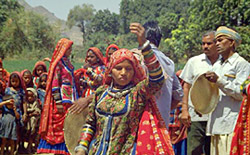
The men of the Gondi tribal community wear dhoti whereas the Gondi women wear sarees teamed with blouse or choli. The Gond people prefer to eat meat and rice is eaten during the festive occasions. Apart from these, the staple foods of the Gondis include two millets that are named as Kutki or Kodo.
The main occupation of the Gondis is agriculture. Shifting cultivation is a popular practice among the tribes. Apart from these, some of the Gondi people are engaged in fishing, fishing, collecting minor forest produce, hunting, devising metal goods in cottage industries and other prime arenas of the Gond society etc. The Gondis basically practice Hinduism along with the worship of various gods and spirits belonging to the customary Gond religion. They worship a number of gods and goddesses including spirits. They worship Janani who is known as the mother of creator, Pharsa Pen, Bhimsen and Mariai (the Goddess of plague and several other sicknesses) including the Gods of Cattle, Gods of household, Gods of fields etc. As they have a strong belief in spirits, they think that the spirits used to reside in all around the environment. Religious formalities and other religious customs were performed by the priests of their community in each religious occasion. The Gondi people practice animal sacrifice on some of their religious occasions.
The Gondi people are the followers of an umpteen number of customs and festivals that got the influence from the Hindu culture and tradition. The Gondi people celebrate Madai, Keslapur Jathra, Dusshera along with several fairs and festivals with frivolity. The Gondis perform Gusadi dance by decking themselves up in cotton clothes that are worn around waist, artificial beard headgears as these are he mportsnt part of the dance costume. They enjoy their tribal occasions with liquor and tribal dance and music with their relatives, kiths and kins.
Gondi Tribe
Gondi tribe is one of the most populous tribes in India with rich cultural heritage.
Recently updated articles in Tribes of India
Arakh Tribe
Arakh Tribe is one of the ancient tribes located in several parts of central India. Their origin dates back to the Tughlaq era. Arakh tribe appears to...
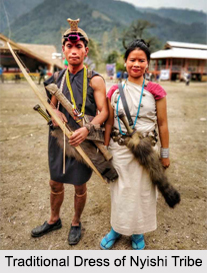
Traditional Dress of Nyishi Tribe
Traditional Dress of Nyishi Tribe is worn during festivals and social gathering. Men wear a cane helmet surmounted with the beak of the great Indian H...
Pasi Community
Pasi is an aboriginal race of India and are mainly distributed over the northern region of the country. The traditional occupation of Pasi is the extr...

Bhojas
Bhojas have been described as a very important tribe in the Aitareya Brahmana. Historical records have said that the Bhojas were settled towards the s...
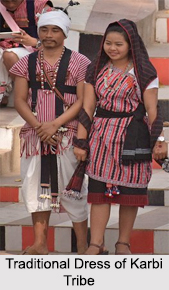
Traditional Dress of Karbi Tribe
Traditional Dress of Karbi Tribe can be easily recognized by the artistic designs inherited from their forefathers. Karbis have their own traditional...
Related articles in Tribes of India
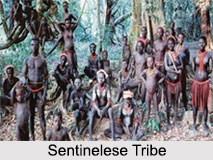
Sentinelese Tribe
Sentinelese tribal community is one of the most isolated and secluded tribes that are found in the whole world.
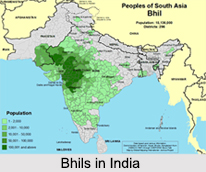
Bhil Tribe
The people of the Bhil tribe are the most widely distributed tribal groups in India.
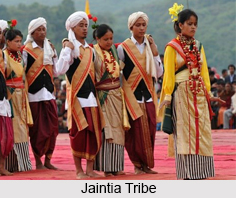
Jaintia Tribe
Jaintia Tribes are located in the Jaintia Hills of Meghalaya. They are also called the Pnars. They are famous for weaving of carpet, making of musical...
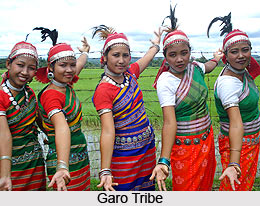
Garo Tribes
Garo Tribes are one of the matrilineal tribes of North-East India who reside in the Garo hills of Meghalaya. Historically, the tribe originated in Tib...
Garasia Tribe
The Garasia tribal community holds a significant position within Indian culture, renowned for their distinctive way of life and rich cultural heritage...