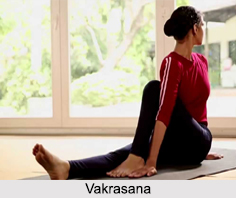
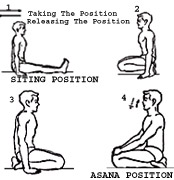
 Vajrasana makes the body strong and healthy. It is the only asana that is permitted to perform immediately after having food. The Lord Indra`s weapon, `Vajra` (thunderbolt) is the allegory behind this particular yogasana. Vajrasana is also known as the Diamond Pose. The term Vajrasana is derived from two Sanskrit words Vajra means thunderbolt and Asana means pose.
Yoga Texts and Vajrasana
The Vajrasana is described first in the Hatha Yoga Pradipika, a major yoga manual of the 14th century. It was later described in several major asana compendia, including the 18th century Gheranda Samhita and the 19th century Sri Tattva Nidhi.
Practice of Vajrasana
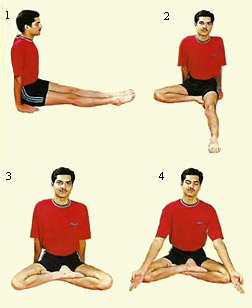
A sequential process for the practice of Vajrasana follows.
* One should fold the left leg in the knee and place the toe on the floor.
* Then he/she should fold the right leg in the knee and should place the toe on the floor and joins the two toes.
* The practitioner should sit on the pit formed by the parted heels and place the palms on the knees.
Benefits of Vajrasana
Vajrasana helps to keep blood pressure under control. It also strengthens the spine and increases the longevity of an individual. With the help of Vajrasana the mind is also stabilised while doing Vajrasana. The special fold of the legs forms one Bandha in Vajrasana. Consequently the blood circulation in the waist - downward portions is controlled. For this reason Vajrasana is recommended after Shirsha asana. Moreover, Vajrasana strengthens thigh and calf muscles. People having trough with stiff joints and whose movements have become difficult should practice Vajrasana with a lot of care. While curing the physical problems this asana has some internal effects also. Hence, this asana is preferred for meditation. Vajrasana helps in stabilizing the mind. This asana is also found to be good for Pranayama.
Precautions in practice of Vajrasana
While practicing Vajrasana, it is important to keep the spine, the neck and the head, erect in one straight line and keep the sight fixed at the plane of the height. One should not place any pressure on the hands. The whole weight of the body should be set on the spine. One should continue smooth breathing, when the final position is attained. While sitting on the bent feet, the heels should stay out and toes should be inside; while soles upward. After a little practice, Vajrasana can be maintained for a long time. In the daily routine Vajrasana should be done for five minutes to experience good results. With more practice it can be done for three hours.
It is recommended that people who have stiff joints and those who have difficulty in movement should practice this asana with lot of care. Such people should practise the asana only when one has cured their joints and their joints are completely in a relaxed state.
Supta Vajrasana
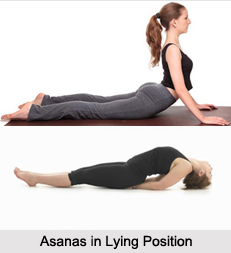
Supta Vajrasana is another variable posture of Vajrasana. The literal meaning of word `Supta` is lying down or resting. One has to begin with simple Vajrasana posture and then bend backward. Firstly, one needs to rest the elbows on ground towards backside and then slowly straighten the hands. The person should lie completely on the back. In this position the shoulders should rest on the ground. Knees should remain together but beginners may keep their knees separately if they find it difficult to keep them together. While returning to the original position, one should first take out the hands and place it by the side of the body and then with the help of elbows he/she should sit as in the first position.
The asana requires some specific precautions. While practising the asana one should try to control the weight while lying on the back, since jerking can cause injury to the back muscles. One should not put more than normal pressure on the back, arms, and the ankle joints while doing this asana. The person should not practice this asana if he/she is suffering from gases, knee injuries or and pain in knees and hip. Supta Vajrasana stretches the thigh and abdomen muscles and thus strengthens them. It is very useful in constipation, high blood pressure and backache.