
 Ratha Yatra is the largest festival in Puri, Odisha. Ratha Yatra is a festival of renewal which ushers in the monsoon months of June-July. This festival rejuvenates the deities. The temple servants stand in a kinship relationship to the deities. These are the daitas and the Devadasis. The daitas are the "blood relatives" of Lord Jagannath and the Devadasis are the wives of Jagannath.
Ratha Yatra Festival
Ratha Yatra is a festival celebrated in Odisha, in commemoration of Lord Jagannath who is the eighth incarnation of Lord Vishnu.
Introduction
Ratha Yatra is the largest festival in Puri, Odisha. Ratha Yatra is a festival of renewal which ushers in the monsoon months of June-July. This festival rejuvenates the deities. The temple servants stand in a kinship relationship to the deities. These are the daitas and the Devadasis. The daitas are the "blood relatives" of Lord Jagannath and the Devadasis are the wives of Jagannath.History of Ratha Yatra
 Ratha Yatra, also called Roth Jatra or Chariot Festival, is a famous festival of the Hindus. It is celebrated with great grandeur in Odisha, in commemoration of Lord Jagannath who is the eighth incarnation of Lord Vishnu. During this festival, Lord Jagannath, along with his brother Lord Balabhadra and sister Subhadra are transported on a chariot. In Oriya language, "Ratha" means "chariot" and "yatra" means "journey". The festival originated in Puri in the State of Odisha. The history of this festival is associated with many legends.
Legends of Ratha Yatra
The festival has been celebrated since ancient times. According to a legend about its origin, Jagannath is said to have expressed his desire to visit his birthplace every year for a week. Thus, the deities are taken to the Gundicha Mandir every year. According to another legend, Kansa invited brothers Lord Krishna and Balram to Mathura for a wrestling competition with the aim of killing them. Kansa who is their maternal uncle sent Akrur with a chariot to Gokul.
 Both the brothers sat on the chariot and headed for their destination. The devotees celebrate this day of departure as Rath Yatra. The people of Dwaraka celebrates this festival on the day when Lord Krishna, accompanied by his brother Balabhadra, took his sister Subhadra, for a ride on a chariot to show the beauty of Dwaraka.
In the temple of Jagannath, his brother Balabhadra and sister Subhadra are also worshiped. There is an interesting story associated with the presence of three deities in this temple. Once the queens of Lord Krishna requested mother Rohini to share the many interesting amorous episodes of Lord Krishna. Rohini found it improper of Subhadra to hear such stories of Krishna so she sent her away. However, by now Subhadra along with Krishna and Balaram appeared on the scene and the Vrajkatha had soon absorbed them. At this time arrived Narad who on finding the siblings standing together motionless prayed, "May the three of you grant darshan in this manner forever." The boon was granted and thus the siblings forever reside in the Temple of the Lord Jagannath. That is why every year, along with Lord Krishna"s chariot, the chariots of Balabhadra and Subhadra are also carried out in procession. The chariots are pulled by devotees from Janakpur to the temple in Jagannath Puri. This is the only temple in world where three siblings are worshipped together. The festival attracts a large number of people from different corners of the world.
Mythological History of Ratha Yatra
This event marks Lord Jagannath, traveling in the chariot with his brother, Lord Balarama and sister Subhadra. It attracts pilgrims and visitors from all over the world. The festival has been celebrated since ancient times. According to a legend about its origin, Jagannath is said to have expressed his desire to visit his birthplace every year for a week. Thus, the deities are taken to the Gundicha Temple, Puri, Orissa every year. According to another legend, Subhadra, wanted to visit Dwaraka, her parent`s home, and her brothers took her back to Dwaraka on this day. The Ratha Yatra is a commemoration of that visit. According to the Bhagavad Purana, it is also believed that it was on this day that Krishna and Balarama went to Mathura to participate in a wrestling competition, at Kansa`s invitation. The chariots are cleaned by the Gajapati Maharaja, with a golden broom to proclaim that he is the first of the Lord`s servants.
Snan Yatra before Ratha Yatra
The idols of Jagannath, Balabhadra and Subhadra are brought out and bathed on a pedestal known as the snanamandap amidst series of rituals and chanting of `Jai Jagannath` and `Haribol` and beating of conch shells, bathing ceremony was performed on Purnima of Jyestha month (Devasnan Purnima), to commemorate the appearance day of Lord Jagannath.
Anavarsha before Ratha Yatra
 The bathing ceremony discolours the painted wooden deities. Therefore nobody except the main priest is allowed to see and pay homage for a period of 15 days, which is known as Anavasara time. It is said that Lord Jagannath himself had ordered King Indradyumna about this Anavasara period.
Netrotsava before Ratha Yatra
 For a staunch devotee of Lord Jagannath, the Anavasara time is really a tough time of separation. The images are re-painted and brought to the Ratnavedi or the main platform for the devotees to see and pay homage. This ceremony is named as Netrotsava. On this day people take the opportunity of seeing the deities in all new and young form. This is called `Nava Yauvana Darshan`.
Nabakalebera before Ratha Yatra
Nabakalebara is an ancient ritual associated with most of the Jagannath temples in Puri and the world, when the Idols of Lord Jagannath, Balabhadra, Subhadra and Sudarshan are replaced by a new set of Idols
Main Ratha Yatra Festival
The main journey of the "Car Festival" involves the large Deities of Lord Jagannath, Baladev and Subhadra to be transported from the temple, each on their own chariot, every year, where: Jagannath`s chariot, Nandighosha is a 35 feet square, rising to a height of 45 feet, with 16 wheels, 7 feet in diameter and is yellow in colour. Balabhadra`s chariot is called Taladhvaja, is blue in colour and has 14 wheels. Subhadra`s chariot is the smallest, with 12 wheels and is called Devadalan.
Masir Bari of Lord Jagannath
Then the images are taken from the temple to Jagannath`s country house at Gundicha Bari, two miles away. They are confined to a solitary abode for a fortnight where they undergo treatment, are offered special Ayurvedic medicine and some special liquid diet called sarapana. After a week`s rest, they are taken back to the temple at Puri. This return car festival or Bahuda Yatra begins on the `Ashadha Sukla Dasami`, the 10th day of the bright fortnight of Ashadha (June-July). On the Ratha Yatra day, temple staff and congregational members cook enormous quantities of foodstuffs, and everyone gets to enjoy as much Mahaprasadam as they care to consume. The continued success of Puri`s Ratha Yatra is so fundamentally important to Odisha that the state government has proclaimed the Yatra a "state festival".
Ratha Yatra of Mahesh
 Ratha Yatra of Mahesh is the most ancient Ratha Yatra or chariot festival in West Bengal and the second oldest chariot festival in the entire country and it is being observed since the year 1397. It continues for an entire week and is a large fair is organised during the time of the Ratha Yatra of Mahesh. Lakhs of tourists visit the fair and the festival, and eagerly participate by pulling the long ropes or `Roshi` connected to the holy chariots of Lord Jagannath, Balaram and Subhadra, completing the journey to Serampur Gundicha Bari from the temple and back.
The region of Mahesh exists in Hooghly District in the eastern Indian state of West Bengal, close to the town of Serampur which is under the jurisdiction of Serampore Police Station, Rishra. Rathajatra of Mahesh is not only the oldest chariot festival of Bengal but it also the grandest one in this part of the nation. Lord Jagannatha is carried inside the chariot till the Serampur Gundicha Temple and it is placed there till `Ultorath` or `Punarjatra`, as it is termed in West Bengal. Famous theatricians Girish Chandra Ghosh, Sri Ramakrishna Paramahansa and his wife Sarada Devi had paid visit to the Rathajatra of Mahesh.
History of Ratha Yatra of Mahesh
During the 14th century, a Bengali sage known as Drubananda Brahmachari visited Puri for the purpose of pilgrimage and he harboured a great wish to serve `bhoga` to Lord Jagannath with his own hand. However, he was prevented in doing so by the temple authority and therefore Drubananda made up his mind, to fast until death. But he heard the voice of Lord Jagannatha in his dream on the third day of his fast which told him to return to Bengal, particularly to the banks of Bhagirathi River near Mahesh.
 There, He would send the sage a neem trunk or `daru-brahma` and the sage must build the idols of Lord Jagannatha, Balarama and Subhadra with its wood. The Lord added that He was eager to receive Bhoga from the hand of his ardent devotee. Thereafter, Drubananda came back to Mahesh and commenced his `sadhana`. Then, the daru brahma appeared in front of him, amidst the waters, in a violent stormy and rainy night. The sage plunged into the water and retrieved the neem trunk after which he created the idols of the Holy Trinity of Lord Jagannatha, Balarama and Subhadra and established a temple.
Sri Chaitanya left for Puri after he embraced `sanyas` and reached the temple constructed by Drubananda at Mahesh. There, he was lost in deep meditation or `samadhi` and much later he was requested by Drubananda to look after the temple and its deities. Therefore, Kamalakar Piplai who was the fifth amongst the Twelve Gopalas of Mahaprabhu the `Sebait` of the Temple. Drubananda Brahmachari died after a few days.
Different Chariots at Ratha Yatra of Mahesh
The current temple of Kamalakar had been built by Nayanchand Mallik of Pathuriaghata near Kolkata in the year 1755. In ancient days, the temple as well as the Ratha were absent from this spot. No information has been derived about the very first Ratha. Once a devotee of Baidyabati had donated a ratha to the temple and another ratha had been offered to the temple by Krishnaram Basu, the grandfather of Balarama Basu who was one of the renowned disciples of Sri Ramakrishna Paramahansa. The Ratha had been renovated by his son Guruprasad Basu during the year 1935. Yet another holy chariot had been prepared in 1852 by Kalachand Basu after the one repaired by Guruprasad was burnt. Once, somebody committed suicide inside the Ratha and therefore a brand new ratha was made by Biswambhar Basu in 1857. Unfortunately, this ratha was also burnt. During this time, Dewan Krishnachandra Basu had ordered for an iron chariot and this ratha exists even to the present-day. The chariot was 45 feet in height and possesses 10 iron wheels and the design of the ratha follows traditional Bengali or `Nabaratna` and it contains nine `churas`.
`Radharani`, the well-known novel composed by Bankim Chandra Chatterjee has elaborately explained the Rathajatra of Mahesh through his literary work.
Ratha Yatra in West Bengal
 Ratha Yatra in West Bengal has close similarity with the Ratha Yatra in Odisha. From the galli maidan, Ratha Yatra is celebrated with much pomp. Its worshipping deities are Lord Jagannath, Balarama and Subhadra. The celebration of Ratha Yatra is found widely in the galli, organised by the young boys and girls and the organisation where Lord Krishna and Lord Jagannath is worshipped. In Kolkata and West Bengal, during Ratha Yatra festival, regional fairs are held and there is much response in Ratha Yatra fair in every locality. Some of the most widely known Ratha Yatra in West Bengal are ISCKON Ratha Yatra in Kolkata, Rashbehari Ratha Yatra in Kolkata, Mahesh Ratha Yatra in Hooghly District, Mahishadal Ratha Yatra in East Midnapore District, Guptipara Ratha Yatra and Rajbalhat Ratha Yatra.
Rath Yatra of Mahesh
 The history of Nahesh Ratha Yatra says that in 14th century Bengal, Dhurbananda Bramhachari, a Bengali sage went to Puri for a pilgrimage, with the desire to offer Bhog to Lord Jagannath. Sadly the temple authorities at Puri at that time prevented him from doing so. Dejected Dhurabnanda decided to fast till death. On the third day of his fast he heard Lord Jagannath"s voice. There Lord Jagganth advising him to head back to Bengal (now West Bengal), to a place called Mahesh on the banks of Hooghly District. The Lord Jagannth also advised him that at Mahesh he will find a huge trunk of neem tree, which he will use to make the idols of Lord Jagannath, Balarama and Subhadra. Now the temple has been replaced by a new structure but the Ratha Yatra dates back to 1397. This Ratha Yatra Festival is the oldest but also the biggest Ratha Yatra in West Bengal.
Guptipara Ratha Yatra
Guptipara is a great place for the sweet lovers of West Bengal. The most famous is the Gupo Sandesh, which is considered as the first branded sweetmeat of undivided Bengal.The Bridabamchandra Temple houses the idol of Lord Jaganath, Balaram and Subhadra. On the day of the Ratha Yatra, the idols are carried out by the towering chariot to another temple known as "Masir Bari" where it is kept for 7 days. After which the journey is retraced by the rath, known as ulto rath, and the idols are brought back to the Brindabanchandra Temple.
 The enormous nine pinnacle iron chariot is decorated with coloured festoons and banners and is fitted with wooden horses and several wooden statues. The multi wheeled rath is pulled by four thick ropes, out which one is reserved for women. A rope at the back serves as a brake. The chariot is pulled through muddy and slushy ground in a wild rampage. It seems a miracle that the Ratha Yatra goes on with a stampede. The seven day period between the ratha and ulto ratha is marked with a fair. The fair is complete with merry-go-rounds and magic and circus shows, makeshift stalls sell household items and decorative showpieces.
Mahishadal Rath Yatra
Mahishadal in East Midnapore is the rath yatras of West Bengal. The 75 feet high rath of Mahisdal is said to be highest wooden chariot in the world. Mahishadal Rath Yatra was started by Rani Janaki Devi in the year 1776. The chariot has undergone several changes but its main structure has remained the same for the last 240 years. Originally the chariot of Mahishadal Ratha Yatra is of a 17 pinnacle structure, but was reduced to 13 pinnacles in the year 1860 with the lower four pinnacle being replaced with wooden statues of men holding flags.

Rajbalhat Rath Yatra
The Radhakanta temple was built in the year 1733. It stands on a square base of approximately 20 feet length and rises to a height of about 50 feet. The front face consists of elaborate terracotta. The temple has a triple arched entrance with the arch panels consisting of elaborate battle scenes of Ramayana. The base panels mainly consist of images of ships and boats and of royal chariots and processions of Bengal history. Radhakanta Temple of Ghatakpara is famous for its Ratha Yatra. It has the nine pinnacled rath, once had brass pinnacles but the metals are replaced by cheaper metal. The towering chariot runs on 12 gigantic metal wheels and the ratha is pulled in a wild rampage through the slushy ground in front of the Rajbalhat High School.
Ratha Yatra of Rajbalhat
 Ratha Yatra of Rajbalhat is celebrated with much fervour. Though the ratha yatra of Rajbalhat is celebrated in the remote village arena, the people celebrate it with much dedication and devotion to Lord Jaggannath, Balarama and Shubhadra. The ratha yatra celebration in Rajbalhat is celebrated from the time of medieval era.
Rajbalhat is a village in Jangipara community development block of Srirampore subdivision in Hooghly District in West Bengal. Rajbalhat houses 16th century temple housing the idol of Rajballavi Devi, after whom Rajbalhat is named, can still be seen to this day but sadly the temple has been renovated several times and in the process wiping out centuries of history.
Apart from the temple of Rajballavi, Rajbalhat houses several terracotta temples and the most prominent among these is the Radhakanta Temple of Ghatakpara.
Radhakanta temple was built in 1700s. This temple stands on a square base, which is of approximately 20 feet length and rises to a height of about 50 feet. The front face of Radhakanta temple consists of elaborate terracotta architectural design. The aatchala temple has a triple arched entrance with the arch panels consisting of elaborate battle scenes of Ramayana. The base panels of Radhakanta temple mainly consist of images of ships and boats and of royal chariots and processions.
Radhakanta Temple of Ghatakpara is famous for its ratha yatra. Although not considered as one of the leading ratha yatras of West Bengal. The ratha yatra of Rajbalhat features a unique rath yatra. The rath does not carry the idols of Jagannath, Balaram and Subhadra but instead carries the idols of Radha -Krishna. The large towered chariot is not pulled by ropes but by iron chains.
The nine pinacalled ratha, once had brass pinnacles but sadly they have been stolen and are replaced by cheaper metal. The towering colourful ratha runs on twelve gigantic metal wheels and the ratha is pulled in a wild rampage through the slushy ground in front of the Rajbalhat High School. The distance between the main temple to the masher bari has largely been reduced after an accident in 2011, when one of the devote was crushed to death under the wheels of the ratha.
Ratha Yatra of Rajbalhat is organized by the Rajbalhat School committee and a huge fair is held in the school ground. The fair sells any thing from day to day items to home decor artefacts and last but not the least the huge variety of mouth watering food.
Ratha Yatra of Guptipara
 Ratha Yatra of Guptipara is celebrated during the ratha yatra, while the same ratha yatra is happening in Odisha.
Guptipara is a rustic town under Balagarh police station in Chinsurah subdivision of Hooghly district in West Bengal. This place is famous for Ratha Yatra and also for the sweets. Guptipara is the place where Durga Puja first held in a public community base. Guptipara is the birth-place of legendary folk singer, Bhola Moira, and the birthplace of the great Commander in Chief of King Siraj ud-Daulah, Mohanlal.
Guptipara offer an interesting mixture of Bengal temple architecture. Now the primary tourism attraction in Guptipara is the terracotta temples. The temples are located in a single temple complex that is the four Vaishnava Temples. These are Ramchandra Temple, Chaitanya Temples, Brindabanchandra Temple, Ramchandra Temple and Krishnachandra Temples. Out of all these, the Ratha Yatra and the fair allure more to the national and international tourists.
Bridabamchandra Temple in Guptipara houses the idol of Lord Jaganath, Balarama and Subhadra. On the day of the Ratha Yatra the idols are carried out by the towering chariot to another temple known as "Masir Bari" where the Lord is kept for seven days.
 After which the journey is retraced by the ratha, which is known as ulto rath, and the idols are brought back to the Brindabanchandra Temple. The nine pinnacled rath like a tower is decorated with coloured banners and flowers and is fitted with wooden horses and several wooden statues. The multi wheeled ratha is pulled by four thick ropes, out of which one is reserved for women. A rope at the back serves as a brake. The ratha is pulled through muddy and slushy ground in a wild rampage.
Ratha Yatra of Guptipara has the seven day period. This is in between the rath and ulto rath and the celebration is marked with a mela (fair). The fair is complete with marry go rounds and magic and circus shows, makeshift stalls sells household wares to decorative showpiece.
The food stalls selling papad and hot jelibi is lip-smacking. But the age old fair is also going through the process of evolutions with different fast food items.
Ratha Yatra of Mahishadal
 Ratha Yatra of Mahishadal serves to the devotee for its beauty of colour and religious faith. Rath Yatra festival of Mahishadal completes with towering raths of royal touch. Some of this rath yatras dates back a couple of centuries and attracts devotees from far and wide.
Mahishadal is a royal place and once a royal capital of East Midnapore District in West Bengal. The 75 feet high rath of Mahisdal is said to be highest wooden rath (chariot) in the world.
Rath Yatra of Mahishadal was started by Rani Janaki Devi in the year 1776. The chariot of Mahishadal has undergone several changes but its main structure has remained the same for the last 240 years. The ratha is of 17 pinnacled structures. It was reduced to 13 pinnacles in the year 1860 with the lower four pinnacle being replaced with wooden statues of men holding flags.
The rath yatra of Mahishadal is inaugurated by the local king Hariprasad Garg. The Hariprasad Garg who arrives in a palanquin, starts the rath yatra by giving the first tug on the ropes of the chariot. The inauguration is marked by gun shoot and the gun shoots continues throughout the entire rath yatra.
Rath Yatra of Mahishadal is of five storied wooden chariot towers to a height of 75 feet and measures 28 feet X 28 feet at the base. The walls of the chariot of Mahishadal are brightly painted and decorated with statues. The gigantic chariot runs on 36 wheels. The ratha yatra of Mahishadal starts at about 3 pm but it is advisable to reach the place early as vehicular traffic closes a couple of hours before the rath yatra starts.
The chariot of Mahishadal is pulled by four thick ropes, out of which one is reserved for women. The chariot of Mahishadal is pulled through muddy and slushy ground in a wild rampage and it seems a miracle that the event goes on without a stampede.
The chariot puller of Mahishadal follow the instruction of a volunteer who stands high up on the chariot with a red and green flags raising them one at a time instructing to stop and pull respectively. The young bare bodied men play in the mud to celebrate the event. They also throw mud at each other and play an active role in chariot pulling.
The chariot of Mahishadal is monitored by volunteers of local clubs and Bharat Sevashram Sangha along with National Cadet Crops.
Recently updated articles in Indian Festivals
Festivals of Dadra and Nagar Haveli
Festivals of Dadra and Nagar Haveli reflect the vibrant tribal culture and traditions of the region. Celebrations such as Tarna Festival and Divasol F...
Teething Ceremony in Indian Customs
In India, teething is observed with deep cultural significance, blending health and tradition. Families often use age-old remedies like rubbing honey,...
Lizard Chirping - Indian Belief
In Hinduism, lizard chirping is often regarded as a sign of divine communication and is considered auspicious in many traditions. The sound, such as h...
Festivals of Haryana
The festivals of Haryana reflect the state's rich cultural heritage and religious fervor. Celebrations like Gugga Naumi, Teej and Gangore are marked b...
Hareli Festival
Hareli Festival is a popular festival of Chhattisgarh. It is celebrated in the month of Shravan by the farmers who worship cows and other equipments u...
Related articles in Indian Festivals
Hareli Festival
Hareli Festival is a popular festival of Chhattisgarh. It is celebrated in the month of Shravan by the farmers who worship cows and other equipments u...
Kunda Mela
Kunda Mela is one of the famous and largest festivals of Jharkhand. The biggest attraction of this fair is the cattle trade.
Bihula Festival
Bihula Festival is one of the popular festivals in Bhagalpur, Bihar.
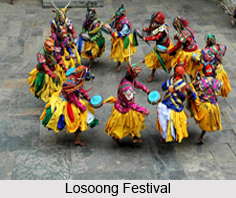
Losoong Festival
Losoong Festival is the Sikkimese New Year, of the Bhutia tribe, celebrated every year in the month of December. This festival is very famous in easte...
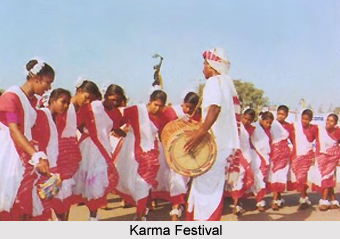
Karma Festival
Karma Festival is a tribal festival celebrated in Madhya Pradesh, Bihar, Jharkhand and Chhattisgarh.