 Folk Dances of Tripura are presented in the events like weddings, religious occasions and other festivals. Tripura has a rich cultural heritage of 19 different tribal communities including Bengali and Manipuri. Each community has its own dance forms which are famous in the country. The folk dances of Tripura are "Hozagiri" dance of "Reang" community and "Lebang Boomani" dance of "Tripuri" community; the "Welcome" dance of "Lusai" community and "Hai-Hak" dances of "Malsum" community.
Different Folk Dances of Tripura
The main tribal and folk dance forms of Tripura include:
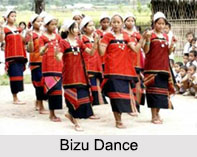
Bizu Dance: The Bizu Dance is a unique dance of the "Chakma" community. "Bizu" means "Chaitra Sankranti" or the end of the Bengali calendar year. During the "Bizu" Dance, the members of this area proffer goodbye to the year that has just ended and conduct in the New Year.
Lebang Boomani Dance: The "Lebang Boomani" Dance is the harvest dance of Tripura. In this dance, the dancers aesthetically represent how the bamboo clappers are used to grab multi-coloured insects called "lebangs".
Garia Dance: The Garia Dance is an essential part of the "Garia Puja". The sacred deity is worshipped through singing and dancing.
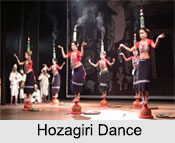
 Hozagiri Dance: This dance is presented in a festival that is celebrated annually in the month of April, just before the selection of a place for "Jhum" cultivation, to pray to the local Goddess of Wealth "Mainuma". The dancers stand on a clay jug with a bottle on their heads. A lighted lamp is balanced on the bottle. The "Reang" dancers bend and bend the lower parts of their bodies in a musical way, without disturbing the bottle and the lighted "diya".
Jhum Dance: This dance portrays their life style, mode of cultivation, culture and traditions. This "working dance" serves as a motivation for them to work harder.
Hai Hak Dance: The "Hai Hak" Dance is a new dance connected with "Jhum" cultivation and performed by the "Halam" area. They present the "Hai Hak Dance" as a part of their festivities. At the end of the yielding season, the "Halam" community urges for the blessings of Goddess Lakshmi.
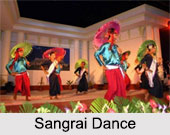
Sangrai Dance: This dance is performed by the adding of a traditional "Khouyang". During this three-day festival, the young members of the "Mog" community move from house-to-house carrying the religious "Wish Yielding Tree" (Kalpataru) on their heads. This ceremony features singing with dancing.
 Gajan Dance: The "Gajan" festival is celebrated by The Bengali community of Tripura. Prayers are offered to Lord Shiva for a happy and wealthy new year. The performers dressed as Lord Shiva, Goddess Durga, Goddess Kali, Nandi dance to the beat of drums and sing songs in honour of Lord Shiva.
Welcome Dance: As the name suggests, this dance is performed as for welcoming guests. Here, the "Lusai" girls generally wear colourful and bright costumes along with fragrant flowers as their accessories. This is performed for visitors, who pay visits to their house as a guest. Being a very colourful & attractive dance, young girls of the entire community take part in this dance.
Dailo Nritya: "Dailo Nritya" is a dance presented with great festivity and happiness. This dance is performed when the crops are brought home. Invitations are sent to neighbours, friends and relatives. The whole community take part in the dance.
Galamuchamo Dance: The "Tripuri" community performs this dance at the end of the harvesting season. The dance is of individual meaning to the community. Through the dance, the community conveys their thankfulness to the Gods for a good harvest. The "Galamuchamo" dance is performed by dancers dressed in traditional attire. Musical Instruments are played during the dance.
