
Sudyumna was a King of the Solar dynasty. In the Hindu mythology it is mentioned that Sudyumna is the son of the Manu Vaivasvata.
Birth of Sudyumna
Manu Vaivasvata was sonless before Ikshwaku"s birth. But by the grace of the great Sage Vasistha, he performed a Yajna to satisfy Mitra and Varuna. Then, although Vaivasvata Manu wanted a son, by the desire of his wife he got a daughter named Ila. Manu, however, was not satisfied with the daughter. Consequently, for Manu"s satisfaction, the great sage Vasistha prayed for Ila to be transformed into a boy, and his prayer was fulfilled. Thus Ila became a beautiful young man named "Sudyumna".
Legend of Sudyumna
Once, he went hunting in the forest, and was separated from his entourage. Tired, and exhausted, he waded into a pool in the forest along with his horse and quenched his thirst. Unfortunately, that pool had been enchanted by Lord Shiva, so that any male who enters it would become a female. Under the curse of Lord Shiva, Sudyumna was again turned into a woman called "Ila" and his horse became a mare.
He (she) took refuge at the hermitage of Budha that was nearby. The sage became infatuated with her, and she reciprocated his affection. They had a son named Pururavas. Ultimately, the King was freed from his curse and returned to his kingdom, along with his son Pururavas, who is the first king of the Chandra dynasty or the Lunar race.
According to the legends in Bhagavata Purana and Devi Bhagavata, Sage Vasistha; the preceptor of Sudyumna prayed to Lord Shiva, alleviated the curse by making it such that the King would be woman for a month and man for another in alternation.
Descendants of Sudyumna
According to the Bhagavata Purana, Sudyumna as "Ila" was the mother of Pururavas. By favour of Lord Vishnu the male form was again recovered, and Sudyumna became the father of three sons named Utkala, Gaya and Vimala. These sons inherited the southern part of his kingdom. His son Pururavas inherited the major portion of the empire and thereafter, Sudyumna took the order of Vanaprastha life. This legend evidently has reference to the origin of the Lunar Race of kings.
Sudyumna
Sudyumna is the son of the Manu Vaivasvata. By birth he was a female, named ‘Ila’.
Recently updated articles in Religion in India
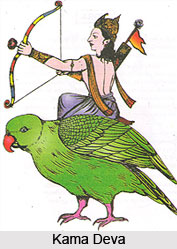
Kusumayudha
Kusumayudha is a name of Kamadeva, the Hindu God of Love. Depicted with a sugarcane bow and flower-tipped arrows, he represents attraction and longing...
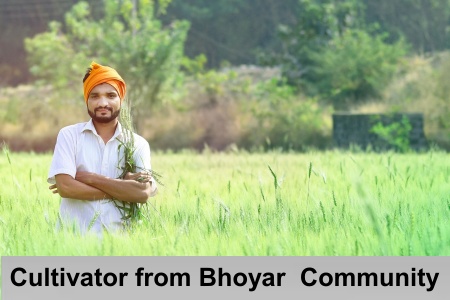
Bhoyar Caste
Bhoyar Caste is largely found in the Central Provinces of the country. Traditional occupation of Bhoyars is agriculture. They are good cultivators and...
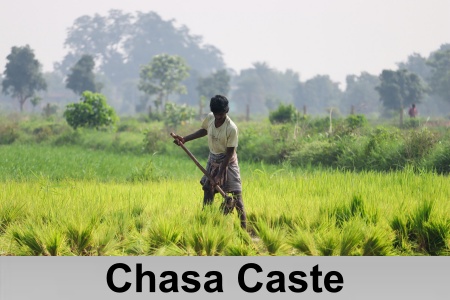
Chasa Caste
Chasa caste is a prominent agrarian community native to Odisha. Traditionally associated with cultivation and farming, Chasas have historically played...
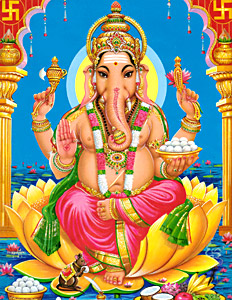
Vigneswara, A Form of Lord Ganesha
Lord Vigneswara is another form of Lord Ganesha or Vinayaka, prominently worshipped as the God of intelligence and good luck in the Indian subcontinen...
Maheswara
Maheswara, meaning “the Great Lord,” is a revered name of Lord Shiva in Hindu tradition. It represents Shiva’s supreme authority over creation, preser...
Related articles in Religion in India

Religion in Indus Valley Civilization
Religion in Indus Valley Civilisation included Hinduism, Buddhism and Jainism. Details about the religion in Indus Valley Civilization have been gathe...

Iyer Brahmin
Iyer Brahmins are originally from Tamil Nadu of South India. They are known for their adherence to Advaita philosophy and Smarta traditions. Tradition...

Kumbhakar / Kumhar Caste
Kumbhakar or Kumhar caste is a traditional artisan community in India known for pottery making. Derived from Sanskrit word Kumbhakar, meaning potter,...

Gujjars in Mughal Era
Gujjars in the Mughal era enjoyed great power. Further their power increased with the decline of Aurangzeb, Mughal emperor.

Gotra in Hinduism
In Hinduism, gotra refers to a lineage system tracing descent from ancient sages, primarily through the paternal line. Originating from Vedic traditio...