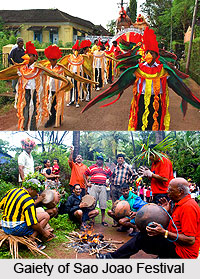
 The Sao Joao festival is most pompously celebrated in Goa amongst the Catholic community. The festival is dedicated to St. John the Baptist and is celebrated on 24th June every year. According to Christianity the prophet saint is believed to have heralded the coming of the `Messiah` into this world. The Bible states that when Mary, mother of Jesus came to visit Elizabeth, mother of St. John, the baby in the latter`s womb leapt up in joy. Thus the festival came to be known as the feast of Saint John the Baptist, where jumping with joy`, specially in water bodies has been the custom.
During this occasion most wells remain fully swollen. The festival marks the celebration of the advent of the rains also. The Sao Joao festival is celebration by the local youths in the villages of Goa who normally get drunk and jump into wells ponds or creeks, yelling, `Viva re Sao Joao`. It possibly meant more than just a cool dip.
Performers usually exchange fruits and other eatables amongst themselves. Young brides yearning for motherhood are given seasonal fruit, flowers and vegetables. Young unmarried girls hoping for a ideal match also make these offerings. The youths also engage in different types of folk dances or Mandos which are popularly known as Sangodds. Sao Joao is an occasion for family get-togethers and celebration. According to their tradition the son-in-laws are invited by his mother-in-laws for a grand feast which included an array of Goan delicacies, especially sanas with sorpotel. The key dish of the festival is the `patodio` a sweet dish prepared from rice, with stuffings of grated coconut, raisins, jaggery and other ingredients. Other traditional hot meals include lot of vegetables, salt fish, salt-water mango, the hard round bangle-like bread `kankonn` dipped in a concoction of moog dal. The existing tradition also follows another custom where a person who owns a well and has a girl who is newly married exchanges pleasantries and food items with their in-laws. This custom is followed in every Goan village.
During the festival children, women and young girls and the local youth wear wreaths of flowers and leaves known as copel on their heads. All the participants march in long processions carrying Goan liquor along with them and jumping into wells. Later, they enjoy a lavish feast of meat and seafood marking the end of the festival. Government also promotes this festival by organizing various events, specially a day-long cruise on boards `Santa Monica`. Different hotels also organize many thrilling competitions or their tourists like pot breaking contests, the frog race and others. Overall this festival is all about fun and frolic.