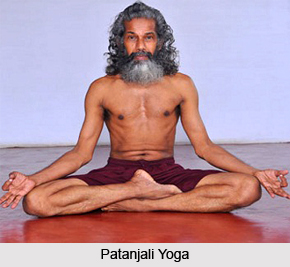
Santosat anuttamah sukhalabhah

This is the forty-second yogic sutra which is contained within the second phase of the Patanjali Yoga Sutras.

Santosat anuttamah sukhalabhah, Patanjali Yoga SutraThe santosat anuttamah sukhalabhah sutra speaks about the period of self-satisfaction that comes from the cleanliness of tehg external body. When combined together, they stir up the sadhaka towards the fire of knowledge.

saniosai from contentment
anuttamah unexcelled, unsurpassed, supreme, excellent
sukha delight, happiness
labhah gain

From contentment and benevolence of consciousness comes supreme happiness.

Contentment is achieved through cleanliness of the body. Together they stir up the flame of tapas, motivating the sadhaka towards the fire of knowledge. This transformation, which indicates that the sadhaka is on the right path of concentration, enables him to look inwards through Self-study (svadhyaya) and then towards Godliness.


Recently updated articles in Yoga

Khanda Manda Yoga
Khanda Manda Yoga Thumbnail

Khanda Manda Yoga

Khanda Manda Yoga is a difficult form of yoga where the Yogi cuts off his own arms and legs with a sharp cleaver, that is axe-like knife, and throws t...

Kaivalya Pada
Kaivalya Pada Thumbnail

Kaivalya Pada

Kaivalya Pada, the fourth chapter of Patanjali Yoga Sutra denotes an absolute, indivisible state of existence of the Yogi. The Kaivalya Pada is someti...

Vibhuti Pada
Vibhuti Pada Thumbnail

Vibhuti Pada

Vibhuti is the Sanskrit term for “power” or “manifestation.” In this third chapter, Patanjali introduces the final three limbs of Aṣṭanga Yoga, collec...

Sadhana Pada
Sadhana Pada Thumbnail

Sadhana Pada

Sadhana Pada in Patanjali Yoga Sutra denotes the idea of practicing yoga that leads to spiritual illumination. Sadhana, the Sanskrit term for “practic...

Samadhi Pada
Samadhi Pada Thumbnail

Samadhi Pada

Samadhi Pada is the first chapter of Patanjali Yoga Sutra. In this chapter, the author explains the essence of yoga, the nature of samadhi, and the me...