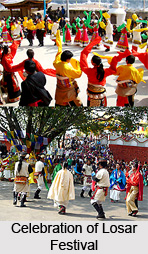
 Losar festival is one of the important festivals celebrated in the Arunachal Pradesh state of India. The festival is exactly organised in the Tawang District. Losar is celebrated to observe the arrival of New Year. The term Losar is derived from two Tibetan words, "lo" meaning "year" and "sar" meaning "new". Hence in Arunachal Pradesh, the Losar festival is also called as the New Year Festival. It mostly falls in the last part of February or early part of March. Losar is generally celebrated by the Monpas who forms the major portion of population in Tawang. The festival of Losar is organised with great enthusiasm and lots of fun.
Celebration of Losar Festival
The festival is celebrated on the first day of the first month of the calendar. Losar is celebrated for fifteen consecutive days. But the main celebration lasts from the first to the third of the first lunar month. People clean and paint houses. The dust of the old year is considered to indicate ill health. They also adorn their houses with different decorations and make offerings known as "Lama Losar". They purchase new utensils and cloths.
On the New Year"s Day, people usually wake up early in the morning. They wear their finest or new attires. They present Prasad (offering) to the household shrine to pay homage to the God. Prayers are also offered for prosperity and good health of the family members. This day is dedicated to the immediate family members only.
The second day is reserved for moving out, meeting and greeting friends and relatives. They wish one another saying "tashi delek", which means "good luck". Then in the evening, people lit lamps and move around their houses to ward off the evil spirits.
On the third day, people visit the monasteries, shrines and stupas. They also donate clothes to the monks and nuns.
One of the attractions of this festival is the traditional noodle soup called guthuk. It is made on the New Year"s Eve. The soup comprises of dumplings made from flour and water. The dumplings are stuffed with each of nine different fortune symbols that decide the fortune of the person in the next year.