Kulgam District came into existence after being carved out from district Anantnag and made functional administratively with effect from 2nd April 2007. Nallah Veshav which drains most of the northern face of Pir Panjal is the main left bank tributary of river Jhelum and traverses through District
Kulgam. Before confluence of Veshev with the Jhelum it gets broken off into a number of channels providing drinking water facilities and irrigation to huge tracts of the land of the District.

History of Kulgam is dealing with the life and the journey of a Muslim hermit, Sayed Simnan Sahib, who gave it the name "Kulgam" where means "Kul" means "clan" in Sanskrit; "gram" in Sanskrit means "village".
Coming of Sayed Simnan Sahib : Sayed Simnan Sahib came from a place called Simnan in Iran. The travelling to the
Kashmir valley of
Jammu and Kashmir in modern India, Sayed Simnan Sahib came to Kulgam and liked the spot on a cliff overlooking the Veshaw River.
Formation of Sayed Simnan Sahib : Sayed Simnan Sahib made Kulgam his permanent abode and was buried at the very spot which he had found fascinating. His aastan is a great draw from the population in and around Kulgam.
Family of Sayed Simnan Sahib : The family of Syed Simnan is buried in a nearby village called Amun. Both the shrines have a masonry plinth and a wooden superstructure of high- quality deodars. He was known for his mystical powers and had devotees amongst Muslims as well as Hindus.
Mystery behind Sayed Simnan Sahib : Shaikh Nur-ud-din also known as Nund Rishi was a famous Kashmiri saint who belonged to the Rishi order and is also called Alamdar-e-Kashmir. Sheikh-ul-Alam as the patron saint of Kashmiris, highly revered by both Muslims and Hindus, was also born in a village called Kaimuh of the Kulgam in 779. The family of Shaikh Nur-ud-din is buried in Kaimuh. The Kulgam area is the birthplace of the ancestors of Allama Iqball (Supur village).
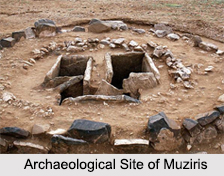
Archaeology in Kulgam : Kulgam was in the news regarding the recent excavation of a new archaeological site in a nearby village called Kutbal which has yielded signs of having been home to a first-century civilization as some rare artefacts belonging to the period of Kushana kings appeared in
Kulgam district. The plateau of Kutbal was once considered a scenic city in the Kushan period. The magnificent stamped tiles, which were excavated from the site, indicated the taste and living standard of the people of first century AD. These excavations speak much of high culture, civic sense, social norms and art of the people living in first century AD. The Kutbal site and its findings, which belong to the Kushana period, are more significant in view of several religious and artistic practices that had flourished then and had travelled to far off places in the subcontinent. Further excavation has been stopped due to prevailing political unrest in valley and is believed that further findings will reveal magnificent history of
Kashmir.

 Kulgam District is a district of the state of Jammu and Kashmir of India. This area is famous to the tourists for the hill station and the waterfalls nearby.
  Kulgam is a picturesque place nestling on the bank of river Veshaw across the wide spread of which is the foothills of the great