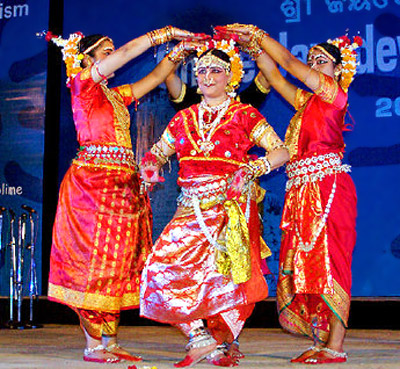
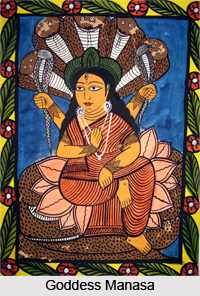
 Deodhani Dance is a folk dance practiced in the Assam state of India. This dance is considered as a form of wild dance evolved from two places of Assam, Mangaldai and Uttarlakhimpur. It is performed at the time of `Manasa Puja` i.e. the Snake Goddess. Devotees and tourists from all across India visit Assam to celebrate, this age old dance festival. Moreover, this dance form is also a subject of interest among the researchers.
Meaning of Deodhani
The word "Deo" means "God" and "Dhani" signifies a "woman". The term Deodhani depicts the dance of a woman when she is possessed by an evil spirit.
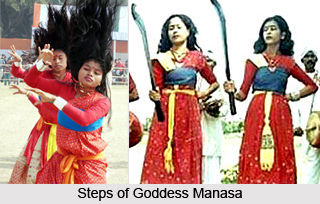 Performance of Deodhani Dance
Deodhani Dance is performed only by womenfolk. It is danced as a solo or group performance. The group generally comprises of three to four females. This form of dance is furious and dreadful and is sometimes even called as `Bhawani Charai` meaning influence of Bhawanimai on women. Some of the steps in the dance are quite complex and they need rigorous practice. The most difficult part of the dance is performing with the "Daa". Daa is a sharp weapon.
At the time of performance a goat is sacrificed and also a pigeon is torn by the neck before Mansha goddess. During this occasion an Ojha followed by his Pallis sings few songs. In Deodhani the songs sung by Ojapali are known as Shuknamni. These religious songs are sung in honour of Manasa Devi.
The musical instruments that accompany the dance comprise of Jaidhol i.e. a specific cylindrical shaped percussion instrument and Khutitaal i.e. a palm sized Cymbal. Khutitaal is played by Palis.
Costume of Deodhani Dance
The dancers generally wear Mekhela, the traditional costume of Assam, made of Muga silk accompanied with a red blouse. They decorate themselves with traditional jewelleries and ornaments. The performers usually leave the hair open while dancing.
Mythological Story of Deodhani Dance
It is believed that Behulaa had to dance before the Hindu Goddess Manasa to get back her husband"s (Lakhindar) life. Behulaa is a character in Padma Purana. So basically, this traditional dance form portrays the process of worship of Goddess Manasa.