
According to the Vedanta, the process of evolution of prakriti into various modifications is initiated by the will of Isvara or God who is immanent as controller in all the entities, of the universe, including prakriti and its evolutes. This theory is advanced on the authority of the teachings of the Upanishad. The view of the Sankhyas that prakriti evolves itself without the aid of Isvara is rejected on the ground that what is non-sentient cannot undergo modifications in an orderly way and also at any particular point of time on its own accord. The presence of purusa, the eternal self, which is the only other reality accepted by the Sankhyas is not considered sufficient to cause evolution because purusa in that system is present eternally.
The Naiyayikas, as true logicians try to trace the origin of the universe to the paramanus, the atoms which are eternal, partless, infinitesimal and supra-sensible reals. Even this theory is rejected by the Vedanta as untenable because of the impossibility of the combination of the absolutely partless atoms to form an aggregate for purposes of evolution into a physical entity. Hence, the Vedanta accepts prakriti as the primordial cosmic source for the physical universe, as the Sankhyas believe, with one modification, viz. that the process of evolution is initiated by God`s will.
The very first evolute is known as mahat and from the latter arises the evolute called aharhkara. These two do not refer to the psychic entities, intellect (buddhi) and ego of an individual. On the other hand, they are technical terms used for the two ontological tattvas or evolutes of prakriti which represent the two important stages of evolution. Both mahat and ahamkara, being products of prakriti, consist of the three gunas- sattva, rajas and tamas. The ahamkara tattva assumes three forms on the basis of the three gunas. These are the sattvika ahamkara, rajasa ahamkara and tamasa ahariikara. From this stage the process of further evolution takes place on two different lines. From the sattvika ahamkara in which sattva element is predominant, the eleven sense organs including manas or mind evolve. From the tamasa ahamkara evolve the five tanmatras or the subtle elements. These are sabda or sound, sparsa or touch, rupa or colour, rasa or taste and gandha or odour, in a successive order. From each of these subtle elements come the gross elements- akdsa or space, vayu or air, tejas or fire, jala or water and prithvi or earth.
There is some difference of opinion between the Sankhya and the Visistadvaita regarding the order of evolution from ahamkara tattva. The Puranas also present them in a slightly different manner. But these details are not of philosophic significance. What requires to be taken note of is that the total number of evolutes including prakriti is generally accepted to be twenty-four and that the five gross elements, which are undeniable facts, have their origin in the prakriti.
Evolution of Prakriti
evolution of prakriti is said to be set into motion by the will of God or Isvara. Prakriti is the primordial cosmic source for the physical universe, and the total number of evolutes including prakriti is said to be twenty-four.
Recently updated articles in Religion in India
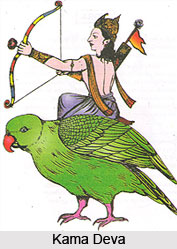
Kusumayudha
Kusumayudha is a name of Kamadeva, the Hindu God of Love. Depicted with a sugarcane bow and flower-tipped arrows, he represents attraction and longing...

Bhoyar Caste
Bhoyar Caste is largely found in the Central Provinces of the country. Traditional occupation of Bhoyars is agriculture. They are good cultivators and...
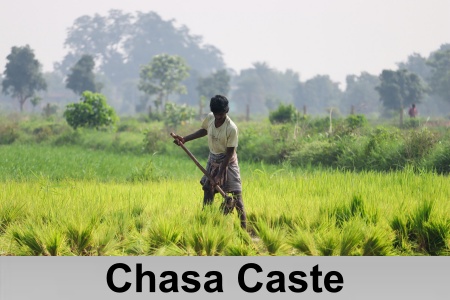
Chasa Caste
Chasa caste is a prominent agrarian community native to Odisha. Traditionally associated with cultivation and farming, Chasas have historically played...
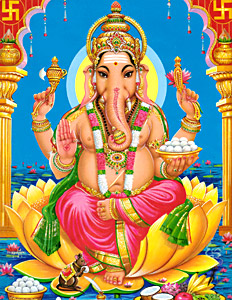
Vigneswara, A Form of Lord Ganesha
Lord Vigneswara is another form of Lord Ganesha or Vinayaka, prominently worshipped as the God of intelligence and good luck in the Indian subcontinen...
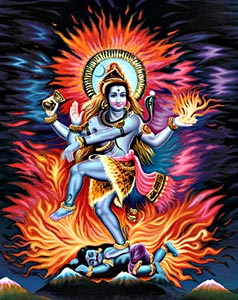
Maheswara
Maheswara, meaning “the Great Lord,” is a revered name of Lord Shiva in Hindu tradition. It represents Shiva’s supreme authority over creation, preser...
Related articles in Religion in India
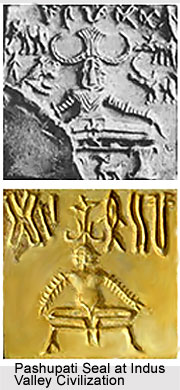
Religion in Indus Valley Civilization
Religion in Indus Valley Civilisation included Hinduism, Buddhism and Jainism. Details about the religion in Indus Valley Civilization have been gathe...
Iyer Brahmin
Iyer Brahmins are originally from Tamil Nadu of South India. They are known for their adherence to Advaita philosophy and Smarta traditions. Tradition...
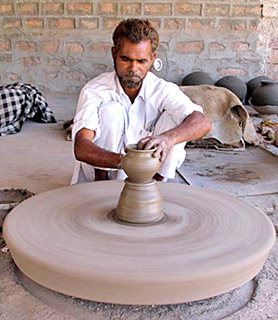
Kumbhakar / Kumhar Caste
Kumbhakar or Kumhar caste is a traditional artisan community in India known for pottery making. Derived from Sanskrit word Kumbhakar, meaning potter,...

Gujjars in Mughal Era
Gujjars in the Mughal era enjoyed great power. Further their power increased with the decline of Aurangzeb, Mughal emperor.
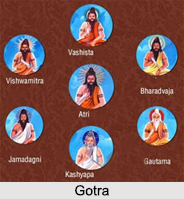
Gotra in Hinduism
In Hinduism, gotra refers to a lineage system tracing descent from ancient sages, primarily through the paternal line. Originating from Vedic traditio...