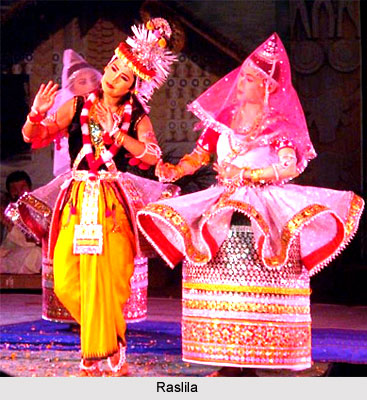
 Ras Lila is a cosmic dance that is often defined as a popular Indian folk dance. Raslila originated from Vrajadham or Vrindavan, the land in Uttar Pradesh, where Lord Krishna resided. Besides being a folk dance, Ras Lila is also an integral part of Indian culture. The eternal togetherness of Lord Krishna and Radha is celebrated through this classical Indian dance drama. In Indian states, such as, Uttar Pradesh and Manipur, Ras Lila is quite popular. As an Indian classical Manipuri dance, Ras Lila enjoys the status of a significant art form in this North-eastern state. The tale of Lord Krishna and his divine love, Radha, has been narrated in Bhagavata Purana. The story of Radha and Krishna has been for ages considered as the epitome of love and romance.
Origin of Raslila
The traditional performances of Raslila are well known all over the Vaisnava world as one experience of spiritual world. It was started in the early 15th Century CE by Swami Sri Uddhavghamada Devacharya at Vamshivata in Vrindavan, Mathura. He is known as a prominent saint belonging to the Nimbarka Sampradaya and also a disciple of Swami Sri Harivyasa known worldwide.
Concept behind Raslila
As far as the term is considered, Raslila distinctively means a circular dance of the Lord with the gopis (maidens). It also depicts the myriad coloured emotions that constitute love: romance, tiffs, mischief and care, worry, jealousy, complaints and at last the final making up. These varied sentiments are wonderfully woven and depicted through the dance drama. Raslila existed even before the ancient texts, such as, Bhagawata Purana and Geet Govinda. Hence, this form of Indian folk dance helped to convey the unadulterated emotion called love.
Theme of Raslila
Raslila retells the story of a night in Vrindavan when the gopis stealthily visit the forest to meet Lord Krishna. In the forest the Lord was playing the flute and the gopis danced with Him throughout the night. Lord Krishna, however, miraculously stretches the night to the length of one night of Brahma (equivalent to 4.32 billion years). It is mentioned in the Bhagawata Puarana that if one performs the Raslila with utmost devotion he or she will attain Suddha Bhakti.
Performance of Raslila
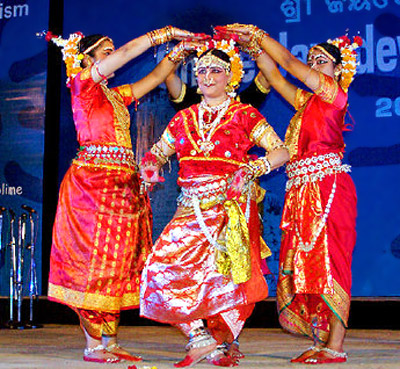
Traditionally a Raslila performance may go on for about three hours. The graceful movement of the Indian folk dancers, the vibrant attires and the apparent devotion with which the dance drama is performed transcends the audience to a world of bliss. Apart from Uttar Pradesh and Manipur Raslila, Indian folk dance, is also performed throughout the country during specific religious occasions. Krishna Janmashtami is one of the special occasions when Raslila is performed.
One of the primary reasons why Raslila is considered a folk dance in India lies in the fact that this art form has its origin in folk dances. In the contemporary India, Raslila is performed by the Rasdharis. The entire troupe of Raslila consists of musicians and dancers. These performers are primarily teenage boys.
Music of Raslila
The Vani literature of Vraj is transcription of songs that were previously heard by Swami Harivyasa Devacarya and Swami Shri Shribhatta, who happens to be his guru. They meditated on the Nitya Lila of Radha Krishna. Later on, these songs became the ones describing the eternal spiritual abode of Radha Krishna, sakhis and Nitya Vrindavana Dham or popularly known as Nikunja Dham.