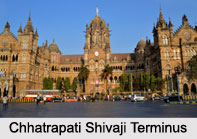
 Chhatrapati Shivaji Terminus was formerly known as "Victoria Terminus Station". It serves as the headquarters of the Central Railways and is a celebrated railway station and a UNESCO World Heritage Site in Mumbai. It is the westernmost end point of the Central Railways of India and is also the southern end point of the central and harbour lines of Mumbai`s metropolitan rail transport system. It is one of the busiest railway stations in India.
History of Chhatrapati Shivaji Terminus
Chhatrapati Shivaji Terminus was built in the year 1887 in the Bori Bunder area of Mumbai to honour the Golden Jubilee of Queen Victoria. The new railway station was built to the south of the old Bori Bunder railway station. In honour of Emperor Chhatrapati Shivaji, its name was changed from "Victoria Terminus" to Chhatrapati Shivaji Terminus in March 1996. On 2nd July 2004, the World Heritage n Committee of UNESCO nominated this magnificent specimen of late 19th century railway architecture as a World Heritage Site.
The station was designed by the consulting British architect Frederick William Stevens during 1878. The station took ten years to complete. The original numbers of platforms were nine. The original building is still in use to handle suburban traffic and is used by over three million travellers every day. The station was again renamed to Chhatrapati Shivaji Maharaj Terminus in 2015.
Architecture of Chhatrapati Shivaji Terminus
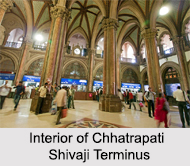
Chhatrapati Shivaji Terminus displays the beauty of late 19th century railway architecture in the British Commonwealth characterized by its advanced structural and technical solutions. It is a magnificent monument full of spectacular sculptures and arcades. At the highest point of the building, on the dome, stands the inspirational statue of "Progress". When it was first constructed, this monument became the symbol of Mumbai as the `Gothic City` and the major international mercantile port city in the Indian subcontinent within the British Commonwealth. Today, it has become an inseparable part of the people of Mumbai as the station operates both suburban and long distance trains. This terminus is one of the rare specimens of the excellent fusion of traditional western and Indian architecture and adds a unique variety to the rich Indian heritage.
Internally, the wood carving, tiles, ornamental iron and brass railings, grills for the ticket offices, the balustrades for the grand staircases and other ornaments were the work of students at the Bombay School of Art. The station stands as an example of 19th century railway architectural marvels for its advanced structural and technical solutions. It has a total of 18 platforms in which seven platforms are for built-up trains and eleven platforms are for intercity trains. It also serves as a finishing point for long-distance trains and two of the suburban lines namely the Central Line and the Harbour line.
The station has been the location of filming the "Jai Ho" song in the movie "Slumdog Millionaire" and "Ra.One". The station was heavily featured on the BBC to show World`s Busiest Railway in 2015.
Visiting Information of Chhatrapati Shivaji Terminus
Mumbai is well-connected by road that leads to all major cities of India. The Mumbai-Pune Expressway was also the first expressway built in India which is connecting Mumbai to the other parts of the country.