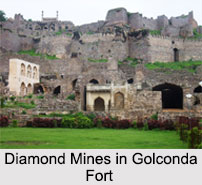
 Golconda Diamond Mines are renowned for the availability of diamonds and best market city of the diamond trade and gems in India. There were 38 diamond mines in India, 23 were located in the Golconda region of Andhra Pradesh.
At that time India was beginning to be known as the treasury of diamonds. Over a vast area on the eastern side of the Deccan Plateau, gems of great size and value had been found. This province set in the territory of Golconda, which today covers the area that forms the state of Andhra Pradesh. In the mines of Golconda, India"s most legendary and largest diamonds were unearthed. In contrary to popular conviction, the Golconda mines were not restrained to a small area around Golconda Fort. In fact, as the entire region was rich with diamonds, a bazaar trading in them boomed in the lanes around the fort. This ancient fort town between the Godavari and Krishna rivers lay 5 miles east of Hyderabad. The large diamonds were found predominantly in the alluvial deposits of the river Krishna.
Myths of Golconda Diamonds
Among the earliest Western travellers, Marco Polo was the one to relate stories about the extraordinary wealth of India. He wrote mesmerizing accounts of how large diamonds were revealed in river-beds and on mountain-sides that were watered by copious rains while journeyed through the country in 1292. His stories were rampant with myths of sinister snakes and vicious eagles, as he had not actually seen the diamond mines, which were supposed to be the guardians of these gems.
Diamonds of Golconda Mines
Golconda is known as Diamond Capital of India. Most of the world famous diamonds are from Golconda which is listed below:
•Daria-i-Noor.
•Noor-ul-Ain.
•Koh-i-Noor.
•Hope Diamond.
•Princie Diamond.
•Regent Diamond.
•Wittelsbach-Graff Diamond.
For more than 5,000 years the sole source of the world"s biggest diamonds are mostly from the ancient Golconda Region. But it has been more than 250 years since diamonds have been mined in Golconda.
This article is a stub. You can enrich by adding more information to it. Send your Write Up to content@indianetzone.com
