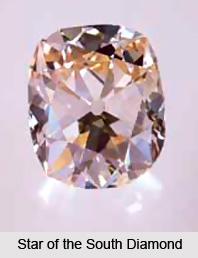
 It was 1853; a black female slave during her course of working in the diamond deposits in Brazil found a stone weighing about 254 carats. Here we came to know about the established custom in these diamond mines from the writings of Edwin Streeter: "If a negro finds one [diamond] from eight to ten carats weight, he receives two new shirts, a suit of clothes, a hat and a handsome knife." Taking into consideration the size of the stone, in this case, the slave was rewarded with her freedom and an allowance for life.
Casimiro de Tal, the slave`s master was unaware of the real value of this incredible stone and a clever buyer for a small sum of £3,000 from Casimiro. The new owner secured a bulky loan of £30,000 against the diamond as guarantee in the Bank of Rio de Janeiro.
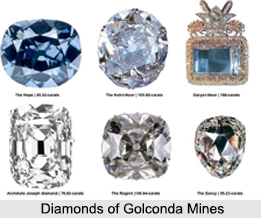
The diamond ultimately arrived in Amsterdam to be cut after passing through several hands. Voorzanger, of the reputed firm of Coster was entrusted to do the task. He is the person who had earlier cut the Koh-i-Noor diamond. The work resulted in a astounding oval-shaped gem weighing 128.80 carats and measuring 35 mm long, 29 mm wide, and 19 mm deep.
A syndicate of dealers in Paris bought it, shortly after the diamond was cut. The diamond was sent to India as the chief of the conglomerate ordered to do it for a possible sale to an anonymous maharaja, but this business deal did not materialize at all. During its time in India, stories about the diamond`s beauty and purity reached the ears of Mulhar Rao Gaekwad, the ruler of Baroda, who was an obsessive collector of jewels. For the gem, he is said to have paid £80,000.
Laxmi Vilas, the Gaekwad`s pistachio-and-gold marbled palace, famous for being three times the size of Buckingham Palace welcome the diamond with great ceremony and style. There is a myth that the gem was placed on a saddled, caparisoned giraffe and ceremonially taken through the sun-dusted streets of Baroda till it eventually reached the palace, though it was yet to be paid to its great beauty and special value. Along with another famous diamond known as the English Dresden, the Star of the South was set in a necklace of pear- and teardrop-shaped diamonds. The necklace has decked out countless princesses of Baroda`s royal family.
A rumor is in the air that the Star of the South diamond was consequently sold to Rustomjee Jamsetjee of Bombay, and it is acknowledged that it may still be in the custody of his family.