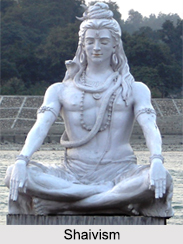
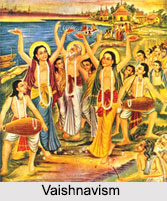
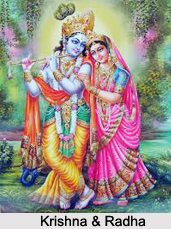
 Tantra in Vaishnavism implies that Krishna Radha is an additional form of Shiva and Shakti. According to the Vaishnavas Krishna and Radha are two manifestations of a single absolute reality. The concept of Siva-Sakti in Tantra is supposes to have inspired the moulding of Krishna-Radha. A close relation with Shakta is revealed in the Panchratra works of the Vaishnavas. In both the traditions Lakshmi is considered as the Supreme Energy who resides in Muladhara. Similarly the Panchratra works provide for Nyasas as a means of Sadhana.
The body is regarded as the abode of God in Tantra. In the different chakras supposed to be within the body Saktidhama and Sivadhama are considered. In some Vaishnava Samhitas, Mathura, Vrindavan are regarded as the abode of God. Gokula has been described as God`s abode which is in the shape of a thousand-petalled lotus in some Puranas. In Tantra this lotus is called Sahasra- Padma which is believed to be within the head. The description of Vishnu and his Sakti, Lakshmi and their abode in the Brahma samhita is Tantric in spirit.
The tradition of Tantra had acquired an exalted position in the society that Vaishnavas had to write Tantras in order to get support. The Bhagvata Purana recognises the authority of Tantra in context to worship and initiation. However both Tantra and Vaishnavism had influenced each other in some way or the either. In certain Tantras Chaitanya has been mentioned thereby indicating the influence of Vaishnavism.
Vaishnava-Sahajiya is a type of Tantric Vaishnavism which had its birth in Bengal in the 16th century. It is generally considered as a `left-hand path` and fugitive from the "orthodox" standpoint. The Vaishnava-Sahajiya sought religious experience through the five senses. As a system of worship Sahaja was prevalent in the Tantric traditions and was common to both Hinduism and Buddhism in Bengal during the eighth and ninth centuries. The tradition used the romance of Krishna and Radha as a symbol for union with God and sought to experience that merger through physical restoration. The cult survived only in Bengal.