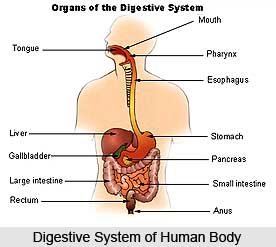
 Purisha or faeces or stool is the waste product, which is left after digestion following the absorption of nutrients from the digested food from the body. The body absorbs water, minerals and other salts and the remaining matter is converted into solid faeces and eliminated from the body. For the faecal matter to be consistent, both the gastrointestinal mobility and the nature of diet should be taken care of.
Roughly about 150 gram of solid purisha is passed from the body in 24 hours. If vegetable, coarse cereals and cellulose are excluded from the diet, the faeces show a fairly constant composition as follows: water- 65 percent, solid- 35 percent, ash- 15 percent (mainly calcium, phosphates, iron and magnesium), substances soluble in ether- 15 percent (neutral fats, fatty acids, and other substances like lecithin, cholic acid and coprosterol), nitrogen- 5 percent. Other occasional components include epithelial cells, bacteria, mucus, and undigested and unabsorbed food. Since under normal healthy conditions, very little food residue is left, purisha are not derived from any part of the ingested food. On chemically analysing stool, no soluble carbohydrates, proteins or their derivatives are found in it. Moreover, animals, even if under complete starvation, produce stool, which show the same composition as that formed after food. This is ample proof for the fact that in a healthy man living upon a well-balanced diet, stool is independent of food.
Bacteria usually comprise about 9 percent of the total solid matter of stool but it may be as high as 50 percent depending upon the pathological condition of the person. The characteristic yellow colour of purisha is due to the presence of a substance called stercobilin derived primarily from the two bile pigments-biliverdin and bilirubin. The color also varies to a certain extent with the type of diet, being paler on a high milk diet, black after an iron based diet and the likes. Pale coloured stool also indicates a pathological condition where the flow of bile may be interfered by obstruction in the bile duct or by a tumour formation.
The odour of purisha is mainly due to the presence of aromatic substances like indole, skatole and also gases like hydrogen sulphide. Indole and skatole result specifically from the action of bacteria on certain products in the body. Under normal conditions, about 500 ml of gas is passed out per day. If coarse cereals and vegetables are taken, the composition of purisha does not remain constant because, the cellulose being indigestible increases the amount of stool. Moreover, various other substances, which remain inside the cellulose covering, are also found in the faeces. So, the composition largely varies. Cellulose serves the important purpose of increasing the bulk of stool and thus stimulating movement of the large intestine.
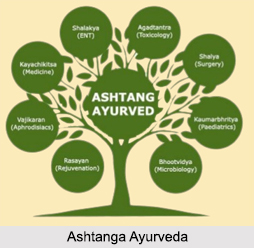
Thus, purisha is a solid waste product of the body, which must be eliminated for the proper maintenance of the body`s metabolism. Ashtanga Ayurveda suggests that regular elimination of purisha along with mutra (urine) and sweda (sweat) is vital for the doshas and dhatus to function in co-ordination with one another. Various disturbances occur in the body due to disorders in stool. Increased production of stool produces heaviness; flatulence and abdominal discomfort while its decreased production may result in bloating, low back pain, abdominal pain, weakness, osteoarthritis, asthma and certain other ailments.
Purisha
Purisha is a category of mala that must be eliminated from the body for the proper maintenance of bodily functions.