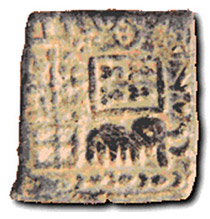
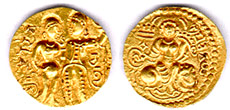
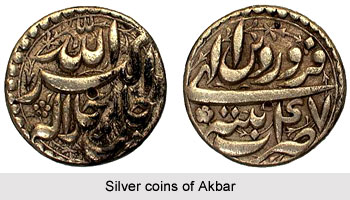
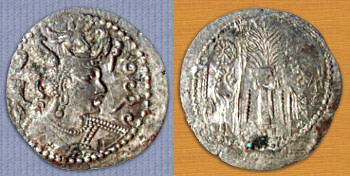
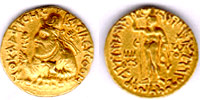
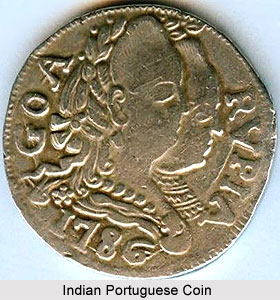
The tribal republics of the Punjab, the Audumbara, Kunida and Yaudheya had almost similar administration. They issued coins in the name of their presiding deities and this practice continued even in the medieval period. In the modern times also this practice was well known.
Before the rise of the Magadha Empire, a number of tribal republics existed in Punjab. They had lost their independence during the imperial supremacy, but as soon as the empire collapsed, they returned to their own republican system and started issuing coins. The tribes that issued their coins in the second century B.C were the Agreya, Kshudraka, Rajanya, Sibi, Trigarta and Yaudheya. The early tribal republics of the second century B.C called themselves `janapada` and referred to their names and the places on their coins in the Brahmi script. The other republics had their names on the coins along with some personal name with the title `Raja` or `Maharaja`. In some cases the coins bore their presiding deities. Copper was the prime issue of all republics. Each tribe seemed to have had its own weights for their coins and a number of them issued coins in more than one weight and sometimes multiples or sub multiple weights were also found. Silver coins were also issued by some of the tribes during this time. These silver coins followed the weight of `hemidrachm` of the Indo-Bactrian rulers.
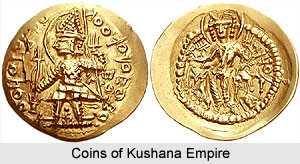
The well executed copper coins of the Yaudheyas (an ancient tribal confederation who lived in the area between the Indus river and the Ganges river) of the later period show Kushana influence in their type and style. Many of the coins bore the symbols that were current earlier and many new symbols were grouped together within a die to form the devices for stamping these coins. A tendency to do away with the symbol groups and an aim to introduce some simple devices were also perceptible in the coins. Maintaining the pattern of the Indo-Bactria, these coins introduced gods and goddesses on some coins. Some of the rulers also placed the effigy of the sage Visvamitra in the familiar Hellenistic style and inscribed his name like the Kushanas. The Yaudheyas sometimes placed their favourite god Kartikeya and his consort on their coins.
The coins of tribal republics throw light on the history, culture, religion, economy, polity, trade, commerce, technology, symbolic use, metrology, movements, etc. of the various tribes in ancient India. These coins are the representation of various aspects of the life and culture of the tribal republics existed in ancient India. Several excavations have enriched the numismatic history and elucidated newer techniques of analysis which were rendered unspoken.