Tridosha System in Ayurveda - Informative & researched article on Tridosha System in Ayurveda
 Indianetzone: Largest Free Encyclopedia of India with thousand of articlesAyurveda


in  
 Art & Culture|Entertainment|Health|Reference|Sports|Society|Travel
Forum  | Free E-magazine  | RSS Feeds  
Ayurveda : Ayurved in India |Ayurveda |Ayurvedic Pharmas in India |Ayurvedic Herbs |Kerala Ayurveda |History of Ayurveda |Development of Ayurveda |Diseases in Ayurveda |Ayurvedic Hospitals & Practitioners |Physiology of Ayurved |Panchakarma |Keraliya Pancha Karma |Ayurvedic Tastes |Malas in Ayurveda |Elements of Ayurveda |Branches of Ayurveda |Ayurveda Medication |Seven dhatus in Ayurveda |Concepts of Ayurveda |Treatment in Ayurveda |Ayurvedic Diet |Indian Ayurvedic Spas |Tridosha System in Ayurveda |Origin of Ayurveda |Astrogenetics |Panchagavya |Tastes in Ayurveda |Ayurvedic Massage |Ayurvedic Skin Care |Asthanga Ayurveda |Panchabhuta in Ayurveda |Ayurvedic Recipes |Gurukul System of Ayurveda |Ayurvedic Practitioners in India |Ayurvedic Hospitals in India |Principles Of Ayurveda
Home > Health > Ayurveda > Tridosha System in Ayurveda
Tridosha System in Ayurveda
Tridosha System in Ayurveda includes Vaat, Pitta and Kapha. Doshas are made of the combination of 5 elements.
More on Tridosha System in Ayurveda
  Theory of the Tridoshas   Role of the Doshas   Sama Dosha
  Vata   Pitta Tridosha in Ayurveda   Kapha

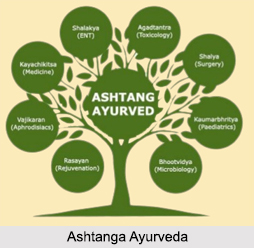
 The Tridosha system in Ayurveda clearly demonstrates the life cycle of an individual. Ayurveda in Sanskrit refers to-"science of life" even clarifies the doshas or temperament. According to Ashtanga Ayurveda, the body is constituted of five elements - ether, air, fire, water and earth. These elements give rise to the three bodily humours or the three doshas - Vata, Pitta and Kapha. These three govern all physical and mental functions of body. To maintain good health and vitality and to protect the body from foreign invasions, a balance of the three doshas is a vital necessity. Derived from the Panchmahabhutas, the doshas cannot be perceived with human senses but their qualities can be. Each dosha is a combination of any two of the five elements of Panchmahabhutas with the predominance of one. Since these three doshas are responsible for all the physiological and the psychological processes within the body and mind, they can explain every physical activity, characteristic, mental capacity, physical energy, thoughts and the emotional tendency of human beings.

Ayurveda states that the structural facet of the human body is constituted of five elements however the functional feature of the body is made up of three biological humours. While the ether and air together forms the VATA personality, it is the combination of fire and water that forms the PITTA constitution and the unification of water and earth therefore forms the KAPHA constitution. These actually govern the physio-biological changes and also mark the physio pathological changes in the body. Therefore when the three doshas are balanced body remains healthy. According to Charaka, the great ayurvedic sage: "Vata, pitta and kapha maintain the integrity of the living human organism in their normal state and combine so as to make the man a complete being with his indriyas (sense organs) possessing strength, good complexion and assured of longevity of life."

When the body suffers from an imbalance within the three doshas, disease is caused. Since it is the strongest dosha in the constitution that usually has the greatest tendency to increase, one is most vulnerable to illnesses linked to an increase of the same.
The three "doshas" are called Vata, Pitta and Kapha.
  • "Vata" is the fusion of space and air.

  • "Pitta" is the combination of fire and water.

  • "Kapha"is the combination of water and earth.


  • The interplay of these humours determines the conditions of health and characteristic attributes of a person. A perfect balance of these rewards health and positive growth, while an excess or "vriddhi" and a deficiency or a "ksaya" results in a disease.

    "Doshas" are all-encompassing, subtle presences. They exist in every cell, tissue and organ. Hence, the matrix of life-the sperm seed in the male and the ovum eggs of the female contain Vata-Pitta-Kapha. One`s lifestyle, food habits and attitude influence Vata-Pitta-Kapha. These features of the father and the mother mould the gene in the offspring.

    Vata controls mobility and is embodied by the nervous system. Pitta is the principle of bio-transformation and the generator of the whole metabolic process in the body. Kapha is associated with cohesion and channelisation of body-fluids.

    The variation in permutations and combinations of these "doshas" and the different ruling qualities (Gunas) create a unique "Prakriti" or nature or physiological structure for every human. This distinguishes one man from another.

    Vata Personality: Vata, the first of the three doshas is constituted by the elements earth and air. It is responsible for entire body movements and mind activities including blood circulation, respiration, speech, sensation, hearing, touch, excretion, natural urges, and formation of foetus, the sexual act, retention and feelings like fear, anxiety, grief and enthusiasm. In short, most of the physical phenomena associated with the nervous system of human beings can be identified with Vata. People of vata constitution are generally physically underdeveloped with flat chests and prominent veins and muscle tendons. The complexion is brown; the skin is cold, rough, dry and cracked. Vata people tend to be either too tall or too short. Physiologically, the appetite and digestion are variable. Vata people love sweet, sour and salty tastes and like hot drinks. The production of urine is scanty and the faeces are dry, hard and small in quantity. They have a tendency to perspire less and also sleep less than other constitutional types. Psychologically, they are characterized by short memory but quick reception and undertaking ability. They have little strength of will, tend toward mental insecurity and possess little tolerance, confidence or boldness. The imbalance of the vata dosha may lead to a wide range of complications like worry anxiety, chronic tiredness, insomnia, underweight, constipation, skin dryness, mental confusion, impulsiveness and fast and disconnected speech.

    Pitta Personality: Pitta, the second of the three doshas comes from fire and is responsible for digestion, thirst, hunger, heat regulation, vision, softness and luster, intellect, cheerfulness and sexual vigour. People of pitta constitution are of medium height, slender and with delicate body frame. The veins, muscles and tendons are not as prominent as in the vata people. These people have a complexion that may be coppery, yellowish, reddish or fair. The skin is soft, warm and less wrinkled than vata skin. Physiologically, these people have a strong metabolic system, good digestive ability and a strong appetite. The person of pitta constitution usually takes large quantities of food and liquid. Pitta types have a natural desire for sweet, bitter and caustic tastes and enjoy cold drinks. Though of medium duration, their sleep is uninterrupted. They produce a large volume of urine and the faces are yellowish, liquid, soft and plentiful. There is a tendency towards slightly high body temperature with excessive perspiration. Psychologically, pitta people have a good comprehensive power and tend to possess intelligence and sharp intellect. The signs of pitta dosha imbalance include impatience, digestive problems, vision difficulties, a tendency to endeavour excessively to achieve goals, and many more.

    Kapha Personality: Kapha, the third of the three doshas comes from the basic elements of earth and water, and makes up all the solid structures of the body. It is responsible for firmness, binding, heaviness, strength, sexual potency, forbearances and restraints. People of kapha constitution have well-developed bodies and naturally, a strong tendency to carry excess weight. The veins, tendons and bones are not prominent but the muscle development is good. These people have fair and bright complexion with soft and lustrous skin.

    Physiologically, kapha people have regular appetites. But due to slow digestion, they tend to consume less food. They are fond of pungent, bitter and astringent foods. Stools are soft, pale in colour and their elimination is a slow process. They enjoy sound and prolonged sleep. Their perspiration is moderate. These type of people record a strong vital capacity with good stamina. As far as memory is concerned they possess slow receptive graph but prolonged susceptibility. The signs of kapha dosha imbalance include ailments like nausea, lethargy and looseness of limbs, inertia, boredom, laziness and many more.

    These three doshas are interrelated and interdependent and changing constantly in this ever-changing universe. The disruption in the activities of one dosha affects the other, and if not taken care properly, the body begins to degenerate and needs proper medical care. Balance of the three doshas produces a healthy body and a healthy mind and eventually makes a well-balanced human being.

    Sama Dosha
    Sama Dosha is occurred when the three humous are in equilibrium and the soul is clean and in accordance with the mind. Doshas play a vital role in the basic foundation of Ayurveda. They are responsible for synchronizing and maintaining all the substances and structures of the body, leading to the physical condition of Sama Dosha.
    Samagni
    Samagni is that condition where the body fire is well-balanced and ensures proper digestion. The factors which help Agni to digest the food completely and to maintain the Samagni condition are the tridoshas - Vata, pitta and Kapha. When all these factors are normal and well balanced, an optimum condition is created to digest the food completely. Indigestion occurs when Agni is imbalanced by any disruption in the composition of the doshas. There are three types of variations from the Samagni condition which indicate that the body is not healthy.

    Samadhatu
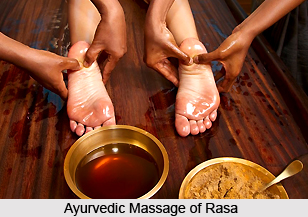
    Samadhatu is that physical condition of the body when the seven tissues function aptly resulting in good health. Each of the seven dhatus has a different function that is properly carried out in the Samadhatu state. Rasa or the life sap flows through various channels and nourishes the body .It soothes the senses, creating peace and satisfaction in the mind. Rakta or blood is synonymous to jeevana or life. By maintaining the normal activities it increases vitality and imparts a natural glow to the skin.

    (Last Updated on : 17/11/2012)
    Recently Updated Articles in Ayurveda
    Ayurvedic Physicians in Medieval India
    Ayurvedic physicians in Medieval India with their commendable contributions elevated the status of Ayurvada, the age old holistic form of healthcare
    Indian Medicine in Post Vedic Period
    Indian Medicine in Post Vedic Period scaled great heights with the laudable contributions of several eminent physicians and with the development of medicinal practises by the Buddhist monks
    Ayurveda in Later Vedic Period
    Ayurveda in later Vedic period developed significantly with information being collected from Vedas, Brahmanas, Aranyakas, Upanishads and Sutra literature. The Sushruta School and Charaka School of Ayurveda developed during this period.
    Ayurveda in British Period
    Ayurveda in British period could not flourish much as the British East India Company promoted western medicine. However, the contributions of few ayurvedic scholars helped in sustaining the reputation of indigenous medicine.
    Ayurveda in Buddhist Period
    Ayurveda in Buddhist Period progressed considerably with the invention of new drugs for the treatment of diseases. The practice of the surgery was however discouraged during this period.
    E-mail this Article | Post a Comment
    Forum
    Forum on Ayurveda
    Free E-magazine
    Subscribe to Free E-Magazine on Health
     
     
    Tridosha System in Ayurveda - Informative & researched article on Tridosha System in Ayurveda
    Sitemap
    Contact Us   |   RSS Feeds
    Copyright © 2008 Jupiter Infomedia Ltd. All rights reserved including the right to reproduce the contents in whole or in part in any form or medium without the express written permission of
    Jupiter Infomedia Ltd.