Amaravati School of art and sculpture evolved during the Satavahna period. Amaravati is situated on the banks of the Krishna River. Creative activity dates back to 3rd century BC and comprises the intricately designed Mahachaitya. The sculptural wealth of Amaravati is displayed include the typical motifs of the Amaravati art and sculptures. This includes the lotus and the `purnakumbha` motifs. These symbols stand for abundance and auspiciousness. Lord Buddha is depicted in the form of `Swastika` mark. This has been carved out on the cushioned seat over a throne that is situated under the Bodhi tree. The same symbol is found on the Flaming pillar. In the lower reliefs of the domes the Jatakas have been depicted. The standing Buddha here dates back to the 8th century AD.
At a later stage the Amaravati School depicted Buddha in the human form for the first time. The sculptures of this school depict Buddha in the superhuman form. There are animal sculptures, the Triratna, the coins of that age and other minor antiquities. The sculptures of the 2nd century BC include the fragmentary Ashokan pillar. The images of Lord Buddha from Alluru, Dharma Chakra from Lingaraja Palli, Bodhisattvas are some of the finest instances of the Amaravati School of art and sculpture. The sculpted figures apparently reflect the features of Satavahana sculptures and architectures. The female figures are full of dynamism and life.
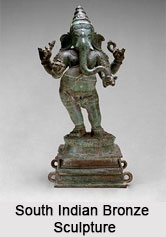
Other pieces of art from the Amaravati School include the ornate bull or `nandiswara` that was situated in the Amareswara temple; earlier forms of Lord Ganesha, Ganeshani and Lakshmi.
Amaravati School also had a great influence over other South Indian sculpture. Its sculpture shows mastery in stone sculpture. The monuments at Jaggayyapeta, Nagarjunakonda and Amaravati are examples. The Andhra sculpture is also known as Amaravati schools. The stupas at Amaravati were composed of green marble. The art of Amaravati region is one of India`s major and district styles. A great number of graceful and elongated figures on the reliefs imbue a sense of life. The quality of the surface enhances the beauty of sculpture.
The figures of Amaravati have slim blithe features and are represented in difficult poses and curves. However the scenes are over-crowded, the general effect is not pleasing. The technical excellence of sculptures is very admirable. Lord Buddha is mainly represented through symbols.