Gupta sculpture is the logical outcome of the early classical sculpture of Amravati and Mathura. Its grace is derived from that of Mathura and its elegance from that of Amravati. Gupta sculpture seems to belong to a sphere that is entirely different. It seems that the Gupta artist seems to have been working for a higher ideal. A new orientation in the attitude towards art is noticed in the attempt to establish a closer harmony between art and thought.
The human figure, taken as the image, is the pivot of Gupta sculpture. A new canon of beauty is evolved. The soft and pliant body of Gupta sculpture with its smooth texture facilitates free and easy movement. It seems that the figure is infused with an energy that proceeds from within. The artist emphasizes the sensitiveness of the plastic surface and therefore all superfluities that conceal the body become minimal. The transparent clinging drapery became the trend of this age. However the sensuous effect was restrained by a conscious moral sense and nudity was eliminated from Gupta sculpture.
The magnificent red sandstone image of the Buddha from Mathura is a great example of Gupta workmanship datable to the 5th century A.D. Buddha is shown here standing with his right hand in abhayamudra, assuring protection, and the left holding the border of the garment.
The image of the standing Lord Buddha is an excellent example of Gupta sculpture. The moulded figure has its right hand in the attitude of assuring protection. Wheel of Law is one of the masterly creations of Gupta classical sculpture. The image is carved in Chunar sandstone and has a surface texture of smoothness. The decorative prabhas are characteristic also of Mathura images.
The stone carving from the temples at Deogarh and those from the temples of Udayagiri and Ajanta are examples of figure sculpture in their decorative setting. The large panel of Sheshashayi Vishnu from the Deogarh temple represents the supreme slumbering on the serpent Ananta.
A representation of Vishnu belongs to the Gupta period, 5th century A.D., and comes from Mathura. The typical gown, the vanamala; the string of pearls twirled round the neck, the long and elegant yagnopavita are characteristics of early Gupta sculpture.
Ganga and Yamuna are originally installed in niches flanking the main steps leading to the upper terrace of the Shiva temple at Ahichhatra. It belongs to the Gupta period 4th century A.D. The Head of Shiva is an elegant example of Gupta terracottas, depicted with matted locks, tied in a prominent and top knot.
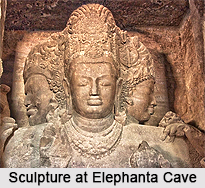
The creation of all these monumental temples and artistic sculptures during the Gupta period till date remains as architectural wonders. The cave temples of Elephanta and structural temples of Kanchipuram in Tamil Nadu are the enduring legacy of the Gupta rulers, still standing proudly as if the sigh of history.
Buddhist sculptural work which had flourished during the Gupta period gained a definite dimension amidst the magnificent sculptures during the Gupta period. The artistic excellence of sculpture during Gupta period can be witnessed through the outstanding stone specimens of Deogarh in Jhansi, at Bhitergaon in Kanpur and the Ajanta Caves in Maharashtra, portraying excellence of Gupta architecture and sculpture.
Hellenistic sculptural works were popularised during the Gupta period. This particular form of sculpture during Gupta period continued to maintain its strong hold because of the tremendous visual impact on the beholder. During the 4th and 5th centuries, when much of northern India was under the dominion of the Guptas, Indian sculpture entered what is now called the `classical phase`.
With the introduction of the classical phase in the arena of art and sculpture during the Gupta period an irresistible form of religious art and sculpture slowly emerged. The Ajanta frescos thus beautify a religious establishment. As Buddhism and Jainism continued to prosper, and more intricate images of the Mahayana pantheon made their appearance thus offering the whole facet of the sculpture during Gupta period a novel diction.
The petite number of sculptures belonging to the late Gupta period, found in Mandasor, Madhya Pradesh echoes the archetypal Gandhara style, which was common in that period.