 Punarjanam is the word commonly used for `Rebirth`. Most of the Hindus believe in the Punarjanam or in the cycle of birth, death and rebirth, which is called `Samsara`. The dogma of rebirth is also known as the theory of reincarnation or of transmigration of the soul. In Sanskrit the word `Punar` or `Puna` means `next time` or `again` and `janam` means `life`. So, `Punarjanam` means `next life` or `the life hereafter`.
The faith of `Punarjanam` varies from person to person. But as per the doctrine of rebirth, the differences between individuals at the time of rebirth are due to their past karma i, e, actions done in the last birth. For example, in a family if a child is born healthy while the other is born handicapped or deaf, this is due to their deeds in their previous lives. The believers of Punarjanam or reincarnation think that they need to face or reap the consequences of the actions done in this life in another birth.
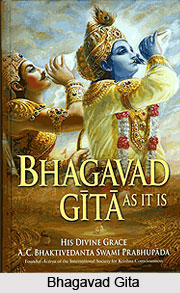
According to Bhagavad Gita, "As a person puts on new garments, giving up old ones, the soul similarly accepts new material bodies, giving up the old and useless." Even the Brihadaranyaka Upanishad supports the doctrine of "Punarjanam". It says, "As a caterpillar which has wriggled to the top of a blade of grass draws itself over to a new blade, so does the soul, after it has put aside its body draws itself over to a new existence." Bhagavad Purana states, "Just as commodities like gold and other articles change hands, a jiva (soul) wanders from one species of existence to another." There is also reference of life after death in the Vedas.
Swami Jyotirmayananda in Tattvaloka wrote, "Though the Sanskrit word `karma` literally means `action`, it implies the impressions of action that exist in the subconscious and the unconscious depths of the mind. Therefore, for every reincarnating spirit, there is a storehouse of karma from the past lives. All karmas don`t bear fruit in the same life. Certain karmas continue to exist as seeds and may fructify in future lives."
There are lots of controversies regarding the faith of "Punarjanam". But Bollywood has earned a lot by making films based on the theory. Subhash Ghai gave the Super Hit `Karj`, where Rishi Kapoor takes the revenge of his previous life in the next birth. And the recent Shah Rukh Khan starrer Om Shanti Om` has also done well in the Box office, which is based on the "Punarjanam" or rebirth.
Swami Vivekananda has emphasized on the Punarjanam by writing this, "We have the power to be what we are, and whatever we wish to be, we have the power to make ourselves." If what we are has been the result of our past actions, it certainly follows that whatever we wish to be in future can be produced by our present actions; so we have to know how to act."
Most of the Buddhists also believe in "Punarjanam". The Tibetan Book of The Dead describes the soul`s passage after death and how it comes back to human form. In fact, the stories of Dalai Lama are the best example of children`s memory of previous life.
The Hindu Dharma faith also says that the one day the cycle of rebirth will be over when there will be no `karma` to cause rebirth will remain i.e., it looses its good and bad karma.