The concept of Brahma is predominant Brahma in both Buddhism and Hinduism. It is said in Hinduism that the source of everything is the nirguna Brahma. In Buddhism, however, Brahma Sahampati is the senior most form of the Mahabrahmas. In this religious sect Brahma is an illustrious passionless deity and the forms of Brahma vary largely in number.
According to the Buddhist scriptures it was Brahma Sahampati who entreated Buddha to teach the world about Dhamma. Initially Buddha hesitated to preach the principle of Dhamma thinking that he will not be able to convey the philosophy. But Brahma Sahampati insisted as in this way the doctrine of Dhamma will spread amongst the layman. Finally Buddha agreed to spread Dhamma.
When Brahma Sahampati arrived Buddha was meditating at Uruvela. Form some of the commentaries it has been gathered that Brahma Sahampati was a non-returner or anagami who was reborn as a monk in the Sangha of Kasyapa Buddha. Sakyuta Nikaya comprise of verses that are spoke by Brahma Sahampati when he attended to Buddha. He is said to have attended to Buddha again when the latter was at his deathbed. The reference to this incident is found in the Mahaparinirvana Sutta.
According to the Vimalakirti Sutra one must not try endeavor to distinguish between good and evil or enlightenment and ignorance as the ideas can make a person bias. It further explains that there is no fixed method to attain enlightenment. When an individual is free of the defilements of mind he will easily comprehend Buddha`s teachings. The sutra goes on to elucidate that the only way achieve enlightenment is by rising above the material ties. The sutra criticizes those who are only concerned about their spiritual upliftment. In order to become a true Buddhist the foremost quality required is to impart the subjective knowledge to those who are suffering.
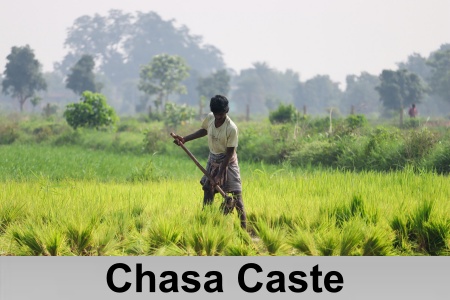
The ideals laid down here are for the Bodhisattvas. The legend starts with Buddha visiting a cultivator, Vimalakirti, as he has fallen ill. Due to the wisdom of Vimalakirti most of Buddha`s disciples declines from visiting the sick man. Finally Manjusri Bodhisattva is sent to him. Through the arguments and counter arguments of these two educated people the teachings of Buddha are slowly revealed. At the conversation Manjusri Bodhisattva hails Vimalakirti as one of the wisest of the followers of Buddha.
There are other two episodes in Vimalakirti Sutra that is also referred to in the Chinese literature. The first story revolves around celestial ladies sprinkling flowers on people at a meeting. The flowers immediately fall to the ground when they touch the bodhisattvas but it is not the same for the junior cultivators. It symbolizes that the flowers stick to those who are yet to free their minds of the defilements.
The second story portrays the supernatural powers of Vimalakirti. He visits the heavenly kingdom of Xiang-ji for bringing fragrant rice for his visitors. This story reveals the compassion and love of the bodhisattvas.
Hence the Vimalakirti Sutra is one of the favorable ways to know more about Mahayana Buddhism and the legends associated with it.