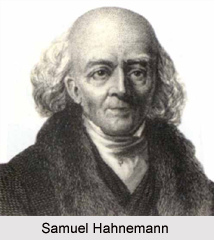
 Samuel Hahnemann, who is regarded as the father of Homeopathy, was a German physician who earned his Doctor of Medicine degree in 1779. At the time of his graduation, scientific advances emerged in the fields of chemistry, physics, physiology and anatomy. The clinical practice of medicine, however, was dominant with superstition and lack of scientific rigor. The treatments of the day, such as purgatives, bleeding, blistering plasters, herbal preparations and emetics lacked a rational basis and were more harmful than effective. Hahnemann recognized this and wrote a critical account of current practices in several papers on topics such as Arsenic poisoning, hygiene, dietetics and psychiatric treatment.
Hahnemann and colleagues began testing various substances to determine the types of symptoms they produced. These results suggested Hahnemann what the drugs would be useful to treat. Hahnemann reasoned that doses of these substances that produced overt symptoms would be inappropriate for treatment of diseases with the same symptoms. Thus he advocated reduction of the dose to minute levels by multiple serial dilutions of ten or hundred fold. Hahnemann practiced Homeopathic medicine for almost 50 years until his death in 1843.
Homeopathy had a large impact on the practice of medicine. The first homeopathic hospital opened in 1832 and homeopathic medical schools opened all over Europe. Homeopathic hospitals and practitioners often had better outcomes compared to their allopathic counterparts. Thus the general public began to boast the benefits of homeopathy and demand better treatment from all physicians.
Homeopathy turned spectacularly popular in the United States and Europe in the 1800s and its strongest advocates included European royalty, American entrepreneurs, literary giants, and religious leaders. But, at that point in time, when it was gaining speedy popularity, it became the object of deep-seated animosity and Argus- eyed opposition as against the establishment medicine.
Homeopathy was first established in Britain by Dr Frederick Quin (1799-1878) around 1827, though two Italian homeopathic doctors (Drs Romani and Roberta) had been employed two years previously by the Earl of Shrewsbury based at Alton Towers in North Staffordshire. Homeopathy in the UK quickly became the preferred medical treatment of the upper classes. At its peak in the 1870s Britain had numerous homeopathic dispensaries and small hospitals as well as large busy hospitals in Liverpool, Birmingham, almost exclusively funded and run by members of the local aristocracy.