Hindi language is essentially counted as an Indo-Aryan language, or a `dialectical gamut` of languages, spoken in northern and central India (defined as the "Hindi belt", commonly referring to the region in North and Central India where Hindi languages are verbalised natively or as a primary language). Native speakers of Hindi dialects amongst them make up for 41 percent of the Indian population (according to the 2001 census conducted in India). As defined in the Indian Constitution, Hindi language is deemed as one of the two official languages of communication, with English serving as its other substantial counterpart. The Indian federal government regards Hindi as one of the twenty-two scheduled languages delineated in the Eighth Schedule to the Constitution. Official Hindi is often described as `Standard Hindi`, which together with English, is utilised for umpteen administrational purposes of the central government. Standard Hindi is a Sanskritised version descended from the khari boli dialect which has given rise to what is known presently as Hindustani. Khari boli was effectively the speech of particular classes and districts in Delhi, attached with the Mughal court during the 16th-18th centuries. Urdu, esteemed as the closest cousin of Hindi language, is a dissimilar, Persianised variation of the same dialect.
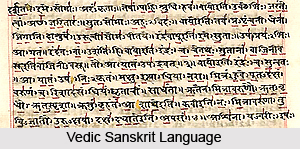
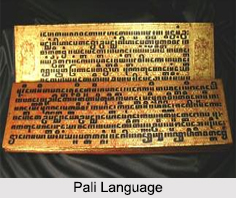
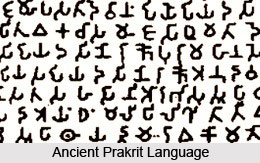
Hindi being conceived as the National Language of India, possesses its roots in the classical Sanskrit language, by means of the Middle Indo-Aryan Prakrit languages and Apabhramsha (a term used by Sanskrit grammarians after Patanjali to designate dialects of North India that departed from the norm of Sanskrit grammar. The term in Sanskrit literally stands for "corrupt" or "non-grammatical language", and hence Prakrit language absolutely comes under this category) of the Middle Ages. The language has since long, acquired its current form spanning over several centuries and numerous dialectical versions make their presence felt to this date. Like Sanskrit, Hindi too is penned in the Devanagari script, which is the common mother to several other Indian languages as well. Much of the vocabulary of Hindi language descends from Sanskrit language, though Hindi also shares a special relationship with Urdu. The grammar and much of Hindi and Urdu vocabulary are in effect identical. Linguists think of Hindi and Urdu as the same language, the difference lying in the fact that Hindi is written in Devanagari and draws vocabulary from Sanskrit, while Urdu is penned in Persian script and draws on Persian and Arabic. The separation though is largely a political one - before the Partition of India into India and Pakistan, spoken Hindi and Urdu were considered the same language, in present times redefined as Hindustani.
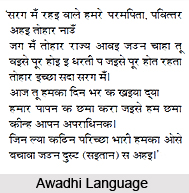
Though there exists no judgement of opinion upon a specific time, Hindi language is also believed to have sprang up as local dialects such as Braj, Awadhi and finally Khari Boli, after the turn of 10th century. In the extent and duration of virtually thousand years of Muslim influence, like times when Muslim rulers commanded over much of northern India during the Delhi Sultanate and the Mughal Empire, umpteen Persian and Arabic words were assimilated into khari boli and was named as Urdu (spoken as `Hindi` in India). Since almost all Arabic words travelled by way of Persian, they do not maintain and hold back the original phonology of Arabic.
Hindi language establishes a contrast with Urdu in the way both are scripted and the usage of Sanskrit vocabulary in higher registers. Urdu is deemed the official language of Pakistan and also an official language in some parts of India. Hindi is principally spoken in the northern states of Rajasthan, Delhi, Haryana, Uttarakhand, Uttar Pradesh, Madhya Pradesh, Chhattisgarh, Himachal Pradesh, Jharkhand and Bihar, but is also comprehended together with regional languages like Punjabi or Marathi across north and central India.

The development of Standard Hindi into a national language had its beginnings during the colonial period, when the British began to promote and school it as a standard among government officials. Later Hindi language was employed for literary purposes and has since become the vehicle for some excellent prose, poetry and drama. Hindi shares its development and germination with English and several other European languages. They had evolved from a language thought to have been spoken in Central Asia approximately around 5000 B.C., addressed by linguists, as the `Indo-European parent language`. For this reason (and because of the extensive 200-year influence of the British upon India), many basic words in Hindi language are the same as or similar to their counterpart in English.
Official status of Hindi language
The Constitution of India, adopted in 1950, adjudges Hindi in the Devanagari script as the "official language of the Union" (Article 343(1)). Hindi is also enumerated as one of the twenty-two languages of the Eighth Schedule of the Constitution of India, which entitles it to represent itself in the Official Language Commission. It was later envisioned that Hindi would become the exclusive working language of the central government by 1965, with state governments entrusted freedom to function in languages of their own choice. This has not, however, happened in that `exclusive` manner and English is also employed along with Hindi for official purposes. In this context of Hindi being adopted as the official language, there occurred widespread resistance to the imposition of Hindi upon non-native speakers, in some states, especially the Anti-Hindi agitations in the state of Tamil Nadu, which ensued in the passage of the Official Languages Act (1963). This act provided for the continued usage of English, indefinitely and for all official purposes, by the Union government. However, the constitutional directive to the central government to champion the circularisation of Hindi was retained and has strongly influenced the policies of Union government.
At the state level, Hindi is deemed the official language in the states of: Bihar, Jharkhand, Uttarakhand, Madhya Pradesh, Rajasthan, Uttar Pradesh, Chhattisgarh, Himachal Pradesh, Haryana and Delhi. Each of these states may also additionally assign a "co-official language"; in Uttar Pradesh for instance, depending on the political formation in power, sometimes this `official` language is changed to Urdu. In the same manner, Hindi is accorded the status of co-official language in several states.
In order to make Hindi language an extensively-accepted one, the Indian government has boosted much to mirror it in virtually all Indian households. Leaving English and its so-called `status` aside, Hindi has been unanimously accepted throughout India, the language itself successfully bridging the regional dialectical gaps since time immemorial. In this context, Hindi cinema that have incessantly been produced from Bollywood, have been playing the most substantial role in popularising the language all over the country, not forgetting the whole wide world.
 Popular Hindi television serials, a concept that has much broader prospects in contemporary times, also aid in making Hindi language reach the remotest corners with ease. Witnessing and charting the popularity of Hindi, BBC World Service had started its News in Hindi in 1940.
Hindi language is deemed a direct descendant of Sanskrit through Prakrit and Apabhramsha. It has profoundly been influenced and enriched by Dravidian, Turkish, Farsi, Arabic, Portuguese and English languages. The language is perhaps rightly referred to as a very expressive language. In poetry and songs, Hindi can put across and transmit emotions by mere utilisation of simple and tender words; it can also be employed to exact and rational reasoning. The Hindi literary tradition is primarily one of verse and is also essentially oral. Prose was a comparative late arrival to the Hindi literary scenario and the first work of prose in Hindi is generally agreed upon as being the fantasy novel Chandrakanta penned by Devaki Nandan Khatri. The earliest works were composed and aimed to be sung or recited and were hence transmitted for many generations, before finally being documented down. As a result, the earliest records of a Hindi language text may come down later by several centuries than the hypothesised date of its composition.
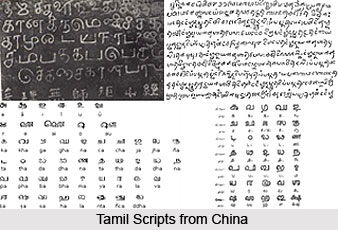
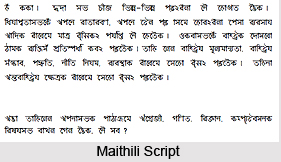
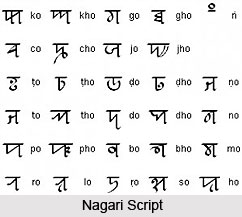
Although Hindi language has basically being penned in the Devanagari script. However, besides Devanagari serving as the singular respected orthography across the country, according to historical annals, there also have existed some other writing system styles for Hindi. These significant others have too made their lasting presence felt in Hindi literary traditions, subject of panoptic research both in India and overseas.
Hindustani, Hindi and Urdu have been penned in umpteen variations, lending a difference in virtually every script, that perhaps goes unheeded to the unpractised eye. Most Hindi texts are penned in the Devanagari script, which has been deduced from the Brahmi script of Ancient India. Most Urdu texts are scripted in the Urdu alphabet, which further has descended from the Perso-Arabic script. Hindustani however has been scripted in both the above-mentioned scripts. Not begun in much bygone years, the Roman alphabet has been utilised to pen these languages for technological or internationalisation grounds.