Ayurvedic principle of diet explains that food should be consumed mindfully with gratitude. It has to be fresh and of good quality. It has to be prepared with proper care which is easily digestible. The principles emphasize on eating different kinds of healthy food, as it will help to balance the nutrition required by the body.
Three Doshas in Ayurveda
As per Ayurveda, foods are categorized by their taste and how they affect the elemental doshas of vata, pitta and kapha. Vata is made of air and ether. It is light, cold, dry, rough, clear and mobile. Pitta is made of fire and water. It is light, hot, sharp, and clear. Kapha is made of water and earth and it is heavy, cool, wet, soft, dense and static.
Tastes in Ayurveda
In Ayurveda, there are six types of tastes and it says that all six tastes be included in every meal in dosha balancing ratios. The six tastes are Madhur, which is sweet, composed of prithvi (earth) and jala (water), amla is sour composed of prithvi (earth) and tej (fire), lavan is salty, comprising of tej (fire) and jala (water), katu is pungent comprising of tej (fire) and vayu (air), tikta is bitter comprising of akash (ether) and vayu (air) and kashay which is astringent , comprising of prithvi (earth) and vayu (air).
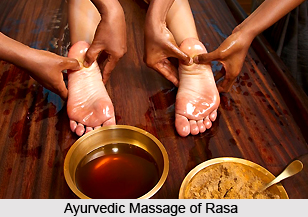
The rasa or tastes are present in all kinds of food. According to Ayurveda, the tastes can increase or decrease the three doshas i.e., vata, pitta and kapha. The sweet taste or Madhur is known for increasing kapha dosha. Amla or sour is known for elevating pitta dosha. Lavan is known for increasing both pitta and kapha doshas. Katu or pungent is known for increasing pitta and tikta or bitter taste is known for accentuating vata dosha. Kashay increases vata dosha.
Digestion in Ayurveda
According to Ayurveda, the concept of digestion depends on Agni, which literally means fire. In the lexicon of Ayurveda, it actually refers to digestive fire. There are mainly four types of agni, Samagni which means regular or balanced digestive fire, Vishamagni or irregular digestive fire, Mandaagni which is dull or mild digestive fire and Thikshnaagni which is sharp and heavy digestive fire.
The main aim of Ayurvedic diet is to maintain the health of people and cure the diseases of sick people. An Ayurvedic diet is complete only when a wide variety of food is consumed which balances the nutritive content required by the body. Any diet, which solely concentrates on one type of food, is incomplete as it is unable to balance all aspects of the physiology.
Ayurvedic Principle of Diet
Ayurvedic principle of diet emphasizes on eating different kinds of healthy food, as it will help to balance the nutrition required by the body.