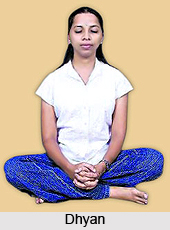
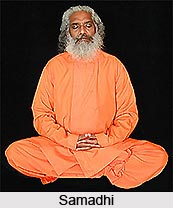
The lotus position or Padmasana is a cross-legged sitting posture originating in meditative practices of ancient India, in which the feet are placed on the opposing thighs. The Hathayoga mentions that of the 84 Asanas Lord Shiva is reputed to have taught, this was one of the most important. The position of Padmasana is resembles a lotus. Famous depictions of the Padmasana position include Shiva, the meditating ascetic God of Hinduism, and Siddhartha Gautama, the founder of Buddhism. Padmasana was also depicted on an ancient seal found in Harappa.
Padmasana may be regarded as an essential exercise in postural training both for the purpose of Yoga meditation as also for preserving normal elasticity of the muscles that are connected with the pelvis and lower extremities.
Meaning of Padmasana
`Padma` means lotus in Sanskrit and in this asana the position of the legs look like blooming lotus. This asana has been given a significant place in Yoga practice as it is best suited for Pranayama, Meditation and also concentration.
Yoga Texts and Padmasana
Padmasana is one of the oldest known Asanas in history, and is described in the Yoga Yajnavalkya (200 BC) the oldest extant text that describes Yoga Asanas. Almost all the Puranas, Itihasas and later Indian texts mention it at least in passing and it is well known even in the Buddhist tradition (as indicated by the iconic Padmasana posture of several Buddha statues).
The Hatha Yoga Pradipika terms the Padmasana `the destroyer of all diseases` and asserts that the Yogi who can control his breath by means of the Padmasana is free from all forms of bondage.
Practice of Padmasana
A sequential process for the practice of Siddhasana is given below.
* Sit down with both the legs spread straight in front of the body and keep them at a distance of 1 to 1.5 feet and keep the spine erect.
* Then, slowly and carefully, bend the right leg and place the foot on top of the opposite thigh, the sole facing upwards and the heel close to the pubic bone.
* When this posture feels comfortable, bend the other leg and place the foot on top of the opposite thigh. Ideally, both knees should touch the ground in the final position. The head and the spine should be held straight and the shoulders and arms should be undisturbed.

* In the final posture, the torso of the Yogi is perfectly balanced and aligned. Hold the pose for five to fifteen minutes.
Effects of Padmasana
Padmasana has several beneficial effects. Padmasana decreases muscular tensions and blood pressure. Digestion is improved as the blood flow to the legs is redirected to the abdominal region. Even as the backbone is kept erect in this asana, its functioning is greatly improved. Dhyana Mudra further aids in stabilising the pulse beats. Since the pose applies pressure to the lower spine, it has a relaxing effect on the entire nervous system. The breath slows down, bringing a feeling of peace and as the body steadies, the mind becomes calm. This steadiness and calmness form the pillars of all yoga practices, and thus helps the mind for real meditation.
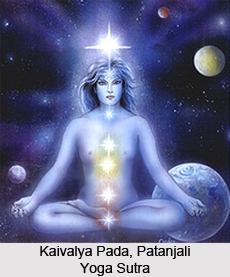
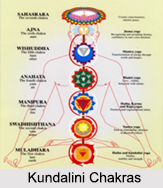
Padmasana directs a flow of Prana from the Muladhara Chakra, the psychic nerve centre lying at the base of the spine, to Sahasrara, the crown chakra in the head, to increase the experience of meditation. This Yoga Asana also slows down breathing, thus one can achieve concentration of mind of practiced regularly. Padmasana calms the mind, stimulates the pelvis, spine, abdomen, and bladder, and stretches the ankles and knees. In women it eases menstrual discomfort and backache, thus aiding in childbirth.
Precautions in Practice of Padmasana
During the `cradle warm-up`, the outer ankle is often overstretched. One should then push through the inner edge of the foot against the upper arm to equalize the two ankles.
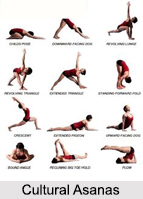
Padmasana is often difficult for learners, because the pressure on the ankles can be painful. If the person cannot lock both the legs initially, he/she can try doing the Ardha Padmasana and the Sukhasana. However, none of these Asanas should be performed by people suffering from back trouble, sacral infections or weak knees. Padmasana is considered to be an intermediate to advanced pose, thus it should not be performed without sufficient prior experience or unless one is accompanied by the supervision of an experienced teacher.