About Indian Temple Sculptures
 Indian temple sculpture can be divided into two types: the Nagara (North India) and the Dravidian (South India). The primary difference between the two is the way in which the shikharas of the temples are carved out. As far as the architectural elements are concerned these include the garbhagrihas, vimanas, mandapas, miniature towers, lathe turned pillars and others. These are common to almost all the Hindu temple sculpture. Another interesting facet of the Indian temple sculptures is the Indian cave temples.
The sculptures of the 2nd and 3rd century BC depict the episodes from the life of Lord Buddha, in the architectural setting of the Vedic period. The Hindu Temples are unique temples among the India`s prehistoric monuments. The symbolic meaning can be viewed in the architecture of the temple with its three elements, namely, the base, the walls and the spire, which correspond to Earth, Space and Heaven.
The best specimen of the Mauryan stone sculpture had a rare feeling for monumental form and royal power. The sculpture has an exquisite finish and a brilliant polish. The monolithic pillars of Ashoka on which are inscribed his famous edicts are the great monuments of the Mauryan age. The most striking feature of these pillars is the finely carved capital with magnificent animal figures.
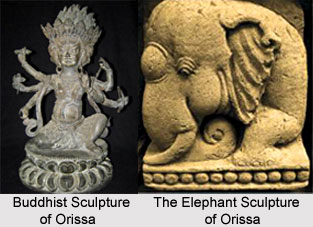
In east India in the state of Orissa the finest examples of exquisite sculpture are the Lingaraja temple and the Konarak temple. Each wheel of the chariot in the Konark temple has rich carvings. The human and animal figures are carved out in black stone. The poses of dancing apsaras depicted look lively. The theme of several of these sculptures is passionate. The Chandella rulers of central India built temples of Khajuraho that is adorned with sculptures. The style of the shikhara varies from that of the others. The Jain temples at Mount Abu are the finest monuments of the Solanki kings of Gujarat who were great patrons of art. The Abu temples are very attractive because of the delicate and intricate carvings in white marble.
The south Indian temple sculptures can bestow a completely separate identity to the temple building idiom in India. The south Indian temple sculpture received an added boost under the reign of the Cholas and Chalukyas. While the Vijayanagara Empire immortalised their art and sculpture on stone in Hampi, the former two kingdoms are also renowned for their massive temples. Another special feature of the south Indian temple sculpture is the miniature towers.
South Indian Temple Sculpture
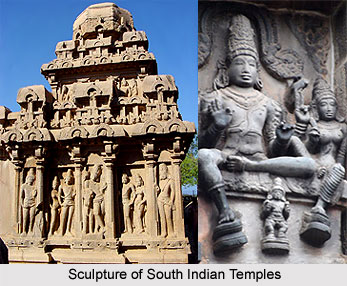 South Indian Temple sculpture comprises of the sculptures of temples of Andhra Pradesh, Karnataka, Kerala and Tamil Nadu. These states have been rule d by various dynasties which include Pallavas, Chalukyas, Viajayanagar Empire, Kakatiyas, Cholas, Rashtrakutas and Gangas. The essence of these sculptures is such that these can bestow a completely separate identity to the temple building idiom in India.
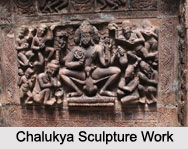
The south Indian temple sculpture received an added boost under the reign of the Cholas and Chalukyas. While the Vijayanagara Empire immortalised their art and sculpture on stone in Hampi, kingdoms of Chalukyas and Cholas are renowned for their massive temples. These beautiful buildings even today spell out the grandeur and splendour that once accompanied them.
Another special feature of the south Indian temple sculpture is the miniature towers. Sculptors of Vijaynagara Empire used soapstone as it is soft and easily carved. During the Vijayanagar period the local hard granite was preferred in the Badami Chalukya style though soapstone was used for a few reliefs and sculptures. The use of granite reduced the density of sculptured works. As granite is prone to flaking, few pieces of individual sculptures reached the high levels of quality seen in previous centuries. In order to cover the unevenness of the stone used in sculptures, artists employed plaster to give the rough surface a smooth finish and painted it thereafter with lively colours.
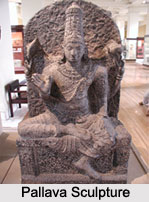
Sculptures of erotic art, nature and deities from the Madurai Meenakshi Temple, Chidambaram Thillai Nataraja Temple and the Srirangam Ranganathaswamy Temple in Tamil Nadu belong to the Sangam period. Chola sculpture drew inspiration from the sculptures of the Pallavas. Pallavas ruled Tamilnadu from 6th century AD to 9th century AD. The Pallava period introduced a new phase in art along with the Pandyas in the south. They sought novel ways of artistic expression. Their range of sculptural compositions was incredible. They are best at relief sculptures. One can find originality in treatment of the sculptures of Pallava era. Mamallapuram is the greatest example of sculptures of Pallava.
Rock cut temple sculpture is mainly the contribution of Rashtrakutas. Their sculptures have element of Jainism and Buddhism. However there are temples whose walls depict incidents from the mythology. The figure sculptures of dancers, musicians, gods and goddesses from Hindu Puranas, nymphs and others are common on the outer walls of these rock cut caves.
Sculptures of Chalukya origin are found in the village of Gangaikondacholapuram. In fact their sculpture is mostly found in the state of Karnataka. Gomateshwara monolith was commissioned by Chavundaraya is considered as the highlight of the sculpture of Ganga dynasty in Karnataka. It has been carved from fine-grained white granite and the image stands on a lotus.
The Kakatiya dynasty of Warangal gave equal importance to architecture and sculpture. The most important temples built by the dynasty are those at Palampeta, Hanamkonda and the incomplete one in the Warangal fort. The sculptures of the dancing girls possess the suggestion of movement and vivacious life.
Types of South Indian Temple Sculptures
 Types of South Indian Temple Sculpture can be defined from the art, sculpture and architecture of Chalukyas, Pandya Dynasty, Chola Dynasty and Pallava Dynasty.
Temple Sculptures from 7th Century
Dravidian style of architecture or southern style has a pyramid shaped tower. It was consisting of progressively smaller storeys of small pavilions, a narrow throat, and a dome on the top called a "Shikhara". The repeated storeys give a horizontal visual thrust to the southern style. Here are the different types of temple sculptures.
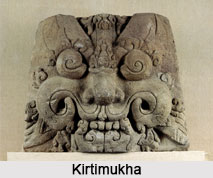
Kirtimukha
Kirtimukha is the name of a swallowing fierce monster face with huge fangs, and gaping mouth, quite common in the iconography of Indian and Southeast Asian temple architecture. The word "mukha" in Sanskrit language refers to the "face" while "kirti" means "fame", "glory". Kirtimukha has its origin in a legend from the Skanda Purana when Jalandhara, an all-devouring monster created from Shiva"s third eye willingly ate his body starting by its tail as per Lord Shiva`s order, who pleased with the result gave it the name face of glory.
Kirtimukha as a Motif
Kirtimukha is often used as a decorative motif surmounting the pinnacle of a temple or the image of a deity, especially in South Indian architecture. This face is sometimes assimilated to or confused with another sculptural element, the lion face. However, in order to be a Kirtimukha, it has to be engaged in swallowing, for the Kirtimukha is the figure of the "all consuming". This grotesque face with bulging eyes sits also as an embellishment over the lintel of the gate to the inner sanctum in many Hindu temples signifying the re-absorption that marks the entry into the temple. Mostly it is only a face, although in some places its arms are portrayed as well.
Musical Sculptures of South India
South Indian Temple sculpture has a unique feature which is known as the "musical sculptures". South India is well known for its temples and the rare and interesting stone sculptures of it. Most of these sculptures are found in mainly Tamil Nadu. These musical sculptures are made up of granite architectural elements such as stairways and pillars that produce resonant sounds or music when struck. Hence, these are called "musical sculptures". In a village named Kodumbalur, which lies 25 miles from the town of Pudukkottai in Tamil Nadu, one of the earliest extant examples of such a musical sculpture was recovered. This belongs to the early 10th century AD. This musical sculpture of South India is a grayish stone sculpture of a standing Goddess, probably Parvati, the spouse of Lord Shiva. 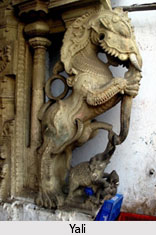
Saptamatrika Sculptures of South India
"Saptamatrika Sculptures" are the unique feature of South Indian temple architecture. "Saptamatrikas" are said to be the energies or shaktis of the deities of the Hindu pantheon like Lord Brahma, Lord Mahesvara, Lord Kumara, Lord Vishnu, Lord Varaha, Lord Indra and Lord Yama. The Saptamatrikas was a very important religious group in India, especially in South India. Hence, they were called Brahmani, Maheshvari, Kaumari, Vasishnavi, Varahi, Indrani and Chamunda. Some of the sculptures of Saptamatrikas can be seen adorned in the walls and some are seen in actual worship form. All these goddesses are sculpted according to the codes of the Agamas.
Animal Motifs in South Indian Sculpture
Another important feature in Dravidian concept is the South Indian Sculpture. The South Indian history has seen a lot of great kingdoms since its beginning, in the Sangam era to around 200 BC. Most of these rulers had contributed in making the art, architecture and sculpture of South India richer. The architects of both Hindu and Jain temples of South India had an innate desire to create animal and bird motifs in their architectural structures.
Depiction of Snakes and Elephants
Pallava Empire showed the depiction of snakes and elephants. One of the best examples of the Pallava Empire depicting the snakes and elephants is the sculpture representing the `Arjuna`s self-punishment` at Mamallapuram. All these motifs feature a very important design element of the architecture of Pallava Era.
Motif of Swan
There is a motif that was widely prevalent in Pallava Era was the motifs of swan. The motif of swan shows the "hamsa" or the swan that has the skill to extract milk from a mixture of milk and water. Swan acts as the symbol for the great sages, who are praised for their purity, who could distinguish the highest truth from worldly reality.
Yali
Yali is a motif in South Indian art and architecture. It has been widely used in south Indian sculpture. The descriptions of Yali and references to yalis are very old. But they became prominent in south Indian sculpture in the 16th century. Yalis are believed to be more powerful than the lion or tiger or the elephant.
Temple Sculpture of North India
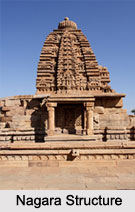 North Indian temple architecture produced all over northern India and as far south as Bijapur district in considered by its individual shikhara, a superstructure, tower, or spire above the Garbhagriha, a tiny shelter housing the main image or symbol of the temple goddesses.
The style is sometimes referred to as Nagara, a kind of temple mentioned in the Shilpa Shastras but correct association of the Shilpa Shastra terms with existing architecture has not yet been recognized.
Different Temple Sculptures of North India
The different types of temple sculptures of North India are as follows;
Nagara - Nagara is the manner of temple architecture which became popular in Northern India. Unlike in south India, North Indian temples do not generally have complicated boundary walls or gateways. Earliest temples of North India had simply one shikhara (tower), but in the later periods, numerous shikharas came. The garbhagriha is always located directly under the tallest tower.
Latina - Latina is the easy and most ordinary type of shikhara. Latina types are mostly used for lodging the garbhagriha. Later on, the Latina buildings grew compound and in its place of appearing like a single tower, the temple began to support many little towers, which were clustered jointly like rising ton type with the tallest one being in the middle.
Phamsana - Phamsana are broader and shorter than Latina form. Their roof is composed of some slabs that quietly rise to a single point over the centre of the building, unlike the Latina ones which look like roughly rising towers. Phamsana roofs do not bend inwards; in its place, they incline rising on a straight incline. In many north Indian temples, the phamsana type is used for mandapas while the chief garbhagriha is housed in a Latina construction.
Valabhi - Valabhi are rectangular buildings with a roof that rises into a vaulted hall. The border of the vaulted hall is round, like the bamboo or wooden wagons that would have been drawn by bullocks in very old times. The shape of this temple is influenced by very old building forms that were already in survival.
Temple Sculpture of Western India
 Temple Sculpture of Western India is still permeated with much of the vitality and sensuousness of Gupta times, with an appended element of baroque overstatement, while the actual material of the temple lends itself more sculptural treatment. Highly observational, diverse, prosperous and even flamboyant, sometimes scattered, the temple architecture and to a lesser amount, sculpture of the Gupta period is the most stirring in all Indian art and in western India it can be still be seen in comparative large quantity.
Features of Temple Sculpture of Western India
A number of interesting and normally tiny shrines in Saurashtra, in the southwest corner of Gujarat, may include the oldest surviving structures in western India-unless. They are predominantly bhiimiprasadas, somewhat pyramidal, with tiers of kapotas, exemplifying storeys and a baffling assortment of other components- in the corners, small square pavilions, normally in the southern form; alternate with amalakas and on certain occasions the superstructure is topped by a Dravida shikhara, Gavasakas, simple unembellished and of a size and audacity quite unknown at the time elsewhere in India, lend these temples a stark individualism, though the common effect of their plain walls, without recesses or expression and with trivial or no carving, is rather terrible. There were more conservative Nagara superstructure sanctums and halls are nearly enclosed by a single rectangular wall and the superstructures are more Dravidian compared to Nagara.
Different Temple Sculpture of Western India
The supreme temples in Western India, though, dated from the 10th century. Some of the noted temple sculptures of western India are as follows;
Ghatesvara Temple: The most significant of which is the Ghatesvara temple at Badoli. The effortless but beautiful Badoli temple consists of a chamber with a curved superstructure and an open hall with six pillars and two pilasters supporting a pyramidal spire. Only the mid projections of the chamber walls are decorated with positions containing monument.
Ambika Mata Temple: The Ambika Mata temple at Jagat, of the mid-10th century, is extremely fine. It consists of a chamber, a surrounded hall and walls covered entrance with projecting eaves. The walls of the chamber and the hall are covered with fine sculpture, the superstructures being of the curvilinear and pyramidal types.
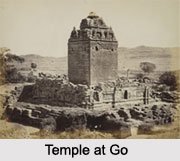
 Temple at Gop: The temple at Gop has three extensions on a side, incorporating recesses. A wall painting of garyas is another early western Chalukya feature. The entryway appears to have been unadorned. Its inimitable and exceedingly graceful superstructure, comprising two sloping rectilinear roofs superimposed, the lower bearing two tremendous gavasakas to a side, the upper one a single one, is the earliest instance of a phamsana roof. The slight sculptural ruins at Gop comprise images of Lord Vishnu and a Skanda, two door keepers, Rama and a seated woman in one of the gavasakas of the roof. The style suggests a late 6th century date and, as with some of the other temples, a link with the early western Chalukyas.
Shiva Temple: The Shiva temple at Kusuma, west of mount abu, known as the Ramachandraji, is still a work of enormous essence and exquisiteness. It has similarities with early western Chalukya temples of the 7th and 8th centuries comprise the central pillars with brackets supported by the protruding busts of youthful figurines. Nothing beats the excessive marble sculpturing developed by the Jains at their temples. The jain temples have large statues of their tirthankaras enshrined in the sanctum. Jain temple architecture is characterized by its profusion of sculpturing. The best examples are at Mount Abu and Ranakpur. Ranakpur consists of a fortified complex of temples that arose in Mewar. The temple of Adinath is characterized by its excess sculpture.
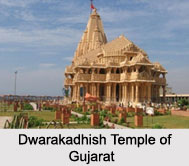
Dwarakadhish Temple: Dwarakadhis Temple of Gujarat is dedicated to Lord Krishna. It consists of sixty carved pillars and a number of sculptures that depict the influence of various dynasties such as the Guptas, Pallavas and Chavdas (referring to Chavda Kingdom) that ruled Dwarka over the years. The Sun Temple, Modhera, Gujarat is dedicated to Sun God that was built during the rule of Solanki dynasty. This temple is also known for its erotic sculptures. Hinduism, Buddhism and Jainism have presented erotic motifs in their art. Intimate scenes have been displayed, at the exterior walls of the main temple itself.
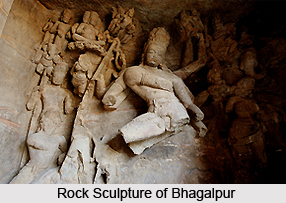
Kailasanathar Temple: The Kailasanathar Temple is located in Maharashtra and the structure seems to belong to the Pallava kingdom. The arcades have huge sculpted panels and alcoves containing enormous sculptures of several deities. Lower stories of the Nandi Mandap are solid structures, decorated with elaborate illustrative carvings. The grand sculpture of Ravana who is shown trying to lift Mount Kailasa is remarkable.
Rankadevi Temple: The Rankadevi temple at Wadhwan of the early 10th century is also described by plain walls and a pyramidal spire, while the Shiva temple at Kerakot has a combined spire and also a mandapa.
The Rudramala at Siddhapur, the most wonderful Gujarati temple of the 12th century, is now in a much ruined condition, with only the torana (gateway) and some contributory structures outstanding. The temples at Kiradu in Rajasthan, dating from the 10th and 11th centuries, show a progress towards rising embellishment and decoration.
Temple Sculpture of East India
 Temple sculpture of East India had created a unique sculpture in stone and metal. The selection of bronze as a standard for sculpture was put chiefly in eastern India, Kashmir and Nepal. Early use of paintings as a figure began in eastern India, Gujarat, Rajasthan and Nepal. East Indian temples found in the North-East, Bengal and Odisha and each of these three areas created a different kind of temple.
A large number of sculptures have been found in Assam and West Bengal, which demonstrates the expansion of significant provincial schools in those regions.
Different Temples Sculptures of East India
Huge variety, intricate and explicit carvings and charming patterns and structures are the most alluring features of these sculptures. Sculpture of Eastern India holds immense historical as well as cultural significance. Different features and works of Temple"s sculptures of East India are as follows:
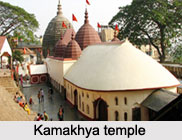
Assam: Kamakhya temple, a Shakti peeth is contributed to goddess Kamakhya and was built in the 17th century. The approach came with the immigration of the Tais from upper Burma mixed with the central Pala style of Bengal and led to the formation of what was later known as the Ahom style in and around Guwahati. The post-Gupta technique persisted in the region well in the 10th. An aged 6th century sculpted door frame from DaParvatia near Tezpur and one more few wandering sculptures from Rangagora Tea Estate near Tinsukia in Assam witnessed to the introduce of the Gupta idiom in that region. Devi Dol Temple at Gaurisagar near Golaghat is a temple dedicated to Devi with interesting architectural and sculptural features. Sib Dol Temple at Shibsagar has numerous walls and pillars within the temple are sculptured with the figures and images of Hindu Gods and Goddess. Hayagriva Mahadeva Temple at Hajo near Guwahati has interesting sculptural work. Madan Kamdev temple also deserves a mention here.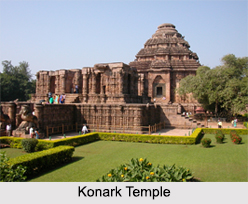
West Bengal: West Bengal is known for its terracotta sculpture. Temple sculpture in West Bengal has been influenced by Pala and Sena dynasty rulers. Bishnupur has several temples where one can see the exquisite sculpture of scenes and illustrations of current events and trends on the walls, the panels and sculptured pillars are some of the remarkable features of these temples. Various stories of the Puranas and phases of Krishna Lila have been reproduced on the walls. Other notable temples of sculpture are Gokul Chand temple, Hanseswari temple, Madanmohan Temple and Krishna Chandra Mandir.
Bihar: Bihar is known for Mahabodhi temple dedicated to Lord Buddha. The Chaubishi Jian temple of Patna is also known for its sculpture. Numerous temples in Nalanda and Rajgir have been ravished by time. Aranya devi and Badi Patan devi temples have minimal sculptures.
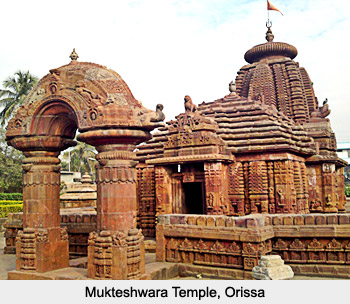
Odisha: Temples of Odisha are known for beautiful and explicit erotic sculptures. For example sculptures of Konark temple. Many of the sculptural scenes are taken from religious mythology and legends; many represent military and courtly life; many represent activities which would have been associated with the temple. Other heavily sculptured temples include Lingaraja temple, Mukteswara temple, Svarnajaleswar Temple, Yameswar Temple near Khandagiri, Bhaskareswar Temple in Megeswar, Leaning Temple Huma near Sambalpur, Sarankul Temple, Simhanath Temple in Cuttack District, Jagannath Temple in Deogaon, Biraja temple in Jajpur district, Laxminarayan Temple in Therubali, Sureswar and Gouri Temple in Bhubaneshwar and several others. Jagannatha temple of Puri is a part of Char Dham and is celebrated for its yearly Ratha Yatra or Chariot festival.
Central Indian Temple Sculpture
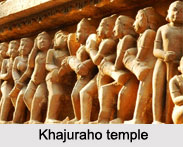 Central Indian temple sculpture has been primarily created out of stone. Some of the most beautiful pieces of sculpture are to be found engraved on stone. Whether it is the innovative rock sculpture or the massive temples, the central Indian sculptures stand out for their intricate designs and awe inspiring craftsmanship. The sculptures of the central Indian temples belong to the ancient era. Hence a lot of historical significance is also attached to these shrines.
Different Central Indian Temple Sculptures
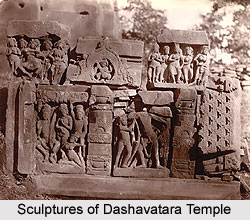
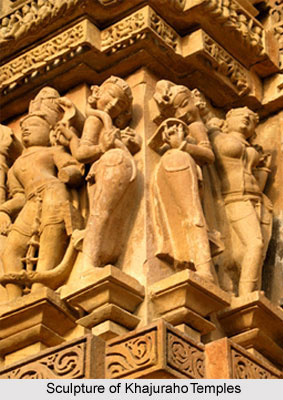
The early on temples were diffident looking shrines each have 4 pillars that hold up a small mandapa before an similarly small room that served as Garbhagriha. The antique temple of Uttar Pradesh, Madhya Pradesh and Rajasthan share many qualities and the most noticeable is that they are made of Sandstone. The major highlight of the central Indian temple sculpture is the Khajuraho temples and Dashavatara Vishnu Temple. The sculptors have breathed life into the listless stones. The sculptures, whether erotic or religious, are perfect in shape and form. Though these sculptures are often termed erotic, the aestheticism in them remains undeniable. These temples were constructed between 10th or 11th centuries. Besides this the Deogarh Temple in Gwalior has been built following the style of Gupta architecture. The Khajuraho temples were patronized by Chandela kings. The temples at Khajuraho are all made of Sandstone. Every the towers or shikhara of the temple rise towering, growing in a curved pyramidal style, emphasizing the temple"s straight up push ending in a horizontal fluted disc called an Amalaka topped with a Kalasha or a vase.
Hindu Temple Sculpture
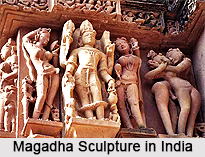
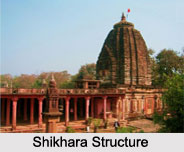 Hindu temple sculpture was evolved with the rise of the Magadha Empire in India. Till then it was nature worship and Buddhism dominated the sub-continent. The rise of Magadha dynasty led to an absolute change in the religious architecture and sculpture. Some of the most exquisite sculptures were created during the Mauryan and Sunga eras. Stone sculptures decorate the interiors and the exteriors of the sophisticated temples; later temples are completely covered with sculpture. Each piece of temple sculpture has a precise iconographic meaning and plays a role in identifying and celebrating the principal deity housed in the temple as well as in symbolizing the Hindu cosmos.
Famous Hindu Temple Sculpture
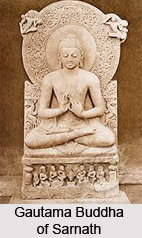
The Gupta Empire encouraged a cultural florescence. Sculpture produced throughout the Gupta Empire has a relatively uniform "classic" style. It spread through much of India and along with the trade routes to influence the art of the countries of South and Southeast Asia. The Gupta style also greatly influenced the art of north Indian kingdoms for centuries after the end of the Gupta dynasty. There were two main artistic centres for sculpture production: Sarnath produced images with clinging material while Mathura created images with patterns of string folds in the material.
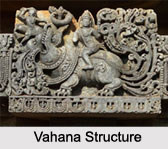 Most of the sculptures and monuments in south India dated from the 7th through the 9th centuries. They are associated with important dynasties: the Pallavas and the Pandyas, both of them were Hindus. The creative brilliance of South India also came to the forefront with the construction of the temples. The sculpture of Brihadisvara Temple, Hampi and the sculpture of Mukteshvara temple are some of the finest specimens of Hindu temple sculpture. In fact throughout numerous Hindu places of worship were carved out. But primarily these temples were modelled upon the two key schools of Hindu temple architecture and sculptures.
Chola rulers also constructed enormous stone temple complexes decorated inside and out with painted and sculpted representations of the Hindu gods. While the stone sculptures and the inner sanctum image empowered the temple. The main motifs that formed the part of the Hindu temple sculptures included episodes from Ramayana, Mahabharata and the Puranas. Popular beliefs, legends, court scenes, animal and plant motifs, kirtimukhas, gods and goddesses and eroticism are widely found engraved on the walls of the Hindu temples.
In the original temples, the construction was a small cubical structure with a single doorway.
Afterwards it grew into a larger compound. Mandapa is the doorway to the temple. Dances and such other amusements are practiced here. A number of temples have numerous mandapas in different sizes named as Ardhamandapa, Mandapa and Mahamandapa. Shikhara or Vimanam are the ton like the spire of a free-standing temple. Shikhara is found in North Indian temples and Vimanam is found in South Indian temples. Shikhara has a curve outline whereas vimanam has a pyramidal-like construction. Amalaka is a stone round like construction at the peak of the temple and they are ordinary in North Indian temples. Kalasha is the highest point of the temple and usually seen in North Indian temples. Antarala is an evolution region between the Garbhagriha and the temple"s main passage (mandapa). Jagati is a raised platform for sitting and praying and is common in North Indian temples. Vahana is the go up or vehicle of the temple"s main goddess along with a standard pillar or Dhvaj which is placed axially before the workroom. The position of an image in a temple is cautiously planned: for example, river goddesses (Ganga and Yamuna) are visually found at the entrances in a Nagara temple, Dwarapalas are regularly found on the entry or gopurams of Dravida temples, likewise mithunas (erotic images), navagrahas ( the 9 auspicious planets) and Yakshas are also placed at the entrances to guard them.
Nagara is the style of temple building which became trendy in Northern India. Earliest temples had only one shikhara (tower), but in the afterwards periods, numerous shikharas came. Latina is the easy and most ordinary type of shikhara. Latina types are mostly used for lodging the garbhagriha. Later on, the Latina buildings grew compound and in its place of appearing like a single tower, the temple began to support many little towers, which were clustered jointly like rising ton type with the tallest one being in the middle. Phamsana are broader and shorter than Latina form. Their roof is composed of some slabs that quietly rise to a single point over the centre of the building, unlike the Latina ones which look like roughly rising towers. Phamsana roofs do not bend inwards; in its place, they incline rising on a straight incline. In many north Indian temples, the phamsana type is used for mandapas while the chief garbhagriha is housed in a Latina construction. Valabhi are rectangular buildings with a roof that rises into a vaulted hall. The border of the vaulted hall is round, like the bamboo or wooden wagons that would have been drawn by bullocks in very old times. The shape of this temple is influenced by very old building forms that were already in survival.
Terracotta was the major medium of building of North-East, Bengal, and Odisha temples. Most of the antique temples are located in earliest Kalinga - current Puri district, including Bhuvaneswar or ancient Tribhuvaneswar, Puri, and Konark.
Indian Cave Temple Sculpture
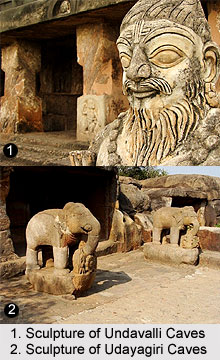 Indian cave temple sculpture evolved in India in the 2nd century BC and continued till the 7th century AD. It was actually with the arrival of Buddhism that the cave sculptures emerged in India. The monolithic rocks were actually carved out and given the form of cave temples. The earliest caves constructed were the Kanheri Caves, Maharashtra. The sculpture of Kanheri Caves includes beautiful reliefs.
Another remarkable instance of Indian cave temple sculpture can be found in the Ajanta caves. There are numerous cave temples that are scattered throughout India and reflect the splendour and the artistic brilliance of the sub continent. These are:
| Sculpture of Undavalli Caves, Andhra Pradesh | Sculpture of Kaviyoor Caves, Kerala | Sculpture of Karla Caves, Maharashtra | Sculpture of Patal Bhuvaneshwar Cave, Uttarakhand |
| Sculpture of Lomasrishi Caves, Bihar | Sculpture of Edakkal Caves, Kerala | Sculpture of Kailash Caves, Maharashtra | Sculpture of Bhaja Caves,Maharashtra |
| Sculpture of Sudama Caves, Bihar | Sculpture of Bagh Caves, Madhya Pradesh | Sculpture of Pandavleni Caves, Maharashtra | Sculpture of Mandapeshwar Caves, Maharashtra |
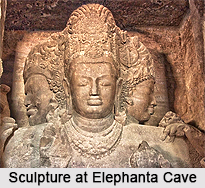
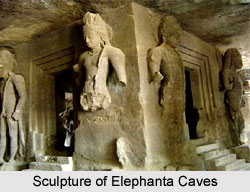
| Sculpture of Udaygiri and Khandagiri Caves, Orissa | Sculpture at Elephanta Caves, Maharashtra | Sculpture of Pataleshwar Cave Temple, Maharashtra | Sculpture of Gavi Gangadhareshwara Cave, Karnataka |
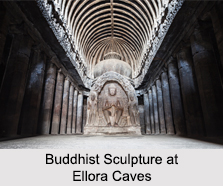
| Sculpture of Aihole Caves, Karnataka | Sculpture at Ellora Caves, Maharashtra | Sculpture of Narthamalai Cave, Tamil Nadu | Sculpture of Bedse Caves, Maharashtra |
| Sculpture of Badami Caves, Karnataka | Sculpture of Jogeshwari Caves, Maharashtra | Sculpture of Varaha Cave Temple, Tamil Nadu | Sculpture of Mahakali Caves, Maharashtra |
Some of the prominent cave sculptures are:
Undavalli caves: These caves are carved out of solid sandstone on a hillside in the 4th to 5th centuries A.D. The largest cave one has four stories with a huge statue of Lord Vishnu in a reclining posture. It has been sculpted from a single block of granite. These are the earliest examples of Gupta architecture.
Udayagiri Caves: Several sculptures are found in Caves 1, 3, 4, 5, 6 and 13. In cave 3 there is a rock-cut image of Karttikeya. The broad square face is typical resembles the fifth-century style of figural sculpture. Cave 4 has a spectacular Shiva linga. Cave 5, Vishnu as Varaha showing the earth goddess carried on the god`s tusk
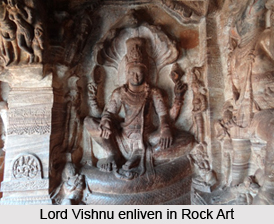
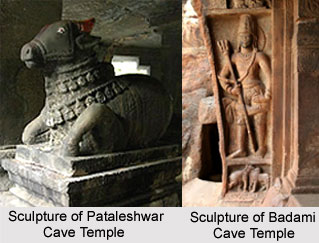 Badami cave temples: The first cave has an 18-armed Lord Nataraja that comprises a series of arches. The second cave is situated on a sandstone hill. It is dedicated to lord Vishnu who is portrayed here as a dwarf or `Trivikrama` of awesome proportions with one foot getting command over the earth and the other the sky. The other attractive features of this cave are the depictions of Lord Vishnu with a serpent, Vishnu as Narasimha (Vishnu as Man-Lion), Varaha, Harihara (Shiva, Vishnu) and Vishnu as Trivikrama. The wonderful artistry and sculptural brilliance makes this cave a masterpiece of Deccan art. It provides a detailed portrayal of the art and culture of the 6th century, specially costumes, jewelry, hairstyle, lifestyle and the like. All the three caves so far mentioned are Hindu caves. The fourth cave is the only Jain cave whose construction started in the 6th century and was completed nearly 100 years later than the earlier three caves. Here one can see the carvings of the 24th Tirthankara Parshavnatha with a serpent at his feet as well as Mahavira in a sitting position.
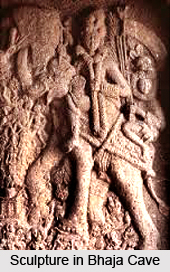
Karla caves: The caves at Karle and Bhaja illustrate the Buddhist art. The last cave to the south has excellent sculptures including that of the famous `Dancing Couple`. Bhaja Caves are famous for the cave sculptures. The sculptures of this place depict Lord Buddha. The caves are carved on the black rock that lies on a flat terrace, several hundred feet above the base of hill. Inside the cave, there are the three doorways & panels of figures comprising six couples, presumed to have been the wealthy patrons of the hall. Two rows of octagonal columns with pot-shaped bases seem to divide the interior part of cave into three.