 Natya Manorama is a famous treatise on Odissi Dance. It contains all the technical details of dance and music belonging to the land of Orissa. In the treatise the author has made profuse use of `Anka` or the year of the reign of the then king of Orissa. He has also referred to some famous artists of Orissa such as Ray Ramananda, Hari Nayak the author of Sangeeta Sara, Krishna Das, the author of Geeta Prakasha and Purusottam Misra, a learned musician and poet. The author has described his text as Sangeetarnava Chandrika, which he had completed earlier. The text of Natya Manorama may, therefore, be considered to be a compendium of his earlier work, either in respect of some portions dealing in detail with the topics discussed or of the whole work.
The text is divided into five chapters. The first chapter defines various technical terms of music. The second chapter is devoted to Raagas and their Lakshanas. This chapter starts from the Sloka about Raagas. He writes that the Raagas described by Bharata are vast in number. 16000 Raagas have been mentioned. Out of these Raagas only 36 female Raaginis and 6 male Raagas were prevalent in those days. Malava, Malhar, Sriraga, Basant, Hindola and Karnata are male Raagas. But Bhairava is not included in male Raaga list. Bairagi is a modern name. But in this treatise the author says that Bairagi is a female Raaga of Sriraga.
This author has taken most of the Slokas from Panchamsara Samhita of Narada. Sloka numbers 5, 16 and 17 are taken from Sangeet Makaranda. The description of Raaga Bhairavi is different. Raaga Belavali, Kedarika, Koda and Madhavi are not found in the Panchamasara Samhita. The singing time of Raagas and Raaginis are given. For the first time, the author has described the Raasas according to the hour of the day. The author has mentioned the two varieties of Geeta, Nibaddha and Anibaddha. Nibaddha Gana has three kinds, Shudha, Chayalaga and Kshudra Geeta. Anibaddha is of two types: Ragalapti Androopakalapti. Nibaddha has six Angas. The first is Gamaka. The author has described four Dhatus. He has also mentioned six Angas giving different names to them compared to the works of other authors of the time. Gamaka is the first Anga. The author says that Prabandhas are of many types. His Prabandhas vary from those of others according to their use of Dhatu and Matus. The Prabandhas are of three types: Divya, Manushi and Divya Manushi. The language of Divya Prabandha is Sanskrit and accompanies Marga Tala. Manushi Prabandha`s language is Prakrita and Tala is Desi. The character of Divya Manushi Prabandha is mixed in nature. The language is the combination of both Sanskrit and Prakrita. Talas used are both Margi and Desi Tala. Kayvalya, Talarnava, Snihaleela and Sudha Prabandhas are mentioned and their Lakshanas are described. Different numbers of Talas are used in different Prabandhas.
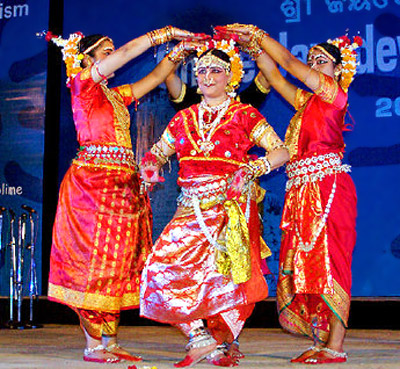
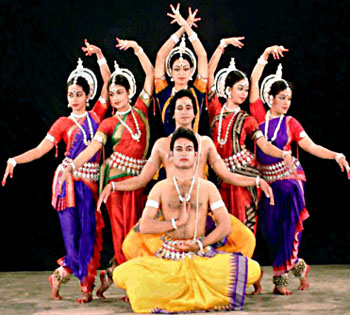
Out of the five chapters the third and the fifth chapters are devoted to Odissi dance. He has given the description of some regional folk dance forms. In the third chapter the author quotes from a number of Oriya devotional songs. The work contains many verses composed by Narapati.
Even today the manuscript of Natya Manorama has been preserved in the Orissa State Museum.