
Parsi language was the language of the Parsa people who used to rule Iran from 550 to 330 BCE. Scholars also say that Parsi language belongs to the Indo-Iranian languages. Parsi became the language of the Persian Empire and was also spoken in the ancient days ranging from the borders of India in the east, the southern shores of the Persian Gulf, Russian in the north, Egypt and the Mediterranean in the west.
Parsi was also the court language of several Indian kings until the British banned the use of the language, after capturing India in the eighteenth century. The Indian Mogul kings had made Persian their court language. One can still find the engravings filled with Gold on the walls of the Red Fort in Delhi, which reads; `Agar Ferdows dar jahan ast hamin ast o hamin ast o hamin ast`. The meaning of this sentence is that, if there is a paradise on the earth then it is here it is here it is here.
Parsis migrated to a different world to preserve their religion. Their experience is similar to the dilemma what other minority communities face; questions with regard to their race, religion, customs, language, their extinction and survival, identity and assimilation, tradition and the modern world. When oppresses in their homeland, the Parsis took refuge in India many centuries ago. Staying firm as far as their identity is concerned; they have suitably prospered themselves and also contributed to the polity, economy and civic society of India. It is proved that the Parsi community is the model community in India by providing valuable contribution to the rich religious, social and cultural diversities in India. They came to India in the eighth century, landed in Diu, and afterwards provided shelter in Sanjan (Gujarat) by Jadhav (Jadi) Rana, the local Hindu King. With the advancing years, the Parsis have conveniently adopted the language, customs and the mode of living of the people of Gujarat. Thus, the Gujarati language became the native language of the Parsis living in India and sari, the garment worn by Parsi women. When the British arrived in India and the city of Mumbai was renovated, the Parsis shifted their base from the cities and villages of Gujarat to Mumbai.
Parsi Language In India
Parsi Language in India primarily reflects the influence of Gujarati although their original language is Persian.
Recently updated articles in Religion in India
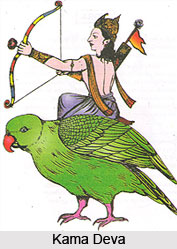
Kusumayudha
Kusumayudha is a name of Kamadeva, the Hindu God of Love. Depicted with a sugarcane bow and flower-tipped arrows, he represents attraction and longing...
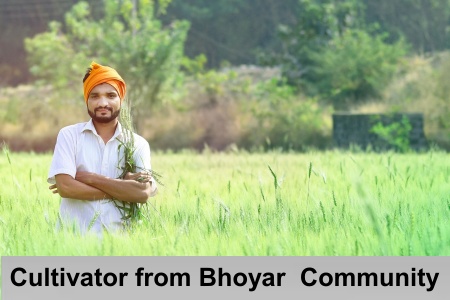
Bhoyar Caste
Bhoyar Caste is largely found in the Central Provinces of the country. Traditional occupation of Bhoyars is agriculture. They are good cultivators and...
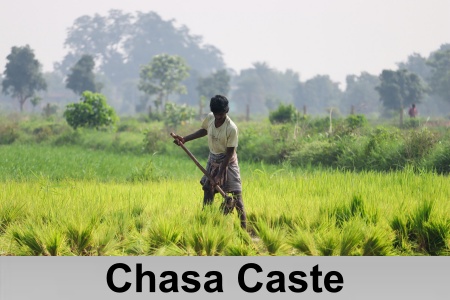
Chasa Caste
Chasa caste is a prominent agrarian community native to Odisha. Traditionally associated with cultivation and farming, Chasas have historically played...
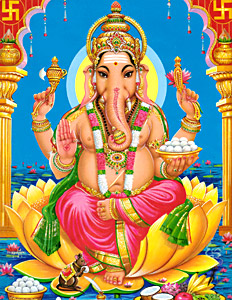
Vigneswara, A Form of Lord Ganesha
Lord Vigneswara is another form of Lord Ganesha or Vinayaka, prominently worshipped as the God of intelligence and good luck in the Indian subcontinen...

Maheswara
Maheswara, meaning “the Great Lord,” is a revered name of Lord Shiva in Hindu tradition. It represents Shiva’s supreme authority over creation, preser...
Related articles in Religion in India
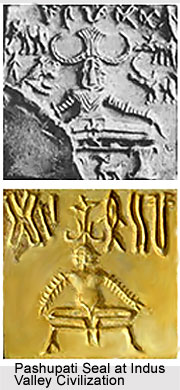
Religion in Indus Valley Civilization
Religion in Indus Valley Civilisation included Hinduism, Buddhism and Jainism. Details about the religion in Indus Valley Civilization have been gathe...

Iyer Brahmin
Iyer Brahmins are originally from Tamil Nadu of South India. They are known for their adherence to Advaita philosophy and Smarta traditions. Tradition...
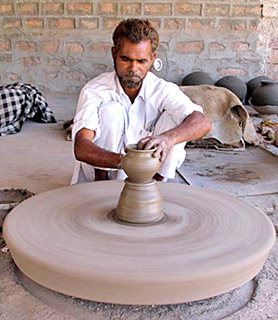
Kumbhakar / Kumhar Caste
Kumbhakar or Kumhar caste is a traditional artisan community in India known for pottery making. Derived from Sanskrit word Kumbhakar, meaning potter,...

Gujjars in Mughal Era
Gujjars in the Mughal era enjoyed great power. Further their power increased with the decline of Aurangzeb, Mughal emperor.
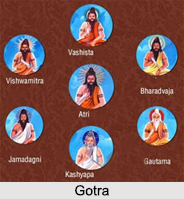
Gotra in Hinduism
In Hinduism, gotra refers to a lineage system tracing descent from ancient sages, primarily through the paternal line. Originating from Vedic traditio...