 Indian natural history relates to the records about different flora and fauna of India. It is a part of the heritage of India. India is the seventh largest country in the world and has quite a rich history and tradition, including valuable notes on Indian natural history. Dating back to the Vedic era, the Indian natural history can be restricted to the broad fields of paleontology, zoology and botany. The Vedas have some of the most ancient historical records about Indian natural history. The medical treatises of Charaka and Sushruta also have records about Indian natural history. A 2000 year old text namely, Gajashastra gives a vivid description about the capture, training and maintenance of elephants, during that time. The Tamil literature of the Sangam period depicts a classification of lands into 5 eco-types that range from the littoral to wet paddy fields.
Indian Natural History during Indus Valley Civilization
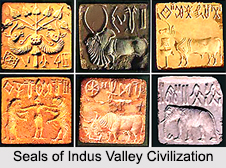
Indian natural history can be comprehended from the study of Indus Valley Civilization. The civilization was in existence before 1700 B.C. and it was spread across north western India. More than a thousand sites of the Indus Valley Civilization have been studied. During the study, several animal bones were found and one-fifth of these comprised bones of wild fauna like the jackal, hare, chital, rhinoceros and elephant. Several seeds of wild plants were also found in the abodes of some western Indian sites. The seeds are known to be extinct in the region. The flora and fauna of the period are nicely portrayed in the clay pottery and tablets excavated from those sites. The clay tablets document many species of extinct wildlife. A tiger seal dating back to 3000 B.C. was found in Harappa, an important city of Indus Valley Civilization.
Indian Natural History during Mauryan Period
Indian natural history during the Mauryan period relates to the efforts taken by the emperors of the Maurya dynasty to protect animals. The Mauryan period is considered to be one of the most significant periods in Indian natural history. The Maurya dynasty ruled India during the fourth and the third centuries B.C. and it was the first dynasty to provide a unified political entity to India. The Mauryas firstly looked at forests as a resource and they considered the elephants as the most important forest animal. This is because the military power in those times depended not only upon horses and men but also upon battle-elephants. The Mauryas aimed to preserve the supplies of elephants as it was more cost and time-effective to catch, tame and train wild elephants, than raising them. The Mauryas maintained separate forests to protect supplies of timber and animals like lions and tigers for their skin. They had appointed protector of animals, who worked to eliminate thieves, tigers and other predators to render the woods safe for the grazing of cattle. Kautilya`s renowned book namely, Arthashastra unambiguously specifies the responsibilities of officials like the protector of the elephant forests. The Mauryas also valued certain forest tracts in strategic or economic terms and instituted control measures over them. Though the Mauryas could not trust the forest tribes, some of the tribes were still employed by them. These tribes were the food-gatherers or aranyaca, who functioned to guard the borders and trap animals.
One of the greatest Mauryan emperors namely, Ashoka (304 - 232 BC) provided great protection to fauna and even relinquished the royal hunt. He was perhaps the first ruler in the Indian natural history to advocate wildlife conservation measures and had rules inscribed on stone edicts to protect animals. The edicts proclaim that many followed the king`s example in giving up the slaughter of animals. Other emperors of that time also made rules to penalize the deer poachers.
Indian Natural History during Chalukya Period
The Chalukyas were the twelfth century rulers of the Deccan. The Sanskrit treatise namely, Manasollasa belonging to the Chalukya period is considered to be the best treatise on hunting in the entire Indian natural history.
Indian Natural History during Mughal Period
Indian natural history during the Mughal period relates to the efforts taken by the emperors to protect animals. As the emperors used to lead a leisurely life and had gardens with private zoos, they unknowingly contributed to the already rich natural history of India.
Indian Natural History during British Rule
During the colonial era, Indian natural history witnessed a colossal change and the British East India Company contributed a lot to it. After assuming ruling position in India, the East India Company and the British rulers took initiative to preserve the Indian flora and fauna. They are credited with the establishment of the first museum in India, which helped one to learn about Indian natural history. The collections of the museum grew rapidly with the course of time. The British era in the Indian natural history brought some of the rare species of flora in India. During the British period, the Indian Civil Service drew several British naturalists to India. Some of them collected species on behalf of British and European museums, while others carried out studies entirely on their own. All of them enriched the Indian natural history with their own contributions. The earliest effort to document the Indian fauna was perhaps that of Thomas Hardwicke (1755 - 1835). He was a military officer in India and he hired local artists to produce a huge collection of illustrations on Indian animals. John Edward Gray (1800 - 1875) followed his work and this subsequently led to the publication of `Illustrations of Indian Zoology`. This publication was mainly selected from the collection of Major-General Hardwicke and consisted of 202 color plates. In 1883, a large number of naturalists having an interest in sharing observations founded the Bombay Natural History Society. It was indeed another milestone in the Indian natural history.
Modern Indian Natural History
Although the growth of modern Indian natural history can be attributed to British colonialism, several Indian naturalists are also known to make contributions to it. The most notable naturalists are the famous ornithologists, Salim Ali and his cousin, Humayun Abdulali, who worked with the Bombay Natural History Society. Salim Ali produced the most comprehensive handbook of Indian ornithology, while working with American collaborators like Sidney Dillon Ripley and Walter Norman Koelz. Apart from them, the Zoological Survey of India is also known to conduct surveys related to Indian natural history. The Indian natural history after Independence received great contributions from several naturalists. These naturalists included entomologists like M. S. Mani and B. K. Tikader; ichthyologists like Sunderlal Hora, C. V. Kulkarni and S. B. Setna; herpetologists like C. R. Narayan Rao; etc. Some of the eminent scientists from other disciplines like J. B. S. Haldane have also contributed to the study of Indian natural history.