
Serfoji I, born in the year 1675, is also known as Sarabhoji I. He was the son of the Maratha ruler of Thanjavur Ekoji I and the Raja of Thanjavur from the year 1712 to 1728. Serfoji I was the third Raja of the Bhonsle dynasty. He was a ruler who patronised literature and arts and also consolidated the hold of Marathas over Thanjavur.
The Marava War of Succession
In the year 1720, a war of succession broke out in the Marava Kingdom. With the death of Vijaya Raghunatha, the adopted son of Raja Kilavan, a war of succession broke out between two other sons of Kilavan namely Bhavani Shankar and Tanda Teva. It was seen that Serfoji I supported the cause of Bhavani Shankar and placed him on the throne. But the promise to cede all lands north of the Pambar River to Thanjavur was not fulfilled by Bhavani Shankar. As a result Thanjavur switched sides and began to support another pretender. The army of Marava suffered a huge defeat at the hands of Serfoji I. Thereafter, the country was conquered by Serfoji I and Bhavani Shankar was deposed. Thus the country was divided into three parts: one part was annexed by Thanjavur while the Zamindaris of Sivaganga and Ramnad were created out of the other two.
Literature During Rule of Serfoji I
The entire rule of Serfoji I was popular for the literary works of immense significance. A Tamil manuscript in the Tanjore library, Advaita Kirtana, speaks of a breach in the Cauvery dam and refusal of the Madurai Nayak to allow this repair. Famine and drought followed and thereafter the much needed repair works were carried on. There is actually a Sanskrit Language manuscript called Sarabhoji Charitra that praises the king for fighting with those who came to cut off the Cauvery dam. The reference here has to be traced to the happening in the Marava war of succession.
Serfoji I is often presented as a moral, dutiful and charitable monarch. He endowed Brahmanas with Agraharams like Mangamatam in Tiruverkadu and Sarabhojirajapuram in Tirukkadaiyur. Vidyaparinaya written by Vedakavi was enacted in the festival of the Goddess Anandavalli in Thanjavur. It speaks of the marriage of the individual soul with Vidya. Sarabharaja Vilasa and Ratinamanmatha were written by Jagannatha son of a minister of Ekoji. Sivabharata, a Sanskrit manuscript deals with the ancestry and achievements of Shivaji. It was translated into Tamil language as Sivajicharitram.
Succession of Serfoji I
Serfoji I did not have a legitimate male offspring of his own. However, after his death, a claimant rose in the person of Katturaja who assumed the name Shahuji II and claimed to be an illegitimate offspring of Serfoji II.
Death of Serfoji I
In the year 1728 as Serfoji I died, one of his queens performed Sati. Thereafter, he was succeeded by his younger brother Tukkoji
Serfoji I
Serfoji I is a Maratha ruler who helped to improve his kingdom through enhancement of literature and society.
Recently updated articles in History of India
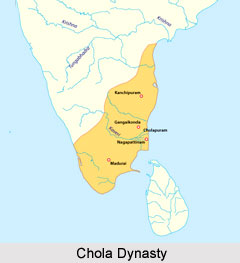
Chola Dynasty
Chola Dynasty is a Tamil dynasty and had longest duration of ruling in parts of South India. Chola dynasty had ruled South India successfully for a ex...
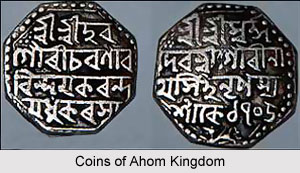
Suhungmung
Suhungmung was the fourteenth ruler of the Ahom dynasty who ruled from the period 1497 to 1539 AD. His reign was significant in terms of expansion of...
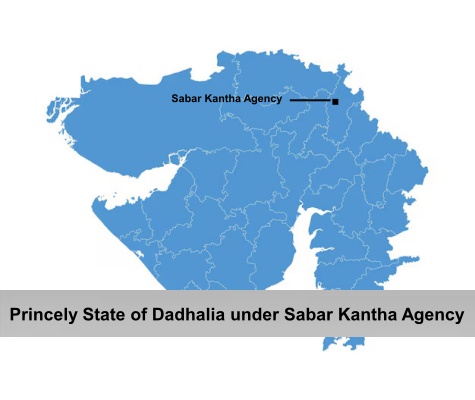
Princely State of Dadhalia
Princely State of Dadhalia was located in the present state of Gujarat. The state covered a total area of 28 sq miles and comprised of 15 villages. Th...
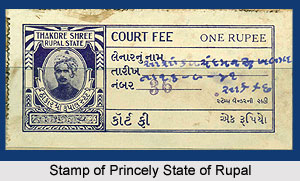
Princely State of Rupal
Princely State of Rupal was a part of the Baroda Agency, a sub division of Western India States Agency. It was under the administrative control of the...
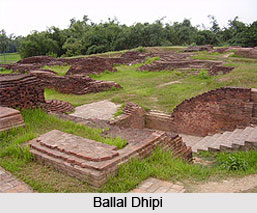
Archaeological Sites of West Bengal
Archaeological sites of West Bengal reveal several aspects of ancient India. Excavations by the Archaeological Survey of India have furnished artefact...
Related articles in History of India
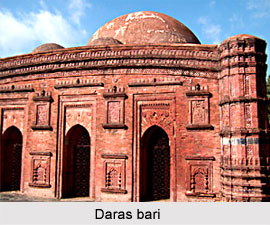
Mughal Architecture during Babur
Mughal architecture during Babur marked the foundation of a new architectural era in India, blending Timurid, Persian, and local influences. His reign...
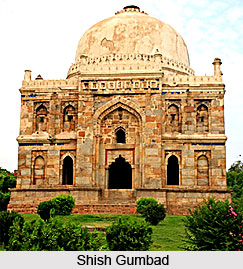
Architecture during Sayyid and Lodi Dynasty
Architectures during the Sayyid and Lodi dynasty were mainly the tombs and monuments for the dead rulers. It were carefully designed and meticulously...
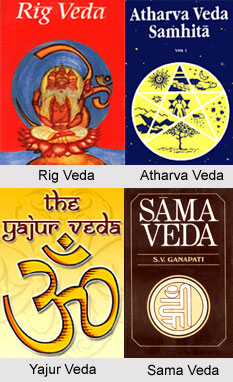
Brahmanical Sources of Ancient History
Brahmanical Sources of ancient history are contained in the Vedas and they constitute one of the most important literary sources of information about...
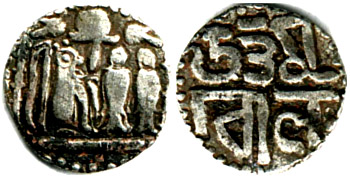
Coins of Chola Empire
Coins of Chola Empire were issued in gold, silver and copper and carried the Chola emblem.
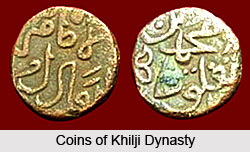
Coins of Khilji Dynasty
Coins of Khilji Dynasty had an influential feature that was followed by the other dynasties.