
Balaji Vishwanath had distributed the royal land of the Maratha Confederacy among the chief Maratha nobles for properly securing the "Chauth" and "Sardeshmukh" from the affixed areas.
Baji Rao the promising young son of Peshwa Balaji Vishwanath, embraced the responsibility of his father after his death in 1720. He was invested with the quality of prudence, besides being a steady warrior. Accurately sensing the imminent decline of the Mughal Empire, he charted out the useful strategy to spread the wings of Maratha confederacy. His was a plan of befriending with the Hindu powers. He led Shahu to proceed beyond Narmada region, the very nerve-centre of Mughal imperialism, to plant the flag of Maratha imperialism from the Krishna to the Indus.
Baji Rao`s was a plan of befriending with the Hindu powers. He politically manipulated the Hindu sentiments by propagating the ideal of "Hindu- Pad-Padshahi" or a Hindu empire. Naturally, when he exerted the policy of expansion over Malwa in 1723, he was very much co-operated by the Hindu zamindars.
The occupation of Gujarat happened smoothly. But the interference of Baj Rao in the internal matters of Gujrat spoiled the game. The " Senapati" or commander-in-chief of the dissenting Maratha band , named Trimak Rao Dhabade voiced his disgust. Raja Shambhuji of the Kolhapur section of Shivaji`s family and the Nizam-ul-mulk, envious of the Maratha victories rallied with Trimbak Rao Dhabade , against the Maratha Confederacy under the Peshwa Baji Rao. Baji Rao annihilated their wrongdoings. In the combat held on the plains of Bilhapur, on 1st April, 1731, Trimbak was assassinated.
Baji Rao was lucky enough to join hands with the arms of cordiality extended, by the Sawai of Amber,Jay Singh and Chhatrasal Bundela. This guranteed the Marathas a betterment in their political position .
The tour to close of Delhi alerted the Mughal Emperor, who now thought of curbing this problem by beckoning the Nizam-ul-mulk for indispensable help. It is necessary to mention that the contract between the Peshwa and the Nizam in 1731`s August , ensured that the retention of freedom in their course of political plans. If the south interested the Nizam, then the extension to the north would be the monopoly of the Peshwa.But the Nizam, awaiting the scope for avenge , betrayed the Peshwa. In the fight that followed, the Nizam was squashed . And Malwa became a Maratha colony, while the domain between Narmada and Chambal was converted into a subordinate state.
Salsette and Bassein on the west coast, were pocketed from the clutches of the Portugese in 1739. The news of foreign invasion by Nadir Shah, instigated the wise Peshwa to come into amiable terms with the Islamic powers. He perceived that a joint opposition always yielded greater fortitude.However, before he faced Nadir Shah , he died in April 1740. He bequeathed rewards to the devoted servicemen of his period. For instance, Ranoji Sindhia , the founder of the Sindhia House in Gwalior was gifted a substantial share of the state of Malwa.While Malhar Rao Holkar of Indore, got another portion of Malwa.
Baji Rao
Baji Rao, the promising young son of Peshwa Balaji Vishwanath, was instrumental in the spread of the Maratha Kingdom.
Recently updated articles in History of India
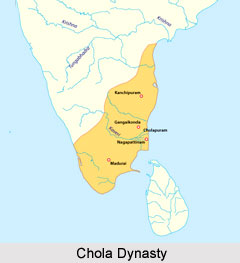
Chola Dynasty
Chola Dynasty is a Tamil dynasty and had longest duration of ruling in parts of South India. Chola dynasty had ruled South India successfully for a ex...
Suhungmung
Suhungmung was the fourteenth ruler of the Ahom dynasty who ruled from the period 1497 to 1539 AD. His reign was significant in terms of expansion of...
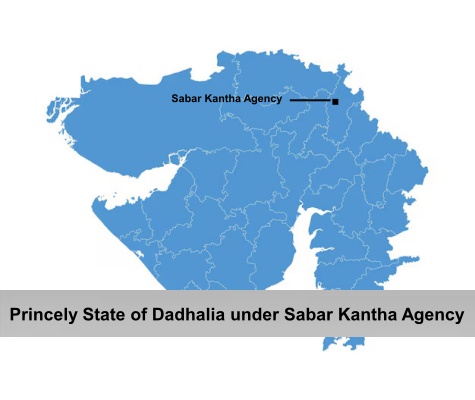
Princely State of Dadhalia
Princely State of Dadhalia was located in the present state of Gujarat. The state covered a total area of 28 sq miles and comprised of 15 villages. Th...
Princely State of Rupal
Princely State of Rupal was a part of the Baroda Agency, a sub division of Western India States Agency. It was under the administrative control of the...
Archaeological Sites of West Bengal
Archaeological sites of West Bengal reveal several aspects of ancient India. Excavations by the Archaeological Survey of India have furnished artefact...
Related articles in History of India

Mughal Architecture during Babur
Mughal architecture during Babur marked the foundation of a new architectural era in India, blending Timurid, Persian, and local influences. His reign...

Architecture during Sayyid and Lodi Dynasty
Architectures during the Sayyid and Lodi dynasty were mainly the tombs and monuments for the dead rulers. It were carefully designed and meticulously...

Brahmanical Sources of Ancient History
Brahmanical Sources of ancient history are contained in the Vedas and they constitute one of the most important literary sources of information about...

Coins of Chola Empire
Coins of Chola Empire were issued in gold, silver and copper and carried the Chola emblem.

Coins of Khilji Dynasty
Coins of Khilji Dynasty had an influential feature that was followed by the other dynasties.