
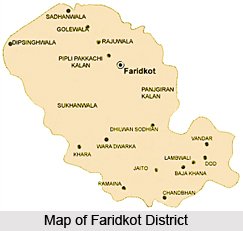
 Faridkot District was part of the then Ferozepur Division but in the year 1996, Faridkot Division has been established with a Divisional headquarter at Faridkot which includes Faridkot, Bathinda and Mansa districts. It is situated between 29 degree 54 feet to 30 degree 54 feet north latitude and 74 degree 15 feet to 75 degree 25 feet east longitude. It lies in south west of Punjab and is surrounded by Ferozepur District in the north-west, Moga and Ludhiana Districts in the north east and districts of Bathinda and Sangrur in the south. Faridkot is the district headquarters. Total area occupied by Faridkot District is 1475.70 sq kms.
Faridkot District
Faridkot District is an administrative district of Punjab and it was created as a separate district in the year 1972. It was initially a part of Bathinda District. Faridkot District is considered as one of the major cotton markets in Asia.
Introduction
Faridkot District was part of the then Ferozepur Division but in the year 1996, Faridkot Division has been established with a Divisional headquarter at Faridkot which includes Faridkot, Bathinda and Mansa districts. It is situated between 29 degree 54 feet to 30 degree 54 feet north latitude and 74 degree 15 feet to 75 degree 25 feet east longitude. It lies in south west of Punjab and is surrounded by Ferozepur District in the north-west, Moga and Ludhiana Districts in the north east and districts of Bathinda and Sangrur in the south. Faridkot is the district headquarters. Total area occupied by Faridkot District is 1475.70 sq kms.History of Faridkot District
Faridkot District derives its name from the headquarters town of Faridkot founded by Mokalsi, grandson of Raja Manj, who ruled this territory during the 13th century and built a fort here. One of the labourers who were engaged in the construction of this fort was Baba Farid. He was observed to possess some miraculous powers. The name of the place was changed to Faridkot after his name. It remained the capital during the reign of Mokalsi`s son Jairsi and Wairsi. The history of Faridkot District pertaining to the ancient period has been traced to the Indus Valley Civilization. A few sites explored in the Moga Tehsil (which is now a separate district) link it with Indus Valley Civilization sites explored in the Rupnagar District. Thus, it can be stated as per the history of Faridkot District that a vast area, including the present area of Faridkot District was under the influence of Indus Valley Civilization.
Geography of Faridkot District
 Geography of Faridkot District mainly comprises low lying flat area. It is located on Punjab Plain which in a macro regional context forms a part of Sutlej Ganga plain. The surface of the district is a depositional plain which was formed by alleviation by the rivers in the remote past. No river is flowing through the district, but here are some drains which flow during heavy rains and serve as natural drainage system. There is a vast network of canals namely Bikaner, Sirhind feeder and Rajasthan Canal passes through Faridkot District. Sirhind feeder, Rajasthan Canal and Abohar Branch of Sirhind canal run through north-south and northeast-southwest directions respectively. Sirhind Canal system has been serving as a main irrigation source in the district since long.
Further, geography of Faridkot District includes dry climate that is characterized by a very hot summer, a short rainy season and a bracing winter. The year is divided into four seasons. The cold season is from November to March. This is followed by the summer season which lasts up to about the end of June. The period from July to the middle of September constitutes the southwest monsoon season. The later half of September and October is the post-monsoon or changeover period. The temperatures increase rapidly beginning at the end of March till June, which is generally the hottest month, with the mean daily minimum temperature about 41 degree Celsius and the mean daily minimum temperature is about 26.5 degree Celsius. The climate is intensely hot during the summer, and the dust laden winds blow continuously. Maximum temperature recorded in the region is 47 degree Celsius.
With the onset of monsoon by end of June or early July, there is an appreciable drop in the day temperature. However, during breaks in the monsoon during latter part of July and in August the weather becomes oppressive due to increase in day temperatures. By about the second week of September both day and night temperatures begin to decrease. The fall in the night temperatures even in October is much more than that in the day temperatures. After October both day and night temperatures decrease rapidly till January which is the coldest month. Minimum temperature recorded in the month of January, which is the coldest month is near about 4.5 degree Celsius. In the cold season the district is affected by cold waves. Average annual rainfall in the district is 433 mm; maximum rainfall is received (near about 71 percent of the annual rainfall in the district) during the monsoon months in between July to September. Some rainfall occurs during the pre-monsoon months, mostly in the form of thundershowers and in the cold season.
Demography of Faridkot District
 As per 2001 Census, total population of Faridkot District is 552466, male population is 293637 and female population is 258829. Further, literacy rate of Faridkot District is 63.34 percent, of which male literacy rate accounts for 68.92 percent and female literacy rate is around 57.09 percent.
Administration of Faridkot District
Deputy Commissioner is the head of administration of Faridkot District. He acts as the Chief Revenue Officer as District Collector and is responsible for collection of Revenue and other government dues recoverable as arrears of Land Revenue. As District Magistrate, Deputy Commissioner is the head of the Criminal Administration of the District and he is responsible for the maintenance of Law and Order in the district. He is assisted by Additional Deputy Commissioner in his day-to-day working. The duties of the Sub Divisional Officer (Civil) within his Sub Division are almost similar to those of the Deputy Commissioner within his district. Administrative set-up of Faridkot District includes two Sub Divisions, two Tehsils and one Sub Tehsils. It has two development blocks - Faridkot and Kotkapura.
Tourism in Faridkot District
 Tourism in Faridkot District attracts the travellers from various parts of the country with its huge exploring opportunities. In Faridkot District, there is no dearth of places of interest for exploring. Tourism in this district offers visits to various historical as well as religious sites. Visiting this district means an enriching experience for the travellers.
Pilgrimage Tourism in Faridkot District
Gurudwara Tilla (Chilla) Baba Farid: This is as old as the town-self. This place is situated near the Qilla Mubarak. Baba Farid remained at this place in meditation for 40 days before proceeding to Pakpattan. Shabad-Kirtan is recited here daily.
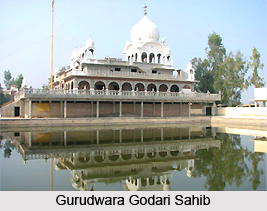
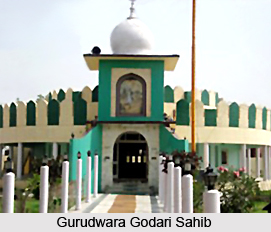
Gurudwara Godari Sahib: This place is situated on the outskirts about 4 kms on Faridkot-Kotkapura road. It is believed that Baba Sheikh Farid left his godari (Jacket) there before entering Faridkot town. A beautiful Gurudwara was constructed here in 1982 and a Sant Sarover was later constructed at this place. Large numbers of people visit this place every Thursday to offer prayers and also take bath in this Sarover.
Gurudwara Guru Ki Dhab: It is believed that Guru Gobind Singh had visited this place previously known as Doda Tal. This place is about 12 kms from Kotkapura on Kotkapura-Jaitu Road.
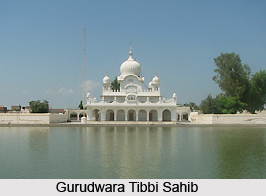
Gurudwara Tibbi Sahib: Guru Gobind Singh Ji is said to have visited Jaitu on 15th April, 1706. Here Guru Ji stayed at a Sand Dune (Tibba) near village Jaitu and practiced arrow shooting. People congregate here in the month of Phalguna every year in memory of the sikhs who scarified their lives during Jaitu Morcha and this is known as Shaheedi Jor Mela.
 Leisure Tourism in Faridkot District
Qila Mubarak: The fort with its impressive architecture still adorns the city of Faridkot. Its foundation is believed to have been laid by Raja Mokalsi; Raka Hamir Singh renovated it and got it extended. Later rulers like Raja Bikram Singh and Raja Balbir Singh got constructed many new buildings. There is a garden within the four walls of the fort.
Raj Mahal: Raj Mahal was built during the reign of Maharaja Bikrama Singh (1885-1889). Spread over nearly 15 acres, it presented a magnificent look with French design, dominating grassy lawns amidst semi desert area of the state. Its entrance called "Raj Deori" - itself is a heritage building of a vintage and now houses Balbir Hospital.
Darbar Ganj: This beautiful bungalow is a well laid out garden place. All the rooms are finished in the most modern style. The building has now been converted into Circuit House.
Fairy Cottage: This cottage is situated 7 kms from Faridkot on Chahal Road. This beautiful cottage is constructed by Maharaja Brijinder Singh in 1910-11.
Check Tower: This tower is made at the entrance of the Fairy cottage which is also constructed by Maharaja Brijinder Singh.
Rajasthan and Sirhind Canals are other attractions offered by Faridkot District. Rajasthan Canal and Sirhind Feeder passes near Faridkot town. Rajasthan canal was constructed during the year 1962 to carry the additional water from Sutlej River and Beas River to dry areas of Punjab. These places of interest are worth visiting as they not only offer a memorable tourism experience but also reflect the rich past of the region.
Recently updated articles in States of India
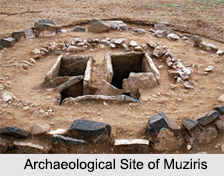
History of Thissur District
Early History of Thissur District explains flourishing of the port cities. Now these port cities are transformed into archaeological sites.
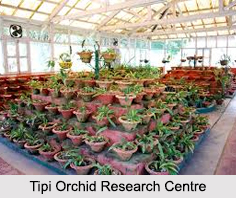
Tippi Orchid Research Centre, Arunachal Pradesh
Tippi Orchid Research Centre in Arunachal Pradesh is renowned for its rich collection of exotic and endangered orchids. Surrounded by lush rainforest...
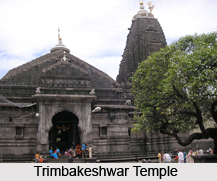
Tourism in Nashik District
Pilgrimage tourism in Nashik district involves visiting the various places of Hindu and Jain worship located here. Some of the holiest sites for Hind...
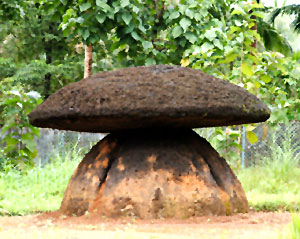
Mangadu, Kerala
Mangadu in Kerala’s Kollam district is a significant megalithic site known for its urn burials, cist burials, menhirs, and stone circles. Excavations...

Devaswom
History of Devaswom is not very ancient and can be dated back to late seventeenth century.
Related articles in States of India
East Indian States
East Indian States comprises of Bihar, Jharkhand, West Bengal, Odisha and also the Union Territory of Andaman and Nicobar Islands. It defines the cult...
Purnia District in Bihar
Purnia District is located in Bihar and extends from River Ganga to Nepal. The district has a rich Hindu history and glorious past.
Hooghly district
Hooghly District along the bank of the river Hooghly is one of the principal trading ports of West Bengal.
Geography Of Chittoor District
Geography of Chittoor district is spread along the topography of the land which is divided into two natural divisions; Chittoor has a dry and healthy...
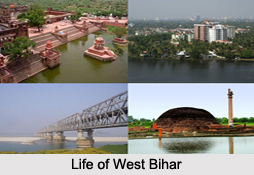
Districts of West Bihar
Districts of West Bihar is comprised of medieval monuments that were built by the different governors of Mughal era.