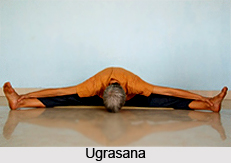
 Ugrasana is one of the significant Yoga asanas of Lord Shiva according to the Shiva Samhita, a classical yoga text. The Shiva Samhita describes the posture as one of the first four (and most important) asanas taught by Lord Shiva, although other texts do not group it in the same category. However, Ugrasana does have a history dating back at least a 1000 years, considering it is nearly identical to the Paschimattana, recorded first in the Hatha Yoga Pradipika (1400 AD). It is considered a more challenging variant of the same.
Meaning of Ugrasana
The meaning of Ugra in Sanskrit is difficult, frightening. The pose hence translates to the difficult or challenging. Ugrasana is a further development of Paschimatanasana.
Yoga Texts and Ugrasana
The asana is significantly similar to the older Paschimattana, described first in the Hatha Yoga Pradipika (1400 AD), which however does not group the Paschimattana amongst the asanas of Lord Shiva. The Gheranda Samhita (1800 AD) also describes the Paschimattana, attributing it to the Hatha Yoga Pradipika. The comparative abundance of textual sources strongly indicates that there has been an asana named either Paschimattana or Ugrasana for a significant period of time.
Steps of Ugrasana
The steps of this asana are difficult so it is advisable to perform this under the supervision of a yoga expert.
•Sit, stretching both the legs together in front.
•Spread out both the legs towards both sides as much as possible.
•Hold the toes of both the legs with respective index fingers.
•Keep bending forward slowly till the forehead touches the ground.
•After maintaining for few seconds raise the head, release the toes and come back to the original position.
Note: For beginners there is no harm if one is unable to touch the ground. They can gradually increase the practice of bending forward. While practising this, muscles of thighs are stretched so practise it carefully. The legs should not bend at knees.
Benefits of Ugrasana
•The practice of Ugrasana strengthens the abdomen and decreases the incidence of sciatica.
•Ugrasana also alleviates symptoms of dyspepsia.
•This asana stretches the inner thighs and increases flexibility in the hip joints.
•It removes excess weight from the abdominal and pelvic areas.
Caution about Ugrasana
•Those suffering from chronic constipation or complaining of ulcer in abdomen should not practise it.
•Also people suffering from slipped disc, or other severe spinal problems should not perform Ugrasana.