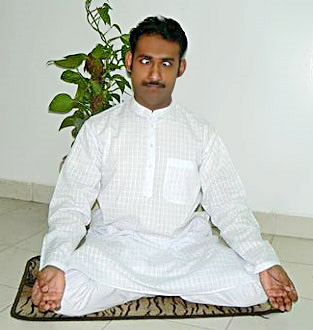
 Pranayama exercises, Asanas as it is popularly known, initiate intense involvement of various parts of human body. Nasagra Drsti or The Nazal Gaze is one such significant asana. Nasagra Drsti is a Sanskrit word and as the name suggests , it means fixing one`s eyes upon the tip of his nose. Drsti means gaze and Nasagra means the tip of the nose. It may be exercised as a part of Padmasana . There are quite a few people who practice it independently. There is a special technique of executing Nasagra Drsti or The Nazal Gaze. During exercise, the head is tossed back a bit with a perspective to make the position of the eyeballs clearly visible.
For those who have the problem in concentration, The Nasagra Drsti or The Nazal Gaze is an excellent exercise. If this practice has been undertaken with lots of gusto and if one continues doing it for a prolonged period of time on a regular basis, one can distinctively notice a massive change, thus bringing stability in that person`s personality.
However, one must be aware of the fact that proper technique needs to be applied in order to do this The Nasagra Drsti or The Nazal Gaze. There are reports of accidents that had happened due to in correct ways of practicing Nasagra Drsti or The Nazal Gaze. Sometimes it has even proved to be fatal. The reason is that the Nasagra Drsti or the Nasal Gaze, directly works upon the brain through the optic nerves of human body. Therefore it is really very important for any person who is doing the exercise to develop this gaze very slowly and that too carefully. It is advisable that the people having weak nerves should be restrained from undertaking this exercise of Nasagra Drsti or The Nazal Gaze . Even if one executes it , he or she should do it only under the proper guidance of any expert Yogic therapists and also consulting to a physician.