
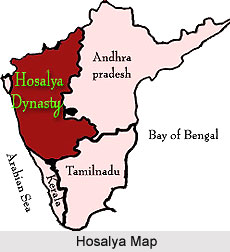
Kannada literature in Hoysala period was soon to follow its classical counterpart, witnessing an all-round development in every sphere of literary pursuits. The Hoysala Empire possesses their own domain of significance and authority, during ancient ruling in India. Hence, during the late 12th century, the Hoysalas, an authoritative and dominating hill tribe from the Malnad province in present-day southern Karnataka, had begun to exploit the political ambiguity in the Deccan to earn ascendancy in the region south of the Krishna River in southern India. A new chronological period was embraced, majestic titles were asserted and Kannada literature began to prosper under such distinguished scholars like Janna, Harihara, Rudrabhatta, Raghavanka, Keshiraja and others. A crucial achievement during the Hoysala period in Kannada literature was the initiation and consequent validation of native metres in literature (the ragale, the tripadi, the sangatya and the shatpadi).
Two renowned philosophers who lived during the Hoysala period of Kannada literature - Ramanujacharya and Madhvacharya, had immensely moulded and charmed the culture of the region. The conversion of the Hoysala King Vishnuvardhana in early 12th century from Jainism into Vaishnavism, was to later testify as a retrograde reversal to Jain literature. In the decades that succeeded, Jain writers had to come face-to-face with tremendous rivalry from the Veerashaivas, to which they responded with complete refutations, and from the 15th century, from the writers of the Vaishnava unit. These events forever altered the literary backdrop of the Kannada-speaking region, creating a lasting impression upon the literary circles.
One of the earliest Veerashaiva writers in Kannada literature from the Hoysala period, who did not contribute to the Vachana literary tradition, poet Harihara (also acknowledged as Harisvara) came from a family of karnikas (accountants), and performed under the patronage of King Narasimha I. Harihara had penned Girijakalyana in ten sections, wholly espousing the Kalidasa tradition, utilising the old Jain champu style (poems in verses of various metres intermingled with paragraphs of prose, also acknowledged as champu-kavya), with the story heading towards the wedlock of Shiva and Parvati. In a significant departure from the model, Harihara had deliberately avoided extolling saintly mortals. He is accredited with more than 100 poems in ragale metre, referred to as the Nambiyanana ragale (or Shivaganada ragale, 1160) eulogising the saint Nambiyana and Virupaksha (a manifestation of Hindu god Shiva). For his poetic talent, Harihara has accomplished the honorific utsava kavi ("poet of exuberance").
Harihara`s nephew, Raghavanka, was the foremost literary persona to bring in the shatpadi metre into Kannada literature in the Hoysala period, in his epic Harishchandra Kavya (1200), deemed a classic, regardless of sporadically breaching stern rules of Kannada grammar. Tremendously harnessing on his dexterity as a dramatist, Raghavanka`s chronicle of King Harishchandra brilliantly draws the friction of personalities between sage Vishwamitra and sage Vashisht and between Harishchandra and Vishwamitra. It is also conceived that this explanation and analysis of the story of Harishchandra is utterly unique to Indian literature. The writing is an ultimate instance of originality and does not comply by any long-conventionalised epic traditions. In addition to Hoysala patronage, Raghavanka was also honoured by the Kakatiya king Prataparudra I. Rudrabhatta, a Smartha Brahmin (a faithful of monistic philosophy), was the earliest distinguished and illustrious Brahminical writer, serving under the patronage of Chandramouli, a minister of King Veera Ballala II. Based upon the earlier work of Vishnu Purana, Rudrabhatta had authored Jagannatha Vijaya (1180) in the champu fashion, accounting the life of Lord Krishna, leading up to his legendary crusade with the demon Banasura.
In 1209, the Jain scholar and army commander Janna had penned Yashodhara Charite, an inimitable set of stories handling the sensitive topic of `perversion`. In one of the stories, a king is portrayed with the sinister objective to perform a ritualistic sacrifice of two young boys to Mariamma, a local deity. However, after the king becomes enlightened with the boys` tale, he is moved beyond measure, deciding to set them free and forever relinquish with the practice of human sacrificing. In honour of this work in Kannda literature in the Hoysala period, Janna was fêted with the title Kavichakravarthi ("Emperor among poets") by King Veera Ballala II. His other classic, Anathanatha Purana (1230), deals with the life of the 14th Tirthankara, Ananthanatha.
The other notable works in Kannada literature in Hoysala period comprised: Nemichandra`s Lilavati-prabandham and Neminathacharita; Rudra Bhatta`s Jagannatha-vijaya; Mallikarjuna`s Sukti-sudharnava, Kesiraja`s Sabdamani-darpana, Kumudendu`s Kumudendu Ramayana, Ratta Kavi`s Rattamata (or Ratta Sutra), Nagaraja`s Punyasrava and Madhura`s Dharmanatha Purana. The most classical instance of a wholesome Kannada work, without employing any Sanskrit words, is Kabbigarakava of Andayya.
Kannada Literature in Hoysala Period
Kannada literature in Hoysala period admiringly dealt with philosophical and religious writings, resembling parables.
Recently updated articles in Indian Literature
Gadyakarnamrita
Gadyakarnamrita is a 13th-century Sanskrit literary work written mainly in prose. It describes the ninety-day battle at Srirangam between the Hoysala...
Women Writers in Malayalam Literature
Women writers in Malayalam literature have worked incessantly to make a place for their literary works. In the earlier periods, they were completely o...
Comrade Kirillov, Novel by Raja Rao
Comrade Kirillov, a distinctive creation of Raja Rao, is presented as a brief yet incisive novelette that offers an ironic portrayal of the self-contr...
The Foreigner, Novel by Arun Joshi
“The Foreigner” is a book authored by Arun Joshi and published by Vision. It is an illustrious creation in the entire career of Arun Joshi, the famous...
Short Story in Telugu Literature
Short Story in twentieth century Telugu Literature was extremely popular and growing in and developing in a major way. Their popularity was greatly fa...
Related articles in Indian Literature
Mythological Themes in Indian Literature
Mythological themes in Indian literature have been integral to every ancient and contemporary writer and their path to f
Literature During Gupta Age
It is during the Gupta Age literature in the form of poetry, epos and drama gained a colossal importance.
Literature of Aravidu Dynasty
Sanskrit and Telugu were the popular literary medium of communication during Aravidu dynasty.
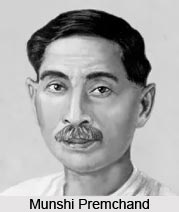
Munshi Premchand
Munshi Premchand was a legendary Indian writer notable for his modern Hindustani literature. A writer of a very high caliber, Premchand`s writings hav...
Sanskrit Poets
The names of some of the Sanskrit Poets are Bharavi, Devarshi Ramanath Shastri, Jayadeva and Srinivas Rath.