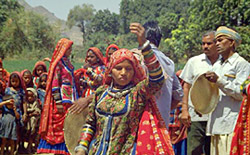
Tribes of Odisha comprise a great diversity with unique and vibrant socio-cultural life. The total number of tribes living in the state of Odisha is much more than other places in India. Their distribution in different districts however varies. Rayagada District, Kalahandi, Koraput, Malkangiri and Nabarangpur are some of the districts of Odisha where more than 50 percent of the total population is tribal.
There are 62 tribal communities in the state of Odisha and among which some are quite ancient. The name of Saora tribe is mentioned in the great Hindu epic of Mahabharata. The tribes of Odisha belong to 3 linguistic divisions namely Dravidian, Indo-Aryan and Austric. These tribes follow the trend of building their houses with bamboo and thatched roofs.
Major Tribes of Odisha
 There are various tribal communities in Odisha who serve a lot to develop the cultural life of the tribes of Odisha.
•One of the significant tribes of Odisha is Bonda Poraja Tribe which has the tradition of following the practice of elopement at times of marriage.
•Another tribal community, known as Bagata Tribe, is considered to be one of the native tribes, conversing with each other in Adivasi Oriya language.
•Chenchu Tribe resides in a special village, known as Penta, clubbed together on kinship basis.
•Dal Tribe of the Odisha state follows the religion of Hinduism and practices the rituals and rites of the same.
•Dharua Tribe lives specially in the Malkangiri district.
•Several districts of Odisha, namely Puri district, Kalahandi district, etc are hubs of Holva Tribe.
•Some tribal people namely the Jatapu Tribe speaks their indigenous language along with Oriya language.
•Bnadhu and Kotumba are the two distinctive totemic clans of Juang Tribe.
 Odisha also comprises Parenga Tribe, Paroja Tribe, Saora Tribe, Sitha Khanda Tribe, Sounti Tribe and Tadvi Tribe. Among them Saora tribes, amidst their rich heritage ennobles the ethnicity of the state and Sabar Tribe is one of the primitive tribes of the Indian subcontinent, also known to many as "Kariya". Other tribes of Odisha include Bhumia Tribe, Koli Tribe, Bhunjia Tribe and many more.
Occupation of Tribes of Odisha
A majority of the Odisha tribes take up occupations to sustain livelihood like gathering, hunting and fishing. Tribal communities residing in the hilly areas of Odisha are adept in shifting cultivation. They are also engaged in handicraft industries or mills. Gadaba Tribe and Bondo tribe possess their own looms and are engaged in making clothes for regular use. Moreover, tribal people like Loharas and Mohali have mastered the art of tool making and basket weaving. Oraon, Munda, Santhals and Ho have switched to the factories, industrial occupations and works in mines.
Society of Tribes of Odisha
The tribal communities of Odisha regard marriage as an important institution. They are very much religious minded, widely practicing religions like animism, animalism, nature-worship, fetishism, shamanism and anthropomorphism. The tribes of Odisha also worship their ancestors. Their local and tribal deities are worshipped by sacrificing animals.
Related Articles
Indian Tribals
Indian Tribal People
East Indian Tribes
Odisha
Oriya Language