


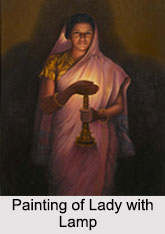
 Raja Ravi Varma was an Indian Painter whose paintings brought a momentous turn in Indian art. His works on great Indian epics Ramayana and Mahabharata brought the omnipresent Gods and Goddesses to the surroundings of earthy world. This showed excellent fusion of Indian traditional art with European realism. These paintings influenced future generation artists and also influenced literature and Films. His representation of mythological characters has become a part of the Indian imagination of the classics. His style is criticized for being too gaudy and sentimental. His works are the best examples for the combination of European techniques with Indian receptivity. According to the Guinness World Records, the most high-priced saree in the world is an 8-kg saree priced at Rs 40 lakh that pays honour to his paintings. Raja Ravi Varma was an Indian Painter whose paintings brought a momentous turn in Indian art. His works on great Indian epics Ramayana and Mahabharata brought the omnipresent Gods and Goddesses to the surroundings of earthy world. This showed excellent fusion of Indian traditional art with European realism. These paintings influenced future generation artists and also influenced literature and Films. His representation of mythological characters has become a part of the Indian imagination of the classics. His style is criticized for being too gaudy and sentimental. His works are the best examples for the combination of European techniques with Indian receptivity. According to the Guinness World Records, the most high-priced saree in the world is an 8-kg saree priced at Rs 40 lakh that pays honour to his paintings.
Early life of Raja Ravi Varma Raja Ravi Varma was born on April 29th, 1848 in Kilimanoor Palace in Kerala. Raja Ravi Varma was brought up in an environment of art and culture. At the age of seven he started painting the figures of animals, acts and scenes from daily life on the wall with charcoal. Raja Ravi Varma's uncle Raja Varma started giving lessons of paintings to little Ravi seeing his keen interest for art. When Raja Ravi Varma was around 14 years of age, he was sent to Thiruvananthapuram to stay at the Moodath Madam house of the Kilimanoor Palace, where he was taught water painting by the palace painter Rama Swamy Naidu. After three years, Theodor Jenson, a British painter taught him oil painting. He was exposed to the famous paintings of Italian painters. Here he was using indigenous paints made from leaves, flowers. Career of Raja Ravi Varma 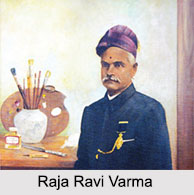 It was at Kilimanoor Palace where his talent was promoted and nurtured by Ayilyam Thirunal at the age of 7. He selected the original paints made from leaves, flowers, tree bark and soil in its place of using the conventional paints. Ramaswamy Naicker who was a famous oil painter of that time, had declined to teach Ravi Varma the art of oil painting. He painted a number of portraits of significant Indian aristocracy and British officials from 1870 to 1878 and added much status for himself as a portrait painter. It was at Kilimanoor Palace where his talent was promoted and nurtured by Ayilyam Thirunal at the age of 7. He selected the original paints made from leaves, flowers, tree bark and soil in its place of using the conventional paints. Ramaswamy Naicker who was a famous oil painter of that time, had declined to teach Ravi Varma the art of oil painting. He painted a number of portraits of significant Indian aristocracy and British officials from 1870 to 1878 and added much status for himself as a portrait painter.
Year 1873 marked the beginning of a flourishing era in the career of Raja Ravi Varma and he won the first prize at the Madras Painting exhibition. The British commissioner Edgar Thurston was an important person who promoted the career of Raja Ravi Varma. Raja Ravi Varma had received well-known applause after he won an award for an exhibition of his paintings at Vienna in 1873 and his paintings were also sent to the World's Columbian Exposition held in Chicago in 1893 and he was awarded three gold medals. He travelled all over India in search of subjects. He often replicated Hindu Goddesses on South Indian women, whom he considered gorgeous. Ravi Varma is chiefly famous for his paintings portraying episodes from the story of Dushyanta and Shakuntala, and Nala and Damayanti, from the Mahabharata. Ravi Varma's depiction of mythological characters has become a part of the Indian thoughts of the epics. Many of his fabulous paintings are housed at Laxmi Vilas Palace, Vadodara. Awards and Achievements of Raja Ravi Varma Raja Ravi Varma won a number of awards and these are as follows: Notable Works of Raja Ravi Varma Given below are the famous works of Raja Ravi Varma: Personal Life and death of Raja Ravi Varma He married Pururuttathi Nal Bhageerathi and had five children. He died on October 5, 1906 in the village of Kilimanoor in Travancore. He was 58 at the moment of his death. |
| |||



Raja Ravi Varma
| Raja Ravi Varma was a famous painter who received recognition for his creations of the scenes from Mahabharata and Ramayana. He was a self taught artist who travelled throughout India in search of themes for his paintings. |
| ||||||||||||||||||||||||||||

