
Mannan tribes of Kerala have been emigrated from the country to the forest region. The then king who dominated in the whole of the territory also used to reside in a beautiful hill, popularly known as Kozhimala. They are said to be the aboriginals of Thekkady. Festivals, dance and music form an integral part of the life style of this Mannan tribal community. On every celebration that uses to take place yearly, these Mannan tribes throng a particular village in large numbers. The Mannan king also takes part in this yearly celebration that is distinguished by several other cultural events and celebrations.
Pious Mannan tribes have got a plethora of hill gods, which these Mannan tribes worship with lots of devotion. All the hill gods comprise of the spirits of their ancestors who are thought to have came down from the mountain regions. However, in the present times, these Mannan tribes have rightly incorporated several practices due to the influence of several other people of the urban society. This resulted in their worship of several other gods and goddesses of other religion.
Most of these Mannan tribes have taken up the occupations of gathering sandalwood and rose woods. These Mannan tribes also are seen to create farms and practice cultivation over the years. Some Mannan people also have taken up honey-collecting, fishing, and cattle breeding as their occupations.
The whole of the Mannan society is based on rural economy and culture. Almost all villages of Mannan tribes comprise of ten to forty five households. Each house is built on the slopes of the mountains just in between the agricultural fields. Most of the houses built with handmade bricks and the roof with leaves .The Mannan village also comprises of tiny bamboo made houses, mostly covered with cashew and are canut trees.
The Mannan people generally speak in Malayalam or Tamil language. In each village, the Mannan tribes have chosen two representatives for the village. These include a village leader namely Thalaivar, while the elder person of the village is called Kani. Thalaivar acts as an intermediary between the government and people, while the kani has been given the responsibility of dealing with some of the significant affairs related to the tribal society. On some important social, both of them came and play the leadership role on several matters.
The society of this Mannan tribe follows unique norms and rituals, specially related to marriage. When girls attain thirteen years they are being segregated from their families and are forced to stay in seclusion in huge tents which is known as inn, namely, Sathram. All the aged women look after these inns. These Mannan girls have to remain there till their marriage. There are facilities of burning fire inside these tents and the fire remains illuminated through out the day and night in the centerfield of the hall. Around the fire these Mannan girls sleep stretching mats on the floor. However, in some of these tents of these Mannan tribes, special platforms are built from bamboo. In some inns there are sitting platforms made up of bamboo. For young males, there are individual `sathram` who are more than twenty years old. Just like the girls, the aged men look after these young Mannan males.
Marriage too is held in high esteem. When a Mannan girl attains the age of thirteen years, she is considered to be ideal for getting married. Special rituals are observed at the time of wedding. Those Mannan girls who are ready for marriage remain hidden in the forests. After getting the information, the prospective groom comes out of the inn and search for the girl. The first male who can find her can marry the girl. The girl too gives her acceptance by sprinkling turmeric water. This symbolizes the fact that both the Mannan couple is now ready to tie the wedding knots.
Mannan Tribe
Mannan tribes of Kerala are the aboriginals of Thekkady and worship hill gods.
Recently updated articles in Tribes of India
Arakh Tribe
Arakh Tribe is one of the ancient tribes located in several parts of central India. Their origin dates back to the Tughlaq era. Arakh tribe appears to...
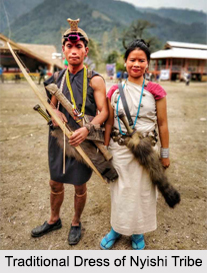
Traditional Dress of Nyishi Tribe
Traditional Dress of Nyishi Tribe is worn during festivals and social gathering. Men wear a cane helmet surmounted with the beak of the great Indian H...
Pasi Community
Pasi is an aboriginal race of India and are mainly distributed over the northern region of the country. The traditional occupation of Pasi is the extr...

Bhojas
Bhojas have been described as a very important tribe in the Aitareya Brahmana. Historical records have said that the Bhojas were settled towards the s...
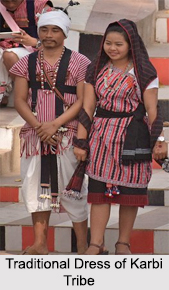
Traditional Dress of Karbi Tribe
Traditional Dress of Karbi Tribe can be easily recognized by the artistic designs inherited from their forefathers. Karbis have their own traditional...
Related articles in Tribes of India
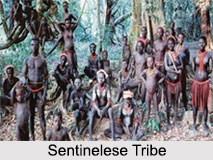
Sentinelese Tribe
Sentinelese tribal community is one of the most isolated and secluded tribes that are found in the whole world.
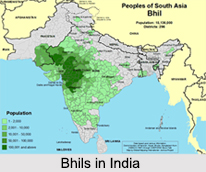
Bhil Tribe
The people of the Bhil tribe are the most widely distributed tribal groups in India.
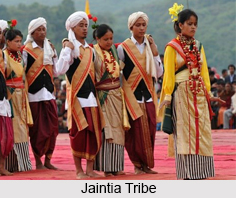
Jaintia Tribe
Jaintia Tribes are located in the Jaintia Hills of Meghalaya. They are also called the Pnars. They are famous for weaving of carpet, making of musical...
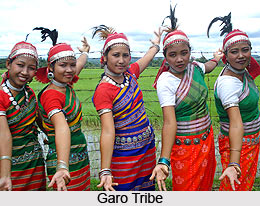
Garo Tribes
Garo Tribes are one of the matrilineal tribes of North-East India who reside in the Garo hills of Meghalaya. Historically, the tribe originated in Tib...
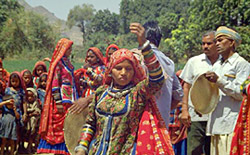
Garasia Tribe
The Garasia tribal community holds a significant position within Indian culture, renowned for their distinctive way of life and rich cultural heritage...