European colonies in India - Informative & researched article on European colonies in India
  Indianetzone: Largest Free Encyclopedia of India with thousand of articles History of India


in  
Art & Culture | Entertainment | Health | Reference | Sports | Society | Travel
Forum  | Free E-magazine
History of India : Sources of History of India l Ancient History of India l Medieval History of India l Modern History of India l Indian Historical Dynasties l Indian Battles l Sepoy Mutiny 1857 l Indian Rulers l History of India l Indian Freedom Struggle l Indian Governor- Generals l British Indian Acts l Post Independence India l Iron Age in India
Home > Reference > History of India > Modern History of India > European colonies in India
European colonies in India
India was invaded by a number of European countries of whom the longest rule was that of the British.

A number of European communities had set their foot in India starting from the 15th century. However it was the British, which ruled India for the longest time spanning a period of more than two hundred years.

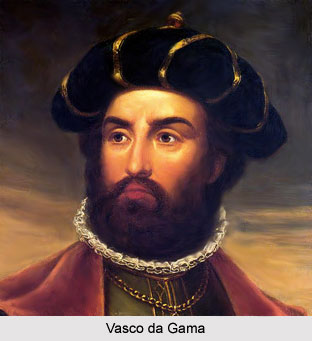
The Portuguese were the first to arrive in India in 1498. It was Vasco da Gama who arrived in Calicut and discovered India. After that the Portuguese established a chain of outposts along the western coast of India. Goa, was the seat of Portuguese administration. In the beginning of the 15th century, The East India Company on the orders of Queen Elizabeth I, began trading with India.

Following the footsteps of the British, the French also arrived in India. By the mid 18th century, the French had captured most of southern India. Their territories included Pondicherry, Karaikal, Yanam, Mahe and Chandernagore. However during this period, a number of Anglo French wars took place where the French suffered huge defeats losing their possessions by the end of the 18th century.

The Dutch also established trading posts in India and controlled the Malabar east coast. They had a brief stay in India like the French and the Portuguese. They conquered Ceylon from Portuguese. The Dutch also established trading stations in various parts of the country. The important ones are, Travancore, Pipely, Hooghly`s Chinsurah, Murshidabad in West Bengal, and Balasore in Orissa.

Denmark or the Danish were the last Europeans to set their foot in India. They established their trading posts in Tranquebar, Tamil Nadu, Serampore in West Bengal and at the Nicobar Islands. The Danish were not a very weak and competent power and by 1845 lost their last outpost to the Britishers.
(Last Updated on : 31/01/2009)
  More Articles in Modern History of India
 
Advent of Europeans to India European colonies in India British Empire in India
Foundation of British Rule in India Birth of Indian National Congress Partition of Bengal 1905
Socio-Religious Reform Movements in India Indian Renaissance Maritime India
Famines in India Indo-Pak Wars Integration of Indian States
Cellular Jail Indian Revolutionaries Indian Nationalism
Indian Organisations during Freedom Struggle Revolutionary Terrorist Movement in India Indian Revolts
Rise of Extremism in India Growth of the Left Ideologies in India Peasant Movement and Uprisings in India
Interim Government Theosophical movement Aligarh Movement
Portuguese Rule in India Ilbert Bill Maharaja Ranjit Singh
Surat Split India and Second World War Ludhiana Resolution
Gurdwara Reform Movement    
Recently Updated Articles in History of India
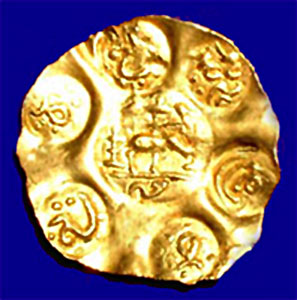
  • Coins of Pandyas
    Coins of Pandyas bear the legend of different Pandya ruler in different times.
  •  
  • Art and Architecture of Mughal Empire
    Art and architecture of Mughal Art offers an aesthetic degree to all art lovers. The subtlety of the finesse and the dazzle of the aura create huge amount of interest among tourist.
  •  
     
  • Architecture in Bengal During Jahangir
    Architecture in Bengal during Jahangir had been brilliantly sponsored and executed by his bunch of nobility.
  •  
  • Architecture in Ajmer During Jahangir
    Architecture in Ajmer during Jahangir was one that was heroically influenced by religion and Islamic notions.
  •  
  • Zebunissa
    Zebunissa was a Mughal Princess, the daughter of the Emperor Aurangzeb and the eldest child of the family. She was a very well educated lady, much interested in the arts, particularly poetry, and was an outstanding poet herself. Unfortunately, though she was her father’s favourite daughter and was given a lot of encouragement by him, she was imprisoned later in life and died in confinement. Her contribution to Persian literature is praiseworthy.
  •  
    E-mail this Article | Post a Comment
    RSS Feeds
    Forum
    Forum on History of India

    Free E-magazine
    Subscribe to Free
    E-Magazine on Indian Crafts
     
     
    European colonies in India - Informative & researched article on European colonies in India
    Sitemap
    Contact Us   |   RSS Feeds
    Copyright © 2008 Jupiter Infomedia Pvt. Ltd. All rights reserved including the right to reproduce the contents in whole or in part in any form or medium without the express written permission of Jupiter Infomedia Pvt. Ltd.