


|
It receives an annual rainfall of 800 mm. Spread over an area of 25,500 sq.km. much of the ecoregion is densely populated and also a lot of activity like agriculture and grazing is carried on. It extends from the Nellore district of Andhra Pradesh to the Ramanathapuram district of Tamil Nadu. Ninty-five percent of the original forests have been cleared. Five percent of the ecoregion remains in forest which is found in scattered fragments. Geologically, this ecoregion has Gondwanaland origins. A unique feature of the East Deccan dry evergreen forest is that they retain their leaves throughout the year unlike most of the world's tropical and subtropical dry broadleaf forests who tend to loose their leaves during the dry season to conserve moisture. Two important wetlands are located in the forest area, the Kaliveli lake in the north of Pondicherryin Viluppuram district of Tamil Nadu and Pulicat Lake in the north of Chennai. The flora of the forest consists of evergreen trees and an emergent species of canopy of taller deciduous trees including Sal, Albizia amara and Chloroxylon spp. Less than one percent of the ecoregion are protected areas or reserve forests. The Marakanam Reserve Forest is a scared grove near Marakanam, northwest of Pondicherry in Tamil Nadu, which preserves a section of evergreen closed canopy forest.The region is also dotted with temple groves which includes, Puthupet, Pillaichavadi, Mudaliachavadi and Kottakarai. 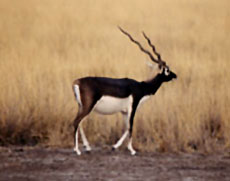
The Point Calimere Wildlife and Bird Sanctuary extend over an area of 117.26 sq. km. and is a protected area. Other preserves in the region include Vettangudi Bird Sanctuary in Sivaganga district of Tamil Nadu and Nelapattu Bird Sanctuary on Pulicat Lake in Nellore district of Andhra Pradesh. The ecoregion does not contain any prevalent mammals or birds. However, of the sixty-six known mammal species, which inhabit the forests, there are two endangered species, the wild dog (Cuon alpinus) and sloth bear (Melursus ursinus). Other species that need to be preserved include the common leopard (Panthera pardus), and some of the smaller predators such as the jungle cat (Felis chaus) and leopard cat (Prionailurus bengalensis). The other mammals, which also need to be protected, are the blackbuck (Antilope cervicapra), the chinkara (Gazella bennettii), and the small Indian chevrotain or mouse deer (Moschiola meminna). The grizzled giant squirrel (Ratufa macroura) which also needs to be protected is found in the Sriviliputhur (Kamarajar District in Tamil Nadu) and Amaravathy Nagar (Coimbatore District. 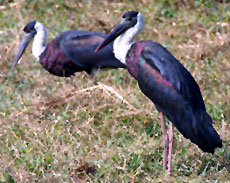 There are two hundred and thirty species of bird that inhabit the forest. The Jerdon's courser (Rhinoptilus bitorquatus) is endangered, and the spot-billed pelican (Pelecanus philippensis) and lesser florican (Eupodotis indica) are some of the endangered bird species. Other birds, which need preservation attention, are the woolly-necked stork (Ciconia episcopus), white-bellied seaeagle (Haliaeetus leucogaster), and Indian grey hornbill (Ocyceros birostris).
Like the other ecoregions in the Indian subcontinent, this region is also not free from threats. It has been subjected to heavy deforestation and the stunted scrub vegetation in most parts of the ecoregion is an indication of the long years of grazing practices. This is a growing concern among the environmentalists. |
| |||



East Deccan Dry Evergreen Forests
| A unique feature of the East Deccan dry evergreen forest is that they retain their leaves throughout the year. |
| ||||||||||||||||||||||||||||

