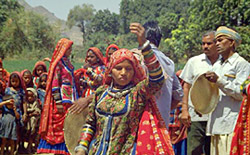
Mru tribe is mostly found in various areas of the Jalpaiguri district of West Bengal state of India. The literal meaning of the term `Mru` is `man`, valuing his freedom and independence more than anything else. The native language of this tribe is also called Mru. Basically, these Mru people are amiable and peace loving and avoid every possible occasion of confrontation and hassles. However, due to this nature they sometimes face tremendous exploitations from other clans and tribes who are residing in the nearby regions.
Habitat of Mru Tribe
Mainly residing on the hills, this Mru tribe lives in huge and cozy `thatch-roofed` cottages. These are made up of bamboo rising on piles, with huge open decks. Salient features of the villages of Mru tribal communities include holy bamboo totems, presided over by guardian spirits.
Occupation of Mru Tribe
The occupation of the Mru tribe is mainly agriculture. They also practice `jhoom (slash and burn)` cultivation. Both females and males take part in the cultivation. Apart from cultivation, these Mru males have the onus of building houses, going for hunting, basket weaving etc. Very recently, in order to meet the demands of the society, some of these Mru people took up other professions as well. These Mru people also engage themselves in making clothes, blankets, instruments and various household and cultural items.
The women folk of this tribal community are engaged in some other occupations apart from their additional responsibilities of cooking, firewood gathering, taking care of the household and children. Most of the women groups of this community practice waist-loom weaving, embroidery, beadwork, making cotton thread etc. For carrying huge burdens, Mru people use the conventional forehead lashed `back-baskets`. What is also interesting is that since women work harder than men, the usual practice is that the brides are little older than her grooms ensuring strong women for running houses.
 Administration of Mru Tribe
Mru tribal society is egalitarian without any prevalence of castes and only a handful of hereditary positions. They avoid all kinds of confrontation and take enormous pride in remaining patient and peaceable all the time. In matters of controlling and administration, each and every household has an equal say. With no practical headship or power structure, they find it hard, though sometimes, they find it problematic to help or cooperate in joint efforts for development or cultural conservation of the whole of the region.
Festivals of Mru Tribe
Festivals are an integral part of this Mru tribal society. Cooking sumptuous dishes as well as making handworks creates attraction amongst the people. Only unmarried boys, who dress and embellish themselves with combs, wild flowers and profound silver jewelry, execute musical performances in great vivacity. The songs and dances are usually accompanied with various traditional musical instruments. The young women play flutes, made from bamboo. These are called `prui`. The young men use elaborate mouth organs, popularly acclaimed as `ploong`. The biggest `ploong` has eight extensive pipes and sounds similar to any of the bagpipes. Drums and gongs go together with the wind instruments and lyrics.
Thus, this Mru tribe is one of those small numbers of native people who have maintained their own unique culture, rituals and beliefs. Thus, musical melodies, exotic dresses as well as the elongated, flower-decked hair kept back in topknots etc are the style marks of the cultural tradition of this tribe.