Amongst the multitudes of tribal communities that are found in the soils of Arunachal Pardesh, the anthropologists have came to a unanimous decision of bestowing a place of prominence to this tribal community of Mishmi. Majority of the populace of the Mishmi tribes have settled down peacefully in the midst of hilly districts, rightly located in the northeastern side of central
Arunachal Pradesh. These are namely, Lohit, Upper Dibang Valley and Lower Dibang Valley districts. What is interesting about their nature is that they are quite amiable and also share their space with other tribes of Arunachal. Various anthropologists who have dealt with these Mishmi tribes have inferred an important fact.
According to them, if one wants to divide the whole populace of Mishmi community, it can be broadly divided into three major groups. These are called Idus or Chulikatas, Digarus or Taroan and Mijus or Kaman. Divisions are being made on the basis of different geographical allocation of these Mishmi tribes, rather than any kind of racial discrepancies. In fact all these three tribal groups fall into the Mishmi as a whole.
A segment of the Idu Mishmi is also locally known as Bebejia Mishmi. The Idu Mishmi tribes are, in the first place, mainly found in the Upper Dibang Valley district and also in few parts of the northern parts of Lohit district of Arunachal. Taraon, as known as Digaru Mishmi amongst the localites, are dispersed in the mountains. Few Idu Mishmi tribes are also found in the foothills provinces situated in between Digaru and the Lohit rivers. Kamans, better known as the Miju Mishmi, reside in the foothill region between the Lohit and the Kambang rivers. In the Mishmi Hills also Idu Mishmi tribes are found on both sides of the Lohit River, stretching up to the Rima frontiers.
The whole lots of Mishmi tribes have developed artistic acumen since the ancient period. Till date they have retained this heritage. Especially the women folks have developed expertise in weaving. Beautiful products like attractive blouses and coats that they have created have acceptance in Arunachal Pradesh as well as in other states of India. Their women are expert weavers and make excellent coats and blouses.
As far as the occupation of Arunachal Pradesh is concerned, majority of the Mishmi tribes consider agriculture to be their main source of income. Several Mishmi tribes have achieved success in the timber trading. Shifting cultivation, better known as jhum agriculture has also been practiced in various provinces of Arunachal Pradesh.
However, there are quite a number of Mishmi tribes who even have developed trading skills. Instance can be cited where it has been established as a fact that during the primitive era, main items of trading include `deer -musk`, `wild medicinal plants`, `animal skins`, `Mishimi - tita` etc.
Another tribal group, namely, Digaru Mishmi also followed the same tradition of trading quite a little more than five hundred years ago.
The other tribal group, the miju Mishmi tribes were amongst the last of the emigrants who came and settled here in large numbers from the foreign origin. The Miju Mishmis are supporters of a special type of tribal religion, which has a close link to `Shamanism`.
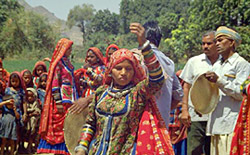
Music, dance and festivals ennoble the cultural excellence of the Mishmi tribes. There is no dearth of festivals and fairs. Different tribal group have adopted their own individual style of dressing up.

Festivals too are equally enriched. There is no dearth of festivals of this Mishmi tribal society. Amongst these festivals, Reh festival is the most important one, which is feted for appeasing those heavenly gods and goddesses who were conventionally believed to be in charge of the peace and prosperity of the people of the Earth. Almost all the Mishmi tribes of Arunachal Pradesh celebrate these festivals and also few other local festivals with great exuberance. No festival is complete without the special treat of music and dancing performances. Special attraction is that the festival ends with the dancing performance of the priest in great delight.
Apart from organizing these joyous rituals with great reverence, the same veneration also has been shown in the case of performing the entire funeral rites. There are different types of funeral ceremonies that were being followed. Amongst these funerals, which one a person must choose actually depend on their social status that they are maintaining in the whole of the society. In all these different funerals, the common factor is the presence of the Igu priest who would go on reciting lamenting songs in memory of the dead person.
In the tribal society of Mishmi tribes, special culinary dishes are being followed especially during festivals and special functions. Boys are trained in hunting and gathering. Marriage too is held in high esteem.