
Kom tribe is one of the important tribal communities of northeastern states, mainly found in the Senapati and Churachandpur districts of Manipur. These Kom tribes share the same language of other tribes like Aimol, Koireng, Chiru. They share a close affinity with the Hmar tribes. According to a popular myth the ancestors of Kom tribes are said to have descended from a cave of other world and then went to the Manipur fort. A tiger used to lay in wait to kill them. Amongst these people, a person named, Karongpa camouflaged a tiger by wearing a dress resembling to a tiger hide. Thus all theses people were saved from the clutches of the beast. Then Saichepa came out and killed the animal.
However, there is another story that narrates that the head of this ancient Kom tribal party, Karong, killed a huge snake and also a tiger for blocking their way. After being free from the danger, all of them carried on celebration in Telenpa`s house.
However, the researches of various anthropologists revealed the fact about the origin of these Kom tribes. As per some scholars, the Kom tribes settled down in Manipur sometime between 200 A.D., after coming from the foreign lands. They are said to come after the Meiteis in the land of Manipur.
The Koms are farmers, practicing mainly shifting and wet cultivation. Rice is the staple food. Also they produce potatoes, millets, maze etc. Kom tribes domesticate several animals like pigs, fowls, goats, cows, buffaloes, mithun etc.
The artistic acumen of these Kom tribes is clearly reflected in the houses, art works etc. The culture thus gets enriched in this way. The house of a Kom tribe has got thatched roof. These Kom tribes have developed expertise in weaving. Man`s regular wear is a dhoti tied round the waist. However, a man having a respectable position in Kom society wears `pasppan`, the cloth bearing the skin mark of Python-god. Black shawl with embroideries also become the style marks of Kom tribes. These tribes have great belief in Pathen. Literacy rate among the people is high and they are very active in political activities of the state.
Special attires are there for expert Kom weavers, which include Pase-pun, Khamtlang, Ponlak etc. These dresses have designs on the borders as bodice or skirt. Wristbands are also in vogue. Exquisite necklaces that they usually wear are studded with semi-precious stones and cowries. They also use weapons like axe, spear, bow and arrow etc.
Society of Kom tribes is exogamous. Since it follows the patrilineal heritage, the youngest son of the family acquires the property.
For better administration, their society is segregated into social groups, which further gets divided into smaller groups. The Clan is the biggest social group. Various Kom clans include Thingpui, Karong, Saiche, Leivon, Tellein, Hmangte, Serto and Lupheng.
Christianity is the main religious practice of Kom tribes. In `Pro Christian` era, marriage of a son was being fixed by his parents. For a male member, marrying his maternal uncle`s daughter was ideal. Acquiring broom is also done in ritualistic way. For that groom has to serve in his father-in-law`s house for 3 years. This custom was called Numhei-hlo. In the contemporary times, however, marriage is fixed by mutual consent.
There are several non- Christians amongst the Kom tribes who have developed faith on two deities, namely, Pathen, and Lungjei. Inroi is the family god. They also believe in the existence of soul after death.
Festivals, both of social and religious nature, are an integral part of culture of Kom. These festivals are Seling, Belam, Hlungphun etc. Cheiraoba is the New Year Festival. Few rituals are also observed. Lukasun is the last rite offered to the deceased persons, while Hlodei is a wedding ritual.
Song and dance are part and parcel of these festivals of Kom. During Lamkut, at dusk song and dance (Lamkut lam) are held in every house. Feasts, merrymaking also follow afterwards.
Kom Tribe
Kom tribes have a rich heritage of culture and tradition as manifested in the celebration of numerous festivals.
Recently updated articles in Tribes of India
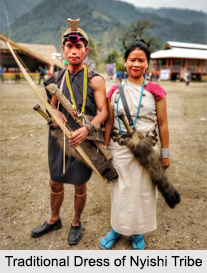
Traditional Dress of Nyishi Tribe
Traditional Dress of Nyishi Tribe is worn during festivals and social gathering. Men wear a cane helmet surmounted with the beak of the great Indian H...
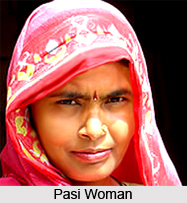
Pasi Community
Pasi is an aboriginal race of India and are mainly distributed over the northern region of the country. The traditional occupation of Pasi is the extr...

Bhojas
Bhojas have been described as a very important tribe in the Aitareya Brahmana. Historical records have said that the Bhojas were settled towards the s...
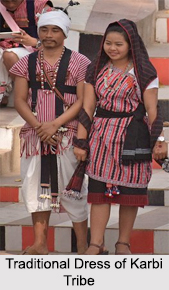
Traditional Dress of Karbi Tribe
Traditional Dress of Karbi Tribe can be easily recognized by the artistic designs inherited from their forefathers. Karbis have their own traditional...
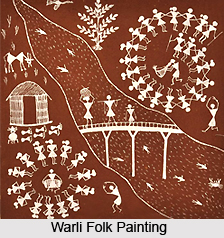
Indian Folk and Tribal Arts
Indian folk and tribal art are the exclusive handiwork of the section of people who belong to different social groups and it is richly enriched with a...
Related articles in Tribes of India
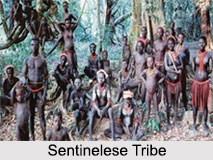
Sentinelese Tribe
Sentinelese tribal community is one of the most isolated and secluded tribes that are found in the whole world.
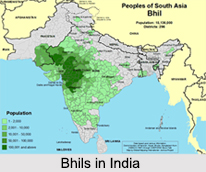
Bhil Tribe
The people of the Bhil tribe are the most widely distributed tribal groups in India.
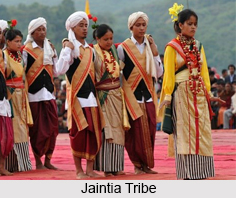
Jaintia Tribe
Jaintia Tribes are located in the Jaintia Hills of Meghalaya. They are also called the Pnars. They are famous for weaving of carpet, making of musical...
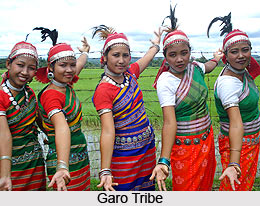
Garo Tribes
Garo Tribes are one of the matrilineal tribes of North-East India who reside in the Garo hills of Meghalaya. Historically, the tribe originated in Tib...
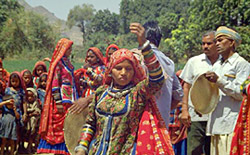
Garasia Tribe
The Garasia tribal community holds a significant position within Indian culture, renowned for their distinctive way of life and rich cultural heritage...