 The concept and principle of homeopathy is becoming so advanced that the lion`s proportion of people are relying on homeopathy. Today`s rapidly grown homeopathic treatment has a rich history of its own. Founded in the early 19th century, homeopathy has crossed all the boundaries and is reckoned today, as one of the well-established alternative medicine systems trusted for its side effect less treatment procedure.
The very concept and principles of homeopathy lies in its demonstrable laws and principles, which are as follows:
* The Law of Similars
* The Law of Single Remedy
* The Law of Minimum Dose
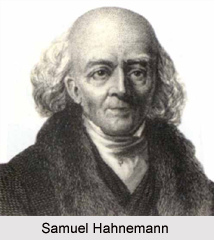
The Law of Similars - It is also called the Law of Cure. Its modern form is based on Hahnemann`s conclusion that a large number of symptoms produced by any substance on a group of healthy individuals will cure a similar set of symptoms in the sick. This law demonstrates that the selected remedy is able to produce a range of symptoms in a healthy person similar to that observed in the patient, thus leading to the principle of "Similia Similibus Curentur". Symptom patterns associated with various remedies are determined by `proving`, in which healthy volunteers are given the drug. It is resulting physical, mental and spiritual symptoms are compiled by the observer to form a `Drug Picture`. The Disease Picture of the sick individual is then matched with the Drug Pictures available in the "Materia Medica" and the most similar medicine is prescribed to bring about healing.
To give a simple example, the effect of peeling an onion and the consequent watering and burning of eyes and nose are a common knowledge. This effect of onion is used in the treatment of common cold. Similar watering and burning of eyes and nose accrued when the "medicien Allium cepa", prepared from red onions is used to cure common cold. This concept and principle has been verified by millions of Homoeopaths all over the world.
The Law of Single Remedy: Hahnemann directed his followers to prove and administer medicines as single and simple substances and not as a mixture of varied substance, the collective effect of which would be very different from that of individual substances being used.
The Law of Minimum Dose: This is the most characteristic and the most controversial principle of Homoeopathy. In this principle minimum dose is prescribed to the sick so that when treated there is no toxic effects on the body. The crude drug substance is diluted and applied to the body by virtue of which, only the medicinal power of the substance is retained and drug related side effects are eliminated. It simply acts as a triggering and a catalytic agent to stimulate and strengthen the defence mechanisms of the body. It is not necessary to repeat the drug frequently.
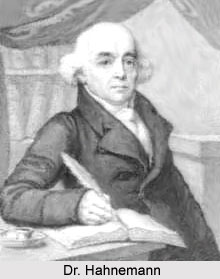
Concept of Vital Force: The vital force was described by Dr. Hahnemann as a "spirit like, dynamic, automatic self powered power, which preserves the life in living beings". It is the life principle, which is present everywhere in the body. This vital force is an active subtle energy, which exists in the living body. This is the force, which penetrates the entire being and is responsible for good health when its harmony is maintained and when this harmony is lost then disease occurs. The body without vital force becomes disordered or unbalanced, when the vital force leaves the body or ceases to function, the body dies. The best-selected homeopathic remedies stimulate this failing vital force. According to Hahnemann this can again take the reins and conduct the system on way to health.
Concept of Miasm: Dr. Hahnemann discovered three fundamental causes like. Psora, Syphilis and Sycosis, which are responsible for all chronic diseases that afflict the human race and called it miasms. This word is derived from a Greek word "miainein". Syphilis and Sycosis are the venereal and contagious chronic diseases, whereas Psora is a non-venereal chronic disease. Psora is present from the beginning to end of life and is the root cause of most of the diseases. Thus miasm are representations of the internal upset of the individual, which predisposes one to varied diseases.
Principle of Drug Proving: This proving experience of Hahnemann was very unique as they are proved on healthy human volunteers and the symptoms thus known are the true record of the curative properties of a drug. This is important for knowing the curative powers of drugs, which are to be applied for therapeutic use. The effect that produced on physical and mental level in noted to evolve the drug picture.
Holistic as well as Individualistic approach in Medicine through Homoeopathy: It is a unique feature of homeopathy as its treatment lies in its holistic and individual approach that means for homeopathic physician it is the person who is sick and not body parts. Therefore, he treats all mental, emotional, and physical aspects of the person who happens to be suffering may be with arthritis or bronchitis or cancer. Homeopathy regards each patient as a unique individual through the totality of the symptoms and selects the medicine, similar to the disease picture. That is why six persons with cancer might get a different homeopathy remedy each one aimed at the individual. The physician`s interest is not only to lessen the patient`s present symptoms but also his long-term comfort.
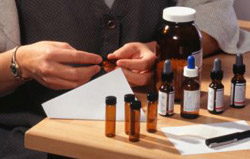
Drug dynamisation and Potentisation: In homeopathy drugs are prepared in such a way they retain utmost medicinal powers without producing any toxic or poisonous action in the body. That`s why it is always preferred for babies. Dr. Hahnemann experimentally found that when homeopathic drugs are diluted and shook powerfully they develop lasting medicinal powers.
Thus, the Laws of Similar, the Law of Single remedy and of course the Law of Minimum Doses has made the concept and principles of homeopathy not only contemporary but also lot more acceptable to befit the current requirement.