


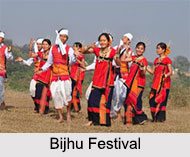
 The Chakma Tribe people are also known as the ‘Daingnet’ people. They are an ethnic group spotted in Arunachal Pradesh, Tripura, Assam, Mizoram, Meghalaya and West Bengal of India and in Chittagong Hill Tracts of Bangladesh. The Chakmas form the largest ethnic group in the Chittagong Hill Tracts. They also have a huge population in the North east India.
Chakma Tribe is known as the ‘Changma’ also and is the fourth largest tribal group of Tripura . They came to Tripura in the 5th century. The Chakma Tribe people are also known as the ‘Daingnet’ people. They are an ethnic group spotted in Arunachal Pradesh, Tripura, Assam, Mizoram, Meghalaya and West Bengal of India and in Chittagong Hill Tracts of Bangladesh. The Chakmas form the largest ethnic group in the Chittagong Hill Tracts. They also have a huge population in the North east India.
Chakma Tribe is known as the ‘Changma’ also and is the fourth largest tribal group of Tripura . They came to Tripura in the 5th century.
Location of Chakma Tribe Chakma tribes are mostly found inhabiting in the south-eastern hills bordering Chittagong Hill tract and in the North East India. People of Chakma Community in Tripura are found generally in the Sub-Divisions of Kailashahar, Amarpur, Sabroom, Belonia and Kanchanpur. History of Chakma Tribe Chakma Tribe’s name was first used by the British census-takers to describe certain hill people. The Chakma people entered present day Chittagong Hill Tracts and made Alekyangdong, present-day Alikadam, their capital after being defeated by the Arakanese. From Alekyangdong, they went north and established the current Rangunia, Raozan, and Fatikchari upazilas of Chittagong District. The Mughals demanded tribute from the Chakmas for trading with Chittagong. The peace was founded and soon a steady connection developed between the Chakmas and the Mughals in 1713 CE. With dynamic contribution of the Bangladesh martial, the Chakmas were attacked, massacred, kidnapped, and raped and their houses were burned. In 1964, around 30,000 original Chakmas moved by the Kaptai Hydro-Electric dam of then East Pakistan and entered India. Government of India issued official migration certificates to the migrants and declared them nationality rights in due path. 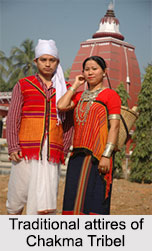
Religion of Chakma Tribe The majority of the Chakmas are the devotees of Theravada Buddhism. Nearly every Chakma village has a Buddhist temple (kaang). Buddhist priests or monks are called Bhikhus. They manage the spiritual festivals and ceremonies. The villagers hold up their monks with food, gifts and offerings to Buddha. The Chakmas also worship Hindu deities. Chakmas sacrifice the goats, chickens, or ducks to calm the spirits that are believed to bring fevers and disease. Language of Chakma Tribe Some of the Chakmas have been influenced by neighbouring Chittagonian. The Chakma script is also known as Ojhopath. Chakmas follow an alphabet which allows for its cursive form and is almost the same with the Khmer and the Lanna (Chiangmai) characters. Costumes of Chakma Tribe The Phinon and the Haadi are brightly hand weaved in different designs. The design is initially embroidered on a piece of cloth known as Alaam. The Chakma women dress in an ankle length cloth around the waist which is also called Phinon and also a Haadi wrapped above the waist accompanied by silver ornaments. Food of Chakma Tribe The Bamboo shoot is a habitual food of the Chakma people, known as "Bajchuri". Shrimp paste and fish paste are their traditional ingredients of cooking known as "Sidol". The staple food of the Chakmas is rice, with corn (maize), vegetables, and mustard. Vegetables include yams, pumpkins, melons and cucumbers. Vegetables and fruits gathered from the forest may be added to the diet. Fish, poultry and meat (even pork) are eaten. Festivals of Chakma Tribe The most significant festivals celebrated by the Chakmas are Bizu, Alpaloni, Buddha Purnima and Kathin Civar Dan. Chakmas celebrate a variety of Buddhist festivals. Bizu is the most important socio-religious festival of the Chakma. This celebration gave birth to the Bizu dance. 
Cultural legacy of Chakma Tribe Folk music of Chakma includes romantic love songs known as Ubageet. The Genkhuli ballads narrate incidents from the history. There are also epic poems like Radhamon and Dhanapati. Traditional musical instruments consist of a bugle made from buffalo horn, a circular piece of iron with a string stretched across it that vibrates to produce sound, and a drum. The bamboo flute is played by roughly all Chakma youth. Administration of Chakma Tribe Udaipur, Kanchanpur, Kailsahahar, Belonia, Sabroom and Amarpur are dominated by Chakma tribes. Chakma tribes have a leader who is colloquially known as Dewan. He is entrusted with the development and welfare of his tribe. The people obey their Dewan and seek his advice if any crisis arises in the community. The Chakmas also have village councils. Their village councils consist of adult members and their Chief is a leader or sardar (Dewari). The duty is to resolve communal disputes, minor offences and petty theft of the Chakmas. Social disputes and minor criminal cases are settled by a high authority person whom they call Karbari. He is an honorary member elected by the villagers. They also have other members Khijayas and Talukdars who are entrusted with the administration of the village. The social discipline of the Chakmas is rigid. In case of major offences the offender is rusticated from the village whereas for minor offences fine is imposed on the offender. For better administration and control, in the recent past an autonomous council had been built called the Chakma Autonomous District Council (CADC). |
| |||



Home > Society > Indian Tribals > Indian Tribal People > North East Indian Tribes > Tribes of Mizoram > Chakma Tribe
Chakma Tribe
| Chakma Tribe is one of the major tribes of Mizoram who are found in the Chittagong Hill Tract, Tripura, Assam and Arunachal Pradesh. |
| ||||||||||||||||||||||||||||

