


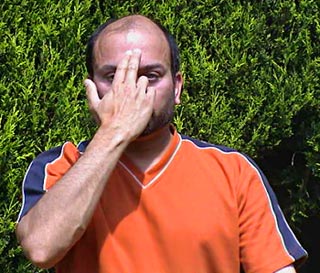
 Suryabhedana is a significant exercise widely practiced by all the people of Indian subcontinent. In fact, the name has been derived from the Sanskrit etymology. As has been mentioned in Hatha- Yoga literature, Surya means the right, while the word Candra symbolizes the left. To be more specific, Suryanga stands for the right side of the body and also Candranga means the left side. Also, if one takes Suryanadi, it would mean the right nostril, rather the right part of the nervous system. Similarly, the word Candranadi has another significance. It means left nostrils or the left side of the nervous system. Suryabhedana is a significant exercise widely practiced by all the people of Indian subcontinent. In fact, the name has been derived from the Sanskrit etymology. As has been mentioned in Hatha- Yoga literature, Surya means the right, while the word Candra symbolizes the left. To be more specific, Suryanga stands for the right side of the body and also Candranga means the left side. Also, if one takes Suryanadi, it would mean the right nostril, rather the right part of the nervous system. Similarly, the word Candranadi has another significance. It means left nostrils or the left side of the nervous system.
To take the word Surya alone, it stands for Daksanadi or Suryanadi. Daksanadi stands for the right nostril and Savyanadi depicts the left nostril.. In 'H.P. 11-8', the word Surya solely is used for the right nostril and Candra for the left . Having inhaled air through the right nostril, one should exhale it again through the left nostril. As per another documentation, Suryabhedana stands for that particular Pranayama in which breathing in is made through the right nostril and is done for the start of 'Kundalini' . The poplar ancient book on Pranayamic Yogas, Gheranda-Samhita provides a different explanation. It gives a vivid description of the technique of Suryabhedana, duly and mentioning about the 10 essential 'airs' along with their areas of activity. These 'airs'are Prana, Apana etc., all representing the air that can be breathed in via the right nostril. Further , according to this book , while executing the techniques of Suryabhedana the air inhaled through the right nostril gets combined with all these 10 main 'airs' that are carrying out their functions in the body. When these combined airs mount up at the root of the naval , they are soon to be drawn close from that root of the naval through 'susumna' . Thus this Pranayamic exercise gets its name. After throwing some light on the meaning of Suryabhadana, it is important now to discuss the technique and process involved for the proper implementation of this Suryabhedana exercise. The process of doing Suryabhadana, as has been depicted in the Gheranda-Samhita, is quite easy to follow. Firstly, the Yogi should choose an easy and comfortable seat so that he can continue with exercise for quite a long period of time. Immense pressure that might be created for folding legs and also pressure in the hips should not be felt. After that, he should take any meditative pose , just as one does in asanas like Padmasana or Siddhasana. After getting accustomed to the seating posture, the Yogi should then start the breathing process. He should then gradually breath in air from outside through the right nostril . He continues doing it till the moment he finds the pressure all over his body starting from above the hair till the end of his nails. After holding the breath as much as he can, the inhaled air is then to be breathed out through the left nostril . However, the exhalation is slow than any the rate mentioned while doing inhalation. Enough precaution is needed and the yoga student must not exert beyond his utmost capability, which ultimately can be even fatal for him. Thus if one does this Suryabhadana in hurry it can cause harm to the lungs , thereby leading to many grave diseases which are not curable at all. Another point that is to be emphasized is that all these techniques adopted for Suryabhadana must be practiced under the thorough supervision of an expert only. To get effective results one needs to carry on rounds of Suryabhadhana , though remaining in one's' own limit. During a single round of this exercise, techniques like Puraka, Kumbhaka and Recaka will be followed . Similarly successive rounds should be followed after that. |
| |||



Suryabhedana
| Suryabadhana, a breathing exercise through both the left and right nostrils , has a rich etymological significance. |
| ||||||||||||||||||||||||||||

