In pre-historic times, human being was of the habit to elucidate their thoughts and feelings with the usage of signs and symbols, comprising the entire domain of language. Vocal language being unseen, the ape-man made only cranky noises to communicate with their fellow members. Although there were hardly any evidences established about the development of spoken languages, traces of writings dating back to more than five thousand years can still be witnessed in contemporary times. Mountain caves bore the testimony of man`s dexterity of communication by scribblings of pictures and images. The trend was that with the evolution of mankind, their languages too underwent substantial metamorphoses. Present-day languages adopted the complex structure, each language differing from the other both in its format and grammatical syntaxes. Espousing these very extraordinary mannerisms, the origin of Indian languages also had towed the magical line of speech and verbalisation.
As far as this subcontinent is concerned, origin of Indian languages too possesses an ennobling evolution. It has developed, keeping pace with the development of various ethno-traditional groups that have thrived in every nook of the whole of Indian subcontinent. As early as 2000 B.C., Indus Valley residents had migrated to Gangetic plains and to particular places in the western side, segregating two chief languages, Indo- Aryan languages and Iranian groups. It needs no special mentioning that Indian languages are a part of this Indo-Aryan family. In fact, origin and development of Indian languages is generally sectioned into three major phases: Old phase, comprising the Vedic and classical Sanskrit; Middle phase, developed from about third century B.C., incorporating specified vernacular Sanskrit dialects namely Prakrit. Pali had served as a major dialect. The third phase had commenced from tenth century A.D. Modern language structure in India includes languages of north and central provinces of the subcontinent.

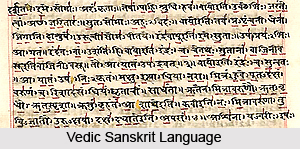
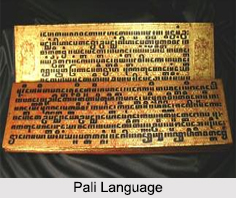
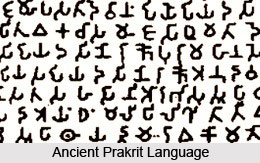
Preliminary form of Sanskrit, namely Vedic Sanskrit serves as an illustrious instance that ameliorates the path of the origin of Indian languages. The whole Vedic literature was penned in this language, which dates back to as early as fifteen hundred B.C. to almost two hundred B.C. Later, Classical Sanskrit came to light near about five hundred B.C., noted mainly for its mythical and mechanical works. Even in the contemporary period, Classical Sanskrit is intensely studied and researched in India. Since primeval times, it has been regarded as the most revered and scholarly of languages. Origin of Indian languages underwent an over-the-top metamorphosis with the kick-off of the illustrious second phase. Prakrit language had evolved in umpteen local varieties, which finally assisted in the development of indigenous literatures. Pali has originated as the sole language of the then Buddhist canonical writings. It is indeed also an enlightened fact that the language of Buddhist scriptures were wholly maintained in Pali, although Buddha had encouraged his disciples to learn in their own dialect and syntax. Still today, these Buddhist writings are regarded as the most ancient of all Prakrit literature.
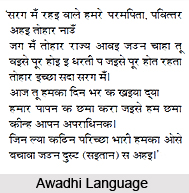
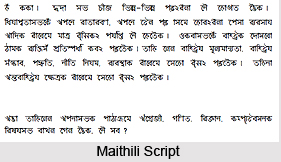
Prakrit was widely used in every household of the Indian subcontinent till the time of twelfth century. Even during times of tenth century, the concept of contemporary Indo-Aryan vernaculars had started to gain popularity. The comparative modern era, the third phase illuminates the complete story of the origin of Indian languages. Most Indians belonging to the contemporaneous era is brightened and enlightened due to the prevalence of numerous languages, including thirty-five crucial languages. These include mainly Marathi, Oriya, Punjabi, Hindi, Urdu, Bengali, Bihari, Gujarati, Kannada, Malayalam, Rajasthani, Tamil, and Telugu. However, two principal languages embellish the origin of Indian languages. Hindi and Urdu are in fact more or less diverse dialects of the same language. Hindi vocabulary has been derived generally from Sanskrit language; Urdu also incorporates several words from Persian and Arabic languages. Hindi writers abide by the Devanagari script, whereas, Urdu is the script of Persian Arabic style. Other major Indo-Aryan languages include: Sinhalese - which has its origin in India and now has considerably spread worldwide. Romani is another language which had originated from Sanskrit, quite apt from its wealth of speech sound and grammar.

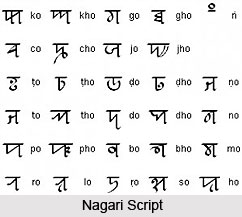
Origin of Indian languages can also be traced to Brahmi scripts and literature. They have their origin in the `North Semitic` family. Hindus of Maharashtra and Kashmir Valley had in fact branched out and broadened Devanagari from Brahmi, which is mostly utilised verbally. Apart from this, they also use as Hindi, Sanskrit and Prakrit as the principal spoken languages. Inhabitants of Gujarat, West Bengal, Assam and Orissa had gradually developed their own writing styles and modes, which all are derivations of Devanagari. Sindhis and Punjabis mostly make use of Persian and Arabic script.
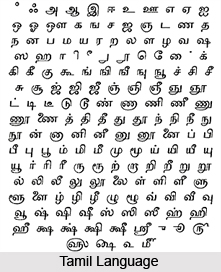
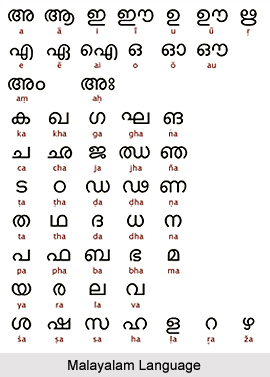
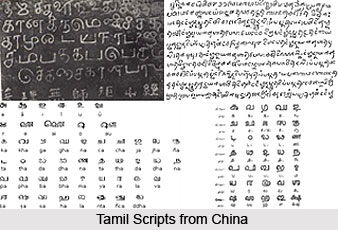
The entire set-up of origin of Indian languages had undergone a sea change with the arrival of Dravidian languages into the Indian dialects scenario. Depending upon a survey, it is stated that a rough estimate of 169 million populace of most parts of South India converse in about twenty-three Dravidian languages. The four main Dravidian languages popularised as official languages include: Tamil spoken in Tamil Nadu, Telugu spoken in Andhra Pradesh, Kannada spoken in Mysore and Malayalam spoken in Kerala. These languages mentioned, possess extensive fictional chronicles and are printed in scripts of their own. Telugu is widely admired and spoken, with its literature being immensely enriched. Other Dravidian languages however have only a handful of speakers. The maximal parts of Tamil, Kannada and Malayalam are popular verbally and written documents have failed to prove their existence. In a nutshell, it is important to shed light upon the fact both the Dravidian languages and all Indo-Aryan languages complement each other by borrowing words and grammatical tenets from each other, in the process growing dignified. It remains only to be mentioned that origin of Indian languages not only did witness their evolvement in the pre-historical eras, but also in the historical eras, during the supremacy of Hindu ruling in India; the time can approximately be dated to the 10th to 14th centuries. Southern portion of India was perhaps the initiator of language studying and researching, leading to rulers and emperors dedicating their times in developing Indian dialects and vernaculars. The Western Chalukya dynasty and the Aravidu dynasty can be termed as those respected and sophisticated reigns, which deserve a pride mention. Language in Western Chalukya Dynasty was pioneered during times of Vikramaditya VI, with Sanskrit and Kannada being used in both governmental and literary levels. Language of Aravidu Dynasty basically had revolved around Kannada, Telugu, Tamil and Sanskrit, deciphered from the coin inscriptions.
Other Language Groups
Among other language groups that can be traced while studying the origin of Indian languages, mention of twelve and more Munda languages are worth to note. These languages mostly are widely spoken by the people residing in various parts of north-eastern and Central India. Amongst them, Santali is the most striking; it is widely spoken by myriads of multitudinous classes. What is even more interesting is that it is the only Munda language that possesses written records. Bearing striking similarity with the Dravidian languages, Munda languages had originated in the Indian subcontinent before primitive men had migrated from the southern parts of Indus valley. According to expert linguists from the country, Munda languages mystically possess a close relation with the Mon-Khmer languages, better known as the Austro-Asiatic family. A popular Mon-Khmer language, Khasi is also widely spoken in various provinces of Assam. Even in the fringes of Indian borders, quite a few `Sino-Tibetan languages` are also prevalent. History of India as an emblem of diversified culture and tradition is richly exuberated due to the prevalence of various languages as developed throughout the Indian panorama.