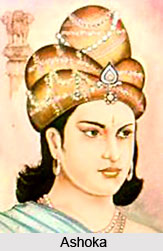
The Peninsula of India south of the Narmada river is called the Deccan area.In more restricted sense, it is the tableland between the Narmada and the Krishna rivers comprising Maharashtra and parts of Madhya Pradesh, Andhra Pradesh, Karnataka and Orissa. The Deccan saw the rise and fall of a number of dynasties and empires. The period of known history of the region begins with the ancient period during which the great king Asoka ruled over most of the Indian subcontinent. The dynasties of Satavahana, Chalukya, Pallava, Rashtrakuta, Chera, Chola, Pandya, Kakatiya and Hoysala were at their zenith during various periods of history. These kingdoms constantly fought amongst each other and against external forces when Muslim armies invaded south India. Vijayanagara empire rose in response to the Muslim intervention and covered the most of south India.
The Vijayanagar Empire
The Vijayanagar Empire was a South Indian empire based in the Deccan. The history of Vijayanagar is perhaps the last magnificent chapter in the history of independent India.
Founded by Harihara I and his sibling Bukka Raya in 1336, the empire prolonged until 1646.
The Sangama Dynasty
The Sangama Dynasty was the primary empire of the Vijayanagar Empire.The first Empire of the Vijaynagar empire of the southern India, which ruled till the 15th century.
The Saluva Dynasty
The Saluva Dynasty was one of the ruling dynasties of the Vijayanagara Empire of Southern India. This dynasty ruled the empire from 1485 till 1505.
Tuluva Dynasty
The Tuluva Dynasty is the third dynasty, that ruled Vijayanagara Empire. They were chiefs who feinted portions of coastal Karnataka. The Tuluva Dynasty was one of the decision-making lines of the Vijayanagara Empire of Southern India.
The Aravidu Dynasty
The Aravidu Dynasty was the fourth and last Hindu dynasty which ruled Vijayanagara Empire in South India. Its founder was Tirumala, brother of Ramraya.
The Chalukya Dynasty
Ruling large sections of southern and central India, the Chalukya dynasty reigned during the 6th and 12th centuries. During this phase, they reigned as three intimately associated but individual dynasties.
The Pallava Dynasty
The Pallavas were a celebrated dynasty that ruled South India for virtually 500 years and have left an enduring smear in the field of art and architecture. Feudatories of Andhra Satavahanas, the Pallavas grew to be autonomous subsequent to their decline at Amaravati.
The Rashtrakuta Dynasty
The reign of the imperial Rashtrakuta Dynasty in sections of the northern, central and southern India was witnessed in the sixth and the thirteenth centuries. They reigned as solitary clans but were closely associated with each other.
Bahmani Dynasty
Bahmani Dynasty was one of the great medieval Indian Kingdoms founded by bahamani Shah.Bahman Shah conquered large part of the Deccan. By 1358 the Bahmani Empire extended to the areas near the west coast, the ports of Goa and Dabhal. He conquered the Hindu rulers of Vijaynagar and Warangal.
Imad Shahi Dynasty of Berar
Imad Shahi Dynasty of Berar ruled over the northern part of the Bahamani Kingdom.This Dynasty lasted for four generations. In 1490, the founding father of Imad Shahi dynasty Imad-ul-Mulk declared his independence.
Adil Shahi Dynasty of Bijapur
The governor of Bijapur Yusuf Adil Khan founded the Adil Shahi Dynasty of Bijapur. In 1489, he declared the independence of his province.
The Qutab Shahi Dynasty
The Qutab Shahi Dynasty was founded by Sultan Quli Qutab Shah. The dynasty was a part of Bahmani Empire.